|
|
|
|
|
Dedicated to Hispanic Heritage and Diversity Issues |
|
|
|
|
 |
||
|
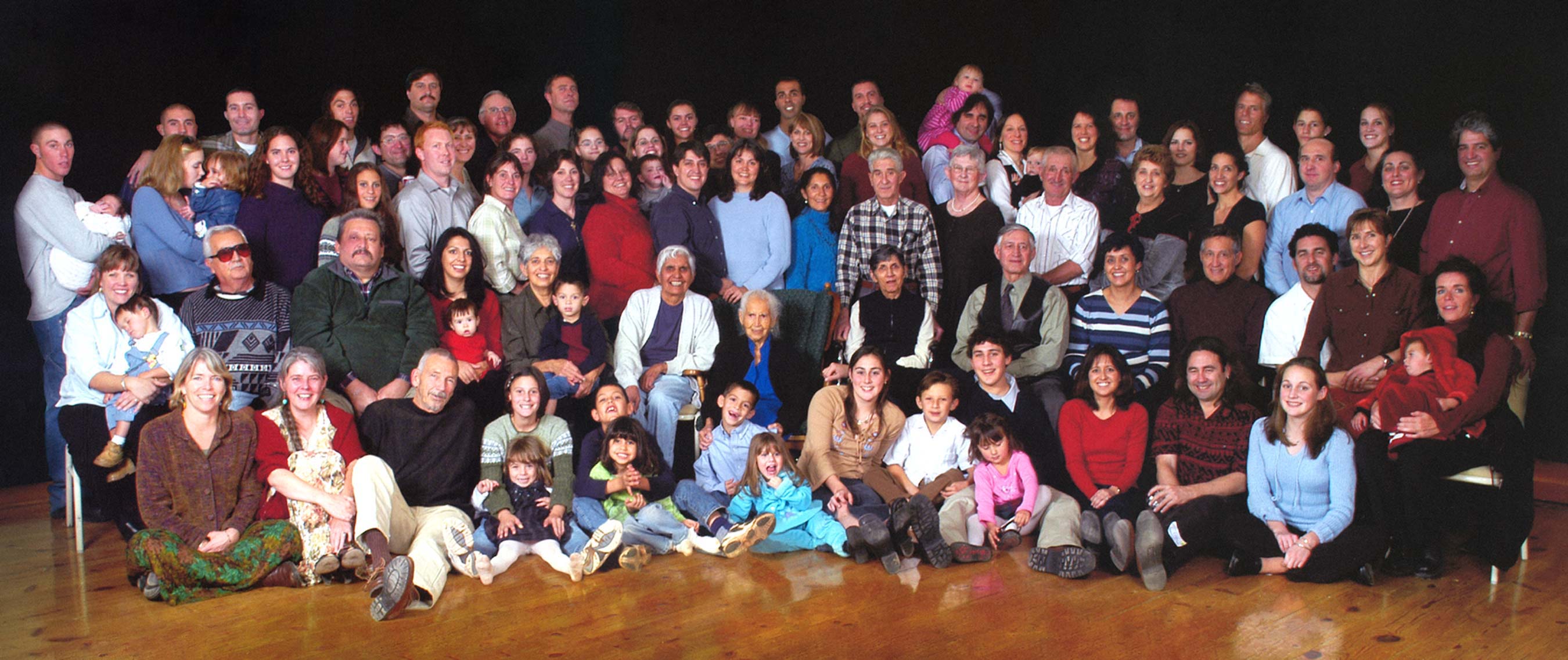
Descendants
of Vicente Martinez and Procora Vergara |
||
|
Content Areas United States 2 Bernardo de Galvez 19 Surname: Vergara 21 Orange County, CA 23 Los Angeles, CA 26 California 30 Northwestern US 39 Southwestern US 41 |
Black
59 Indigenous 60 Sephardic 68 Texas 69 East of Mississippi 87 East Coast 88 Mexico 89 Caribbean/Cuba 105 International 107 |
History
115
Family Research 118 Archaeology 123 Miscellaneous 124 2003 Index Calendars Networking SHHAR Quarterly Meetings held January, March, May, September |
|
|
| Somos
Primos Staff: Mimi Lozano, Editor John P. Schmal, Johanna de Soto, Howard Shorr Armando Montes Michael Stevens Perez Rina Dichoso-Dungao, Ph.D. Contributors: Judge Fredrick Aguirre Tom Ascencio Gail Ballard Jerry Benavides Salvador Cabral Valdes Roberto Camp Bill Carmena Carolina Castillo Crimm Joan De Soto |
Armando
M. Escobar Olmedo Anthony Garcia Joseph J. Garcia Mickey Margot Garcia Michael D. Garcia A. Garza George Gause Richard J. Griego Lorraine Hernandez Granville Hough LeAnne Hull Stephen Hussey John Inclan Larry Kirkpatrick David Lewis Andres H. Luevano Capri Martinez Astiz Juan Mayans |
Penny
McCready Al Milo Armando Montes Paul Newfield Viola Rodriguez Sadler John Schmal Albert Seguin C. Gonzales Bob Smith Mira Smithwick Robert H. Thonhoff Carolina G. de Tomkinson Josie Trevino Trevino Elsa Valdez Luis Larios Vendrell Carlos Villanueva Danny Villarreal Ian West Brent A. Wilkes |
| SHHAR Board: Laura Arechabala Shane, Bea Armenta Dever, Steven Hernandez, Mimi Lozano Holtzman, Henry Marquez, Crispin Rendon, Viola Rodriguez Sadler, John P. Schmal, and welcome to our new Board members, Michael Stevens Perez and Yolanda Ochoa Hussey. |
| May 29,
2004, National World War II Memorial American Battle Monuments Commission White House Fellows Program People and Stories - Gente y Cuentos Los Pachucos y Su Lenguaje Melting Pot Heats Up Scouts Welcome Growing Hispanics Numbers |
Hispanic Association of Colleges and Universities Foreign-Born Hispanics In Education Classes To Target Spanish Speakers Immigration Records Spanning Five Centuries Latinos urged to buy into banking Watch out, Wonder Bread. Resources for U.S. Military Records |
|
"The illiterates of the 21st century will not be those who cannot read and write, |
|
|
|
The memorial will be dedicated on Saturday, May 29, 2004. To learn more about the dedication plans, please go to the site. http://www.wwiimemorial.com/ The National World War II Memorial will be the first national memorial dedicated to all who served during World War II. The memorial, which will be established by the American Battle Monuments Commission, will honor all military veterans of the war, the citizens on the home front, the nation at large, and the high moral purpose and idealism that motivated the nation's call to arms. The Second World War will be the only 20th century event commemorated on the Mall’s central axis. The memorial was authorized by Congress in 1993. Construction began in September 2001 after several years of fund raising and public hearings. The Memorial Day weekend celebration on the National Mall will culminate an 11-year effort to honor America’s World War II generation. The official dedication celebration will span four days and will include a WWII-themed reunion exhibition on the National Mall staged in partnership with the Smithsonian Institution’s Center for Folk life and Cultural Heritage, a memorial service at the Washington National Cathedral, and an entertainment salute to WWII veterans from military performing units. Other related activities in cultural venues throughout the city are expected. World War II Registry Honor members of the World War II generation by enrolling them in the World War II Registry, a list of individual Americans who participated in the war effort. To search for currently enrolled honorees, or to enroll a family member or friend. Details on all dedication-related events will be made available as they are confirmed. Information will also be available by calling the memorial’s toll free telephone number at 800-639-4992. |
American Battle Monuments Commission http://www.abmc.gov/abmc4.htm The Commission maintains a listing of those interred at the American military cemeteries overseas and those Missing in Action from World War I, World War II, Korea and Vietnam. In addition it has a listing of war veterans buried at the Corozal American Cemetery and those who lost their lives during the Korean War. For additional information go to the website. operations@abmc.gov The Commission administers, operates, and maintains twenty-four permanent American burial grounds on foreign soil. The following maps are available: Eastern France, Belgium, Netherlands and Luxembourg Western France and England Italy and Southern France Central Pacific - Hawaii and Guadalcanal Western Pacific - Philippines and New Guinea Presently there are 124,917 U.S. War Dead interred at these cemeteries, 30,922 of World War I, 93,245 of World War II and 750 of the Mexican War. Additionally 6,010 American veterans and others are interred in the Mexico City and Corozal American Cemeteries. For details about these cemeteries go to the website. |
| Aisne-Marne, France Ardennes, Belgium Brittany, France Brookwood, England Cambridge, England Corozal, Panama Epinal, France Flanders Field, Belgium Florence, Italy Henri-Chapelle, Belgium Luxembourg, Luxembourg Lorraine, France |
Manila, Philippines Meuse-Argonne, France Mexico City, Mexico Netherlands, Netherlands Normandy, France North Africa, Tunisia Oise-Aisne, France Rhone, France Sicily-Rome, Italy Somme, France St. Mihiel, France Suresnes, France |
White House Fellows Program Dear LULAC members and friends: We have been contacted by the White House to encourage outstanding Americans to apply for the White House Fellows Program one of our country's most prestigious programs for leadership and public service. The application deadline for the 2004-2005 class is February 1, 2004. Founded in 1964, the White House Fellows program is America's most prestigious program for leadership and public service. White House Fellowships offer exceptional young men and women first-hand experience working at the highest levels of the federal government. White House Fellows typically spend a year working as full-time, paid special assistants to senior White House Staff, the Vice President, Cabinet Secretaries and other top-ranking government officials. Fellows also participate in an education program consisting of roundtable discussions with renowned leaders from the private and public sectors, and trips to study U.S. policy in action both domestically and internationally. Fellowships are awarded on a strictly non-partisan basis. The White House Fellows Program web site at www.whitehouse.gov/fellows contains detailed information about the program and a downloadable application. Please encourage interested individuals to apply for this program. Thank you. Brent A. Wilkes bwilkes@lulac.org National Executive Director League of United Latin American Citizens |
|
||||||||||||||||||||
Sister Cities International http://www.sister-cities.org/sci/Sustainable/index1 What is The Sister Cities Network for Sustainable Development? SCI is developing a network of sister city partnerships committed to implementing sustainable development concepts. Based largely on concepts emerging from the World Summit on Sustainable Development (WSSD) in Johannesburg, South Africa, August 26 to September 4, 2002, the Sister Cities Network for Sustainable Development will demonstrate that local initiatives can: (a) Serve as a catalyst for advancing sustainable development concepts worldwide (b) Improve the quality of life for citizens in the United States and abroad (c) Act as a vehicle for long-term sustainable relationships that will continue to advance the knowledge and practice of sustainable development (d) Reinforce the goals of good governance, sustainable economic development, social development and environmental stewardship (e) Achieve concrete results through partnerships with the public and private sector. For the next three years, starting in January 2003, the Sustainable Development Network will allow established sister city partnerships to explore sustainable development concepts, as outlined in the United Nations' Agenda 21, the Plan of Implementation (adopted at the WSSD), and the Millennium Development Goals (MDG). Using the SCI "model," sister city partnerships will promote the participation of local citizens in all levels of program development, including identifying project areas, suggesting and designing solutions, overseeing implementation, and evaluating results. SCI is the international membership association headquartered in Washington, DC, which links jurisdictions from the United States with communities worldwide. SCI recognizes, registers, and coordinates city, county, prefecture, province, region and state linkages. This effort has led to U.S. and Sister City relationships with over 2,100 communities in 122 countries around the world. The U.S. sister city program originated in 1956 when President Dwight D. Eisenhower proposed a people-to-people, citizen diplomacy initiative. Originally a part of the National League of Cities, SCI became a separate, nonprofit corporation in 1967, due to the tremendous growth and popularity of the U.S. program. |
||||||||||||||||||||
People and Stories - Gente y Cuentos literature project Sent by Al Milo AlM@ci.fullerton.ca.us Source: Lenora Kandiner mailto:peoplelk@starlinx.com People and Stories - Gente y Cuentos is starting an exciting new reading and discussion program in English and Spanish, sponsored by NEH, in conjunction with REFORMA. These bilingual literature programs will be implemented in public library systems nationally over the next two years. The benefits to your library are: * Attract new audiences -- outreach to new grass-roots, non-traditional, and Latino audiences * Offer pre-packaged, award-winning program in Spanish and/or English to new library audiences * Invite new audiences to discover the life-transforming power of literature * Receive a mini grant for $1,000 per series * Receive partial travel reimbursement to attend training workshop Once grant is awarded, participants are required to: Attend one of two training workshops (10 hours) San Diego, California -- in conjunction with the Midwinter Meeting of the ALA, January 9-14, 2004 / or Trenton, New Jersey -- February 5 and 6, 2004 (Inclement weather back up date, February 12 & 13) Implement two eight-week literature series for 12 - 20 people either in your library or in collaboration with a community outreach program For more information about the project and about People and Stories / Gente y Cuentos, you may check our web site http://www.peopleandstories.org/NEHLibrarianInformation.htm You may apply following the instructions on the web site or fill in the application form below my signature and reply to this email. Please contact me if you have any questions. You may forward this email to colleagues who might be interested in the project. Lenora Kandiner People & Stories / Gente y Cuentos 140 East Hanover Street Trenton, NJ 08608 Telephone 609-393-1750 Fax 609-989-8696 mailto: peoplelk@starlinx.com |
|
by Richard J. Griego, April
2002
Reprinted with permission, La Herencia Volume 36 Winter
2002 |
|
My father disliked Arturo, saying he was a pachuco and a marihuano. The year was 1948, I was only eight years old and I was warned to stay away from el Drácula, who himself was only sixteen. But there was an alluring attraction to him. He had flashing hazel eyes, pale skin and sandy hair slick-backed into a ducktail, which was made darker with pomade. Arturo was handsome, slender and tall with a sauntering walk; he would swing his arms slightly from side to side and sway his shoulders. He wore long-sleeve lisas buttoned all the way up to the neck, baggy pegged-pants (drapes with reet pleats) worn high on the waist and fitted tightly at the ankles, and highly shined calcos with pointed toes. Count loved the borlotes (dances) at the Old Town Society Hall (la Ruca) and the Armory in downtown Alburque. When he danced, he moved his feet but slightly and gently rocked to the rhythm. He made the woman come to him, while he just stood there and twirled her around. The girl did all the work; he was cool and aloof. Count was a natural leader. He seemed older than he was and although he was the youngest, he became the head of his clica in the Sawmill neighborhood of Alburquerque. El Drácula era un bato de aquellas y siempre andaba muy bien entacuchado. (El Drácula was a right on guy and he was always well dressed). Around my parents Arturo always spoke in respectful reserved tones, but when he was with fellow chucos, el Drácula tioricaba el totacho de los tirilongos (el Drácula spoke the language of the cool dudes). When the batos met they would greet each other with a backward motion of their heads. Órale, they would say. Their speech was full of words and phrases like: la ruca (the girl or old lady); que agüite (what a drag); ponte trucha (be aware, heads up); nel, ése (no, man); me la rayo (I swear); mi jefita (my mom); simón (yes); chale (no); la güisa (the girlfriend); carnal (brother or good friend) and necesito jando pa’ ir al mono con mi jaina (I need money to go to the movie with my girlfriend). Around outsiders the pachucos were reserved and hermetic, with a dangerous air about them. I didn’t understand a lot of what they were saying until my cousins (who were chuquitos themselves) would tell me the meaning of some of the vocabulary. Moreover, I would be immediately rebuked if I ever used some of the pachuquismos in front of my parents. Once, I inked a "pachuco cross" on the web between my thumb and forefinger with a pen. Youngsters used to do this and then prick the ink with a pin in order to achieve a permanent, if crude, tatoo. I had not reached that point when my father spied the offending cross on my hand and made me immediately wash it off with an admonition to me never to try that again. Who were these pachucos? Why did they talk that way? Why were they despised by so-called respectable people? What happened to them? It wasn’t until I grew up and started reading and talking to people that I began to develop a realistic picture of la pachucada. There are several books on pachucos, at least one major film and, more recently, a national public television special. Yet, no single source covers all the bases about this fascinating group among our people. One of the early commentators on pachucos was Octavio Paz, Mexican poet, writer and Nobel laureate. In his classic book Laberinto de la Soledad he writes, "El pachuco no quiere volver a su origen mexicano; tampoco – al menos en apariencia – desea fundirse a la vida norteamericana. Todo en él es impulso que se niega a si mismo, nudo de contradicciones, enigma. Y el primer enigma es su nombre mismo: ‘pachuco’, vocablo de incierta filiación, que dice nada y dice todo. Extraña palabra, que no tiene significado preciso o que, más exactamente, está cargada, como todas las creaciones populares, de una pluralidad de significados. Queramos o no, estos seres son mexicanos, uno de los extremos a que puede llegar el mexicano." Paz was an insightful observer, but he got a lot it wrong. First of all, the term "pachuco" comes from a nickname for the city of El Paso, which was often referred to as "El Pachuco" or simply "El Chuco". Groups of youth from El Paso migrated to Los Angeles in the 1930s and they were referred to there as pachucos. These young people brought with them the language of the barrios, which contained influences from the Mexican underworld, which spoke a dialect that had its origins (in part) in the language of Gypsies called caló. This Gypsy language in turn is the Spanish adaptation of Romani, the original tongue of the Gypsies that migrated to Europe. The Gypsies of today, numbering some 12 million scattered throughout the world, have their origin in India. The ancestors of the Gypsies formed lower caste artisans and workers in the Rajput Confederacy of northwestern India. In the 11th century Muslims, from what is now Afghanistan, under the leadership of Mahmud Ghazni invaded India and defeated the Rajput Confederacy. Many of these lower castes fled in order to avoid massacres and slavery. There were three branches of this migration: a group that was to become known as the Rom or Roma entered into Europe, while the Dom migrated to the Middle East and the Lom went into Western Asia. The Roma left India through the upper Indus Valley and followed the Silk Road into Persia. Their migration continued on to Armenia, Byzantium, Greece and Rumania. From Rumania, the Roma split up into smaller groups and these then found their separate ways into the countries of Europe. By the 16th century Roma could be found from Norway in the North to Greece in the South and from Spain in the West to Poland in the East. The dark-skinned Roma were misnamed "Egyptians" by Europeans and this name came to be "Gypsies" in English and "gitanos" en español (derived from "egiptanos"). The languages of the three emigrant Gypsy groups were closely related to Sanskrit, from which modern Indo-Aryan languages are descended. The language of the Roma is called Romani and it derives from the word "rom" which means "man". Meanwhile, Roman borrowed from the languages of those countries along the way of their travels. The caló of Spain has many Romani words, but its grammar is based on the Spanish language. In contrast Domari, the language of the Dom, has many Arabic loan words, but its grammar is essentially Sanskritic. Roma found hostility and oppression everywhere they went and there were attempts to extinguish their Romani language. Gypsies have constituted the quintessential pariah group in Europe owing to their dark skin, foreign tongue, nomadic ways, and their fierce independence and defense of Gypsy culture. Roma operated at the margins of society and, in response to discriminatory laws, some got involved in shady or criminal activities, which gave rise to stereotypes that have plagued the entire people. In Spain due to continual pressure against their language, the gitanos developed caló, a linguistic symbiosis of Romani and Spanish. The gitanos called their dialect zincaló meaning "a man of the plains" and this was eventually shortened to caló. The language we associate with Flamenco music, cante and dance is caló gitano. Gitanos came from Spain to the Americas early on. Indeed, there were a few Roma on the third voyage of Cristóbal Colón. Various expulsion attempts of the Roma from Spain were made as early as 1499 and beginning in the 16th century substantial numbers of Roma were shipped off to the Americas, while others came of their own volition. Many gitanos were transported to the New World out of a desire to get rid of them, in stark contrast to the shipment of Black Africans who were brought to the Americas for economic reasons. Gitanos continued to be exploited and persecuted in the Spanish colonies in which they came to form an underclass. In Mexico, as elsewhere, some gitanos eventually became involved in extra-legal activities. This then is the origin of the underclass and underworld associations of caló. Not all who could speak or understand caló in Mexico were gitanos or criminals. Indeed, caló set the tone and spirit for a lot of underground culture in Mexico. The use of some caló in one’s speech would often be a mark of "hipness" by the user. Even in Spain, the flair and innovativeness of caló inspired poets and novelists to use this vernacular of Andalucía, where gitanos were concentrated, in their works. For example, Miguel de Cervantes used caló-flavored speech in his Rinconete y Cortadillo. And in Mexico some of the most expressive and characteristic expressions are in fact caló terms. For example, the useful and malleable chingar is derived from chingarar, a caló word meaning "to quarrel". The concept of mexicanos as being los hijos de la chingada (the sons of the violated one, i.e., of la Malinche) is at the very core of the Mexican psychological makeup. One can refer to the writings of Octavio Paz and Carlos Fuentes for extensive commentary about this complex phenomenon. There have been two foci of the pachuco world: El Paso (El Chuco) and East Los Angeles (East Los). El Paso is a caldron of conflict and creativity, a place where worlds collide – the Mexican and the North American. Thus, El Paso is a fount of culture, where many of the cultural attributes that characterize Chicanos throughout the Southwestern United States (El Norte to mexicanos) are created, developed and transported to the rest of Aztlán (as the Southwest is known among Chicano nationalists). Certainly, much of pachuco culture was created in El Paso. However, Los Angeles is where the full expression of pachuco culture took place and where its most assertive expressions were displayed for all to see. Today’s picture of the pachuco in the public imagination was developed and disseminated in the balmy climate of the City of the Angels. Two popular L.A.-based movies featured pachuco styles. In Zoot Suit, Edward James Olmos plays El Pachuco wearing his zoot suit and speaking caló. The Mask, with Jim Carrey, features this star also wearing a zoot suit, although the movie is not explicitly about pachucos. Language especially was created in El Paso, Los Angeles and throughout the Southwest and caló gitano influenced the language of the marginal Chicano classes. The young people of these classes, also known as tirilongos or tirilones, adapted other elements besides caló gitano into their speech. A wonderful aspect of the language of the pachucos, which here will be called caló pachuco, is its inventiveness and spontaneity. While the basic matrix of caló pachuco is standard Spanish, it has a variety of other linguistic features listed below. Arcaísmos. These are words from old Spanish that are common in New Mexico and in rural areas of Mexico. Pachucos also utilized such words, being that they were sometimes from these communities. For example: asina – así; mesmo – mismo; muncho – mucho; lamber – lamer (from this comes lambe and lambiscón – kissass). Anglicismos. These are terms that are derived from English or that have been literally translated into Spanish. For example: birria (bironga) – beer; clica – gang (from "clique"); ganga – gang; dátil – a date (with a person); guachar – to watch (Ay te guacho, gacho.); guaino – wino; songa – song; dar quebrada – to give a break (La jura no me quiere dar quebrada, carnal.); escuadra – a square or unhip person.
Caloísmos. There are two types: terms imported directly from caló gitano, i.e., from Spain, and those from caló mexicano, native to México. Caló mexicano can also be called jerga mexicana (Mexican slang) and it is associated with the underworld, although the reach of the slang goes beyond the criminal class. Caló gitano: bute (or buti) – much, very; calcos – shoes; catear – to hit with a fist (from catar – to knock down, trample), also cato – blow from a fist (from cate – a blow); chota – police ("informer" in caló); chavalo – boy (from chaval – young man); jando – money (derives from jandoró – money); jarana – guitar ("diversion" in caló); lima (also lisa) – shirt; sardo – soldier; vaisa – hand. Also, bato (vato) – guy or boy – is probably derived from the caló gitano word chibato (chivato) – young man. Also, bato means "father" and bata "mother" in caló gitano, so I’m sure that the pachuco word bato is caló in origin, rather than of New Mexican Spanish origin as is stated in some sources. For example, A Dictionary of New Mexico and Southern Colorado Spanish by Rubén Cobos states that possibly bato is derived from the name of a shepherd in the play Los Pastores. I favor the caló derivation. Caló mexicano: apañar – to steal; filero – knife; jura – police (from jurado – jury or jurar – to vow); nel (or nela) – no; tando – hat; totacho (or tatacha or totacha) – language; trola – a match.Metaphors. These are standard words that are adopted with changes or extensions of meanings. Thus, al alba – alert, sharp, smart – usually "at dawn" – (the early bird gets the worm, i.e., is sharp); borlo (borlote) – a dance – the standard meaning is "tumult"or "uproar"; carnal – brother – ordinarily "sensual" or "related by blood"; descontarse – to leave – from descontar –"to discount"; rayarse – to swear (to God) – customarily rayar means "to make a line on"(rayarse probably refers to making the sign of the cross on oneself); refinar – to eat – usually "to refine"; teórica – speech, talk – "theory" in standard speech (from this comes teoricar (or tioricar) – to speak); yesca – marihuana – usually "tinder" or "fuel". Plays on words (alterations). Calmantes, Montes. – instead of Cálmate, Montes; cora – heart – from corazón; nelson – no; Nos vidrios. - instead of Nos vemos.; ¿Ontablas? – instead of ¿Donde estabas?; ¿Qué pasión? – instead of ¿Qué pasó?; simón, sirol – sí; viroles – frijoles; Ya estufas. – instead of Ya estuvo.; Ya sábanas. – instead of Ya sabes. The metaphors and alterations exemplify the true sense of playful spirit and inventiveness of the language of the pachucos.Inventions or words of uncertain origin. Chale – no (some sources claim this derives somehow from the English name "Charles", but I doubt this); clemo – penny; frajo – cigarette; güisa – girl (Diccionario de Caló – El Lenguaje del Hampa en México by Carlos Chabat states that this means "girl" in caló mexicano, but Linda Fine Katz in her UCLA master’s thesis "The Evolution of the Pachuco Language and Culture" states that güisa comes from güisáo – "brothel" in germanía, a more general European slang associated with criminal classes. The pachuco word jaina – girlfriend – is usually attributed as deriving from the English "honey" (for example, Cobos and Katz), but Chabat lists jaña as mujer o amasia and jaño as hombre, so it seems to me that jaina is a variation of jaña and has nothing to do with "honey". Also, ramfla (ranfla) in pachuco caló means "car". Cobos claims ramfla comes from the English word "rambler" (which I doubt), while others state that ranfla is a Mexican colloquialism for "old vehicle". Some English words associated with drug culture are actually derived from caló pachuco, although such sources as The Dictionary of American Slang give other origins, such as American Negro slang, for these words. For example: "reefer" (marihuana cigarette) – from grifa (pachuco for marihuana); "roach" (marihuana butt) – from roncha – same meaning; "toke" (a "hit" of marihuana) – from toque. Thus, the language of the pachucos was complex and inventive. The term caló (without modifiers) in the Southwest has come to designate this pachuco linguistic melange, extending the original meaning of caló as simply the language of the gitanos. In New Mexico I have encountered those who say that pachuquismo was a Los Angeles phenomenon and deny that our home was ever a stage for pachucos. This is a historical blindness induced by shame and antagonism. How do these good folks explain the following interview conducted in the 1970s (from Caló Tapestry by Adolfo Ortega): "Yo me crié en Alburque, en la ciudad. Yo ni cuenta me daba que había otra lengua. Los batos allá en el barrio, todos hablaban así. Los batos locos, tú sabes, todos tiorican así. … Yo podía comunicarme con otros batos y nomás escuchando el totacho de ellos de volada me daba cuenta de qué parte del estado eran. … Los chucos y los batos, son igual carnal. Antes que hubieran batos locos, les decían batos chucos. Como, bueno, yo tengo treintaicinco abriles de edad, ya no estoy chavalón. Cuando yo me estaba criando allí en Alburque, ése, pues en ese tiempo cuando le preguntaban a uno que de qué raza eras, todos los batos decían ‘pachuco’. En esos tiempos me crié yo, en los tiempos de los pachucos, que fue el primer revolucionario que hubo." The interviewee was from the barrio of Barelas, right there in the Duke City. World War II marked the zenith of pachuco cultural influence among la raza. Pachucos soared onto the national stage due to the infamous "Zoot Suit Riots" that occurred during June 1943 in Los Angeles. It would be more accurate to call these disturbances the "Sailor Riots" since they were characterized by attacks by American sailors and other servicemen on zoot suiters. Conflicts over access to women aggravated the relations between the mostly white servicemen and zoot suiters, who were mostly Black and Mexican. The Chicano zoot suiters or pachucos were also targets because they were viewed as avoiding military service by means of questionable tactics and they were conspicuously different in language, dress, deportment and skin color. A zoot suit featured a knee-length coat with outrageously padded shoulders. The zoot suiter topped things off with a wide-brimmed pancake tando (hat) and a long gold chain hanging down to his knees. The zoot suit, which required yards of war-rationed material, became the symbol of the pachuco uniform and attitude and it was a target of disdain and attacks by the servicemen in Los Angeles in 1943. The harassment spread to all Mexican American youth, pachuco or not, some of whom had the bad luck simply of affecting the zoot suit style of dress. The servicemen often stripped the zoot suiters of their clothes and sometimes cut their ducktails. Local newspapers played an important role in fomenting an atmosphere of racial hysteria against Blacks, Filipinos and Mexicans that resulted in violence. Meanwhile, the police stood aside or even aided the rioting servicemen. The Los Angeles City Council got into the act by making it "a jail offense to wear zoot suits with reet pleats within the city limits of L.A.". Mexican Americans throughout Los Angeles became confused and frightened over the hatred and violence directed against their youth. A lot of raza did not care much for pachucos themselves, but it disturbed the Mexican community that many non-pachuco youngsters were also the targets of racist attacks. Finally, the military authorities did what the L.A. city fathers failed to do; they clamped down on the servicemen by declaring Los Angeles off limits and the riots came to an end. No disciplinary actions were taken against the servicemen, but the jails were full of Mexicans and Blacks. Race riots later spread to Phoenix, Chicago, Philadelphia and New York during that hot summer of 1943. Pachucos were alienated from both traditional Mexican American society and from the mainstream American way of life. Youth everywhere have questions of identity – who am I? how do I confront the world? Caught in a no-man’s land between lo mexicano and lo gringo, the pachucos fashioned their own reality from the tools at hand: a language – caló; a music – swing, jazz and, later, mambo; a social network – la clica; and a mode of dress – the zoot suit (which was incorporated from the styles of Harlem). Certainly, rebellious youth everywhere do similar things, but mainline Anglo American kids were not the victims of racism and class discrimination as were the pachucos. La pachucada flaunted an independent spirit that would not take any crap from anyone. During the Chicano Movement of the late 1960s and 1970s pachucos became a symbol of resistance and cultural pride. Pachuco caló was incorporated into the language of the Movement and one saw the spectacle of Chicano university students tioricando (o tratando a tioricar) en caló. Pachucos themselves were thoroughly non-political and they never sought to organize their communities outside of their own immediate clicas. Thus, it is ironic that the distant and alienated pachuco was redefined as a revolutionary, a cultural hero. As for Count Dracula, he left Albuquerque for San Francisco. There he worked at Fantasy Records, an outlet for West Coast Jazz – Dave Brubeck, Gerry Mulligan, and the like. Count’s job was to press records in plastic disks of red, yellow, green and blue – all brilliant colors. He would combine the colors on a single disk and make psychedelic combinations long before the hippies came up with the idea. Count y los músicos guachaban los discos voltear y escuchaban la música mientras que se ponían locos. Count was into drugs – marihuana and harder stuff. His second wife finally gave him an ultimatum to choose either drugs or her. He chose her and cleaned up his act. My mother asked Count a few years later why he couldn’t have gone straight sooner, when he was married to my sister. He just smiled and shrugged his shoulders, although it was clear that he regretted his previous behavior. Count died at the young age of 40, the victim of chemical poisoning that he contracted at a job with a refrigeration company. I got the chance to visit him a few years before he passed away and he was gracious and generous with me in spite of the conflict he had with my family. His daughter (my niece) ran across Dave Brubeck a few years ago and he still remembered Count fondly. Many people found Count unforgettable. Pachucos had
their day in the sun during the 1940s and 50s. Their heirs in the 1960s
and 70s were the vatos locos or cholos and today it is the
homeboys who carry on the spirit and some of the tradition of the pachucos.
The spirit of the pachuco speaks to us even to this day. My son
plays guitar in a global Latin music band and I had occasion to be at
one of his gigs. That night I heard newly arrived mexicanos de
México tioricando en caló and the band played ‘Gitano"
by Santana and a song by the Gipsy Kings. Count would have felt right at
home. … ¡Ponte trucha! Aquí viene el Drácula,
bien entacuchado. |
Extract: Melting Pot Heats Up; Being American Doesn't Mean Giving Up Your Own Ethnic Culture By Joe Rodriguez; Mercury News, November 18, 2003 For some reason, the old expectation that all immigrants or minority groups should dump their languages and heritage and conform to a uniform American culture, whatever that may be, just won't go away. You'd think the greatest threat to the republic wasn't terrorism, but the suspicious hyphen. The question is: How can you be a loyal American and still cling to your Mexican, Chicano or other ethnic roots? ''Don't you dare call me a Chicano,'' she'd tell me when I fancied myself a Chicano radical way back when. ''Don't call me Mexican-American either. Not even American of Mexican descent. Just call me American, period.'' The irony was, my American-born and raised aunt spoke better Spanish and was more Mexican than I'll ever be. And my English is better and I am more Americanized than she ever was. The lesson I eventually learned from those tortured discussions was that we should separate ethnicity from American national identity in much the same way we have separated church and state in our form of government. We can choose to be as culturally Mexican, Vietnamese, Italian or Cuban as we like and still be 100 percent American citizens. If I'm Catholic or Jewish or Muslim, does that mean I can't love America? Of course it doesn't. One would never ask an Irish-American on St. Patrick's Day if he's loyal to America. So what does it mean then, really, to be Mexican-American? It surely involves the pleasures of food, language, music and holiday customs. But on a deeper level, being Mexican-American means that this group's ethnic culture will form the core of a large, regional identity evolving in the Southwest and parts of the West. Does this spell a Mexican ''reconquista''? Not at all. Of all the experiences of being Mexican-American, one of the most important is an awareness that cultural assimilation is a two-way street. I will become more like you and you will become more like me. New cultures evolve by borrowing and sharing. Mexican-Americans have become who they are after centuries of cultural evolution between Spaniards and Indians and blacks in Mexico, and then from decades of acculturation between Mexicans and Americans in the United States. So, being Mexican-American shouldn't be seen as holding on to a foreign identity. It's another way of being an American, so much so that you can now buy a piece of Mexican-American culture at the all-American shopping mall. |
Extract: Scouts Welcoming a Growing Number of Hispanic Members The Dallas Morning News - November 19, 2003 http://www.hispaniconline.com/lstyles/article.html?SMContentIndex=0&SMContentSet=0 DALLAS - A simple pitch in their native language has torn down a cultural taboo in hundreds of Hispanic households: Young Latinas are not supposed to spend time away from home unescorted by a family member. The Girl Scouts of Tejas Council says that of the 3,188 girls to join in the last two years, 2,252 are Hispanic. This follows a national trend. Of the 2.8 million girls in the Girl Scouts of the USA, 223,269 are Hispanic, up 38,522 from 2001. "The community is changing, and we need to meet the market needs," said Joann Luna, director of membership development for the 20-county Tejas Council. "There's definitely a larger influx of Hispanic immigrants, and we want to make sure that we make (Girl Scouts) available to them, too." Luna attributes the increase in enrollment of Hispanic Girl Scouts to the increased use of Spanish-language media. Bilingual pamphlets are distributed to homes and schools, there are advertisements in Spanish, and word-of-mouth is growing. Norma Uriarte is allowing her two daughters - 7-year-old Alexandra and 6-year-old Stephanie - to participate in the organization's functions and perhaps one day go on camping trips. "Sometimes we don't understand English," said Uriarte, a Honduran who has lived in Dallas for 14 years, referring to the brochures that her daughters brought home from Bethune Elementary School. The brochure and the girls' enthusiasm convinced her that Girl Scouts would be something positive for her daughters. However, other immigrant families don't know the significance of being a Girl Scout because the organization is uncommon in their countries. Additionally, it is unusual in Latin America for daughters to travel or sleep outside their homes without their parents or siblings, said Laura Gonzalez, anthropology professor at the University of Texas at Dallas. "Parents don't like that their daughters sleep outside of their homes. That's why they don't want them to go to a university far away from home. It's part of the Latin culture," Gonzalez said. Gradually, the taboo is breaking apart because of the work by people such as Martinez and Irene Olivares, leader of Girl Scout Troop 598. |
Hispanic Association of Colleges and Universities http://www.hacu.net/hacu/Default_EN.asp For the latest news. S A N A N T O N I O |
Extract: Foreign-Born Hispanics In Education Erika Robles, November 14, 2003 Source: HispanicVista.com Sent by Carlos Villanueva. MBA. CEO. C&V International UnknownSender@UnknownDomain Education is the only way to succeed in a competitive country like the U.S. Unfortunately, according to recent figures education isn't a priority among Hispanics. In the year 2000, 64 percent of Hispanic 18 to 24-year-olds had completed secondary schooling, compared to 92 percent of Whites and 84 percent of Blacks. The average status dropout rate for Hispanics is partly attributable to the markedly higher dropout rates among Hispanic immigrants. Hispanic immigrants' dropout rate is 44 percent, higher than the rate for first-generation Hispanic youth, which is 14 percent and 8.2 percent for whites. According to a study done by the Pew Hispanic Center, one of the reasons why there's a huge difference between Hispanic immigrants' drop out rates and U.S.-born Hispanics is that those who come to the U.S. as teen-agers often go directly to the workforce and are unlikely to enroll in schools. Nonetheless, they are still considered dropouts if they did not complete high school in their country of origin. In the case of the Hispanic youths educated in Mexico nearly all of them haven't completed high-school. Many Hispanic youths drop out because they believe that, no matter how hard they work, they will still get funneled into low-paying jobs or even no jobs at all. They think their chances that education will propel them to success to be too low to make the effort worthwhile. Apart from immigrants being introduced into the labor force too early, the lack of English-language ability is also a prime characteristic of Hispanic dropouts. "There are many reasons," said Lydia Medrano, community services manager for the Children's Board of Hillsborough County. "If they don't do well, they tend to drop out. And much of that stems from language limitations." Medrano was one of the many people who took part in a report two years ago regarding the Hispanic drop put problem. One of the findings had to do with Hispanic children sometimes finding themselves feeling like outsiders in schools. Although she understands the reason why children are told at school not to speak Spanish, educators don't understand that children might take that as a disapproval of their culture. Although the high school completion rate among foreign-born Hispanics rose from 32 percent to 38.1 over the decade (1990-2000), very few of those who completed high school are gaining a bachelor's degree and then moving on to the highest echelons of the U.S. educational system. In the traditional age group, only 25 percent of foreign-born Latinos who graduated from high school are enrolled in an undergraduate institution. And of those enrolled, 46 percent attend two-year schools. Erika Robles, a contributing columnist to HispanicVista.com (www.hispanicvista.com), is a writer and translator now living in Eugene, Oregon. She was educated in Mexico City, and London, England, and has also lived in Melbourne, Australia. Contact at: erikare77@hotmail.com |
Extract: Classes To Target Spanish Speakers; Nonprofit, Mexican Government To Team Up In Plano Literacy Effort, byline Mike Jackson PLANO, TX - A longtime nonprofit organization will soon offer literacy classes for Spanish-speaking residents in the Plano area [to become literate in Spanish]. The organization, Practical Parent Education, will team up on the project with the Mexican government, which recently donated 5,075 books for the project. The courses are set to begin in the spring. "We are honored to do it because we are helping our people," said Rosaura Guerrero, an official with the Mexican consulate in Dallas. The literacy program aims to help immigrant families become self-sufficient, said Juliette Echaniz, Practical Parent's Hispanic services coordinator. Eventually, the adults and children will pursue educational opportunities and jobs, she said. "We need to be well-educated to be a part of society," Ms. Echaniz said. "But many families feel isolated because they don't speak English." The Mexican government donated the books through the country's Mexican Communities Abroad program. The program has partnerships with 12 Mexican consulates in Texas, including Dallas, Austin, Houston and San Antonio, according to the organization. Founded in 1990, the program helps public agencies provide services to Mexican immigrants. In Dallas County, for instance, the program offers free literacy courses through schools and public libraries. The program serves 30,000 students in the Houston area. Practical Parent's classes in Plano will be designed for parents, their children and other recent arrivals who are illiterate in Spanish, said Lucy Long, executive director. Learning to read and write in English is easier after they become literate in Spanish, she said. "A lot of families are not literate in Spanish, and that limits opportunities," Dr. Long said. "This is another resource to reach families that no one was reaching." Practical Parent Education, which partners with the Plano school district, serves about 41 Hispanic families among its clients for parenting classes and educational activities, Ms. Echaniz said. Dr. Long said the agency sometimes provides financial assistance, such as rent, to poorer families. The assistance is funded by the city, she said. The agency, which has operated in Plano for more than 20 years, is part of a national chain of organizations that provides a variety of educational services for parents and parenting trainers, according to brochures. It is supported by grants from the United Way, other foundations and gifts from individuals and corporations. "Our purpose is to help families raise responsible children," Dr. Long said. "We start with the basics and support those families." E-mail mjackson@dallasnews.com mailto:mjackson@dallasnews.com |
Over Ten Million Immigration Records Spanning Five Centuries Now Available Online at Ancestry.com PROVO, UTAH - November 10, 2003 - Today MyFamily.com, Inc. announced the launch of the U.S. Immigration Collection, a unique resource providing international and immigration-focused content in one convenient, growing online research tool. Available as a subscription through Ancestry.com, the U.S. Immigration Collection provides a dynamic resource for discovering information about an ancestor's first steps on the land of their hopes and dreams. "The U.S. is a country founded on immigration. Immigrants dreaming of better lives found their way to these shores in crowded ships--fleeing war, disease, poverty, and famine," said Tom Stockham, president and CEO of MyFamily.com, Inc. "When America called, more than 57 million individuals answered, flourishing despite the odds. This means it doesn't take long for many people to run into a foreign-born ancestor as they trace their family history. Today, MyFamily.com is making the search for immigrant ancestors easier." This ever-growing online resource will give subscribers continuous access to new information and names, making the new subscription increasingly valuable to the family history researcher. Anyone can now conveniently search for ancestors who may have emigrated from many countries to multiple ports in the United States during a five-century period. Currently, the U.S. Immigration Collection includes passenger lists for all of America's major Atlantic ports. Today, more than 10 million individuals whose names appear in ships' passenger lists, port arrivals, and naturalization records are included in the collection. These records allow researchers to pinpoint an ancestor's homeland and learn more about their journey to America. The records contain valuable information such as the immigrant's name, names of family members, dates of vital events, port and date of arrival, and much more. Some of the records found in the U.S. Immigration Collection include: THE NEW YORK PASSENGER LISTS, 1851-1892--Likely the most significant genealogical resource for tracing immigrant ancestors to the U.S., this database will ultimately cover more than 11 million immigrants spanning over 40 years. Eighty percent of all immigrants to America came through the port of New York. Available online exclusively at Ancestry.com, the New York Passenger Lists have been indexed by name for the first time, making it possible to search for ancestors by name. View the actual passenger list images and see who your ancestors traveled with. PASSENGER AND IMMIGRATION LISTS INDEX, 1500s-1900s--This database covers the broadest time period and geography including all U.S. and Canadian ports. Includes exclusive and hard to find records such as: naturalization records, church records, family & local histories, voter registrations, census records, land records, personal diaries and more. The U.S. Immigration Collection will continue to grow as more names and records are added weekly, growing to well over 25 million names in the collection in the coming year. This collection can be accessed online at http://www.Ancestry.com . It is available to subscribers for $19.95 monthly, $39.95 quarterly, or a $79.95 annual fee. Current Ancestry.com subscribers can add the new annual subscription to their account for only $39.95. To learn more about the U.S. Immigration Collection go to http://www.Ancestry.com. |
Extract; Latinos urged to buy into banking by Eduardo Porter and Kathryn Kranhold, Wall Street Journal via Orange Co. Register, 10-26-03 Firms hope to tap into a population that shies away from checking accounts, credit cards and retirement funds. Despite their rising incomes, the 40 million Latinos living in the United States haven't yet become big consumers of financial services. About half of all Latinos don't even have bank accounts or credit cards, and only one in three has life insurance, compared with about half of the general population. Very few own stocks. According to a survey by insurer Allstate, 17% of Hispanics say they have never saved for retirement - four times the percentage for whites and 70% percent more than blacks. The Bank of America has divided the Hispanic market into three segments - new arrival, transitional and established- offering basic bank accounts to the first group, mortgages and retirement accounts to the second, and brokerage services and other more sophisticated products to the third. Many banks are focusing on the $20 billion
in money transfers Hispanics send to Latin America every year. Since
early last year, nearly 300 banks, looking to edge their way in, have
begun accepting the Mexican consular card, virtually the only ID
available for millions of illegal immigrants who are big remittance
senders. |
|
Extract: Watch out, Wonder Bread Fort Worth Star-Telegram, Texas November 14, 2003 Sales of the unassuming but versatile tortilla are catching up to white bread, reflecting the growth of the nation's Hispanic population and the broadening of the American palate.
In dollar terms, retail and food-service sales of tortillas have nearly doubled in a six-year period to $5.2 billion in 2002, up from $2.8 billion in 1996, said the association, which predicts $6.1 billion in sales in 2004. |
| NARA WWII Casualty Lists - Find
digital images and lists for all branches of the armed forces. http://www.archives.gov/research_room/arc/wwii/army_aaf_honor_list/table_of_contents.html |
| List of all of the RootsWeb military-related mailing lists are here: http://lists.rootsweb.com/index/other/Military/ |
|
Bernardo de Galvez |
The planned goals of the Hispanic American Heroes Series (HAHS), "Galvez Project" for 2003 have been met. The HAHS Executive Committee, under the able direction of Co-Chairs Mrs. Mimi Lozano-Holtzman and Superior Court Judge, Fredrick Aguirre, achieved a series of important objectives. At long last, historical connections were re-established in concert with Spain, Mexico, and Philippine government representatives. Over forty associated organizations made the year's successes possible. The Project efforts culminated with a wonderful event celebrating Hispanic culture, ancestry, history, and music. Held in Long Beach, California, the Long Beach Symphony performed brilliantly. To continue the HAHS multi-year series, Mr. Juan Mayans has been appointed as Chief Executive Officer of the HAHS for 2004. Born in Spain of Spanish and Dutch ancestry, Mr. Mayans brings to the position considerable business experience and a love for Hispanic history and culture. |
|
Community organizations, service, business and historical groups |
| If your organization would like to schedule a presentation next year on the topic of the Hispanic American Heroes Series, or on the historical Hispanic contributions to the United States, please send an email to Michael Perez, msphistory@aol.com An honorarium and travel expenses will be determined based on distance and the size of the audience. We have committee members located in various cities across the nation, so do not hesitate to inquire. We want to get the message out. |
|
|
In 1775 Phillipe de Neve was appointed Governor of Baja and Alta California. On October 18, 2003, at the Santa Barbara Presidio, a special award was presented by Juan Mayans, liason to Spain for the Hispanic American Heroes Series (HAHS). It was presented to Santa Barbara Soldado Reenactor, Mr. Michael Hardwick. Mr. Hardwick graciously accepted the HAHS award in recognition of his efforts and the support of the Soldados to promote an awareness of the Spanish presence in North America and their contributions to founding of the United States of America. |
|
|
|
|
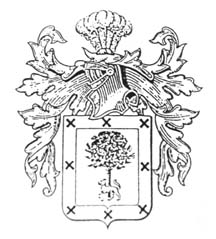 |
VERGARA Este noble linaje guipuzcoano del género de los topónimos, tuvo su primitivo solar en la villa de Vergara, de donde tomó su nombre, extendiéndose después por el resto de las Vascongadas, Navarra, ambas Castillas y Andalucía, hallándose presente en el continente americano desde los primeros momentos de su descubrimiento y conquista. Hubo un importante asentamiento en la anteiglesia de Bedarona, en Vizcaya, y en la Villa de Elizondo, en el Valle navarro del Baztán. Esta última casa solar se denominó de Echandía de Anzamborda y sus miembros fueron reconocidos como nobles, en diferentes años, por los Tribunales de aquel Reino. Esta voz euskera, significa “huerto elevado entre zarzas; pastizal, jaro superior”, según los principales filólogos vascos. |
|
Don Juan Pérez de Vergara, hijo de don Pedro Ibáñez de Vergara, eran vecinos de Tolosa en 1346; don Miguel de Vergara, de Legazpia en 1384; don Pedro López de Vergara, era Escribano de Mondragón en 1392, e igual cargo desempeñaba en Oñate en 1447, don Juan Pérez de Vergara. Todos los lugares mencionados, enclavados en la provincia de Guipúzcoa, donde esta familia probó repetidamente su calidad en diferentes poblaciones en las que fijó su residencia. El hábito de la Orden Militar de Santiago, lo vistieron después de las probanzas nobiliarias correspondientes, los siguientes Caballeros: Don Francisco de Vergara y Alava, de Salvatierra y Ufardín, electo fiscal del Real Consejo de las Ordenes Vitoria, 1651, don Juan Antonio de Vergara y Arriola, Pumarejo y Ramírez de Aguilera, Madrid, 1667; don Antonio de Vergara Azcárate y de Avila, Cádiz, 1650; el Capitán don Miguel de Vergara y de Larretea, Elizondo, Navarra, 1681; don Lucas de Vergara Pardo y Rozas, Capitán de Caballería del Regimiento de la ciudad de Lima, Perú, 1775, y don Antonio de Vergara Urrutia y García de Espinaredos, Sevilla, 1644. En la Orden de Calatrava, fueron admitidos: Don Cristóbal de Vergara Grimón, Realejos, Tenerife, Canarias, 1646 don Lucas de Vergara Pardo y Ponce de León, Fernández Pardo y Tenreiro, Pisco. Perú, 1699, don Juan de Vergara Pardo, hermano entero del anterior Pisco, 1695, y el Capitán de Caballos don Fernando de Vergara y Ruiz del Castillo, Fonzaleche. Logroño, 1713. Don Juan Ruíz de Vergara y Díaz de Alava, Sánchez de Vergara y Díaz de Esquivel, natural de Villoria. Salamanca, ingresó en la Orden de San Juan de Jerusalén el año 1553, después de efectuar las pruebas de nobleza correspondientes. Ante la Sala de los Hijosdalgo de la Real Chancillería de Valladolid, litigaron por la posesión de su nobleza de sangre gran número de personas de esta estirpe entre los años de 1525 a 1771, despachándose gran número de Ejecutorias por diferentes soberanos españoles. Don Carlos II, por su Real Decreto de 18 de enero de 1666, concedió el título de Marqués de Acialcázar a don Baltasar López de Vergara y Grimon, Señor de la villa de Acialcázar, Alguacil Mayor del Santo Oficio y Caballero de la Orden de Calatrava, perteneciente a una noble rama de este linaje afincada en las Islas Canarias. Las armas de la casa primitiva de los Vergara, se organizan así: EN
CAMPO DE ORO, UNA ENCINA DE SINOPLE, FRUTADA DE ORO, Y UN LOBO DE SABLE
ATADO CON UNA CADENA DE ORO AL TRONCO. BORDURA DE GULES, CON OCHO
SOTUERES DE ORO. El Estado Noble de la Villa de Madrid, admitió en su seno en los años que se indican, a los siguientes individuos: Don Francisco de Vergara y su hijo don Felipe, en 1631; don Diego de Vergara Gaviria, en 1661; don Domingo de Vergara y Azcárate, en 1660; don Martín Marcelino de Vergara y Ramón, en 1698; don Manuel de Vergara y Ruiz Basán, en 1713; don Diego Valerio, don Juan Manuel y don Martín de Vergara Sáenz Diez, en 1800, y don José Emeterio y don Juan Manuel de Vergara y Gaviria, Martínez Terroba y Muro, originarios de Torrecilla de Cameros, Logroño, en 1800. El primer Vergara que piso tierra americana, parece que fue don Cristóbal de Vergara, natural de Vergara, que pasó en 1500 a este continente con el Comendador don Alonso Vélez de Mendoza. Don Jerónimo de Vergara, natural de la Isla Española, hoy República Dominicana, hijo de don Jerónimo de Vergara y de doña Juana Hernández de Niño, pasó a la Nueva España en 1527, participando en la conquista de Colima con don Pedro Sánchez Farfán. Don Gaspar de Vergara, natural de Villaflores, Salamanca, donde nació por 1510, hijo del Secretario Vergara y de doña María Hernández Girón, pasó a la conquista del Perú en 1535, haciéndolo después con el Adelantado don Diego de Almagro a Chile, y posteriormente con el Capitán don Diego de Valdivia al intentar nuevamente la conquista de aquel Reino en 1539, fundando la capital de Santiago, en 1541. Fue Regidor de Santiago el año 1548, acompañando al Gobernador en la fundación de la ciudad de Concepción, en 1550, donde tuvo el cargo de Regidor de su primer Cabildo. Don Juan Martínez de Vergara, natural de Gibraleón, Huelva, hijo de don Juan Martínez de Vergara, originario de la villa de Vergara y de doña Isabel Alonso de Gibraléon, fue el progenitor de distinguida rama que hasta hoy conserva su descendencia en Chile. Pasó a la guerra de este territorio en 1601, bajo el mando del Gobernador don Alonso de Rivera, como soldado de la Compañía del Capitán don Ginés de Lillo, obteniendo el grado de Capitán en 1628, disponiendo su última voluntad en Valparaíso e 1668, este Caballero había contraído matrimonio en 1634 con doña Magdalena de Leiva Sepúlveda, en la que procreó diferentes hijos, con rama en Talca que todavía pervive. Don Juan Martínez de Vergara, hijo de los anteriores consortes, nació en Chillán hacia 1645, y de él procede una ilustre familia chilena, de la que son miembros distinguidos: Don Ramón Vergara Donoso, Diputado de Cauquenes y Constitución, 1864-1867; don Francisco de Vergara y Leiva Sepúlveda Alvarez de Toledo, Diputado suplente por Talca al Primer Congreso Nacional de 1811, consorte de doña Maria del Rosario Rencoret Cienfuegos, padres ambos de don Francisco de Vergara Rencoret, Diputado por Talca en el periodo1864-1867, acaudalado propietario, dueño en Santiago de una chacra ubicada en lo que hoy son las calles Vergara y Carrera, quien edificó un suntuoso palacio estrenado en 1876 con un baile de honor del recién elegido Presidente de la República, don Aníbal Pinto Garmendia, donde fueron presentadas en sociedad señoritas de este apellido. En México se estableció en el primer tercio del siglo XVII, don Antonio Urrutia de Vergara, nacido en Villafranca de las Marismas, Sevilla, en 1598, oriundo de la villa de Vergara, quien tuvo los cargos de Alférez, Capitán, Sargento Mayor y Maestro de Campo, dignidad esta última conferida en 1643, poseyó el Hábito de Santiago en 1644, fundo varios mayorazgos y era considerado en su tiempo como uno de los hombres más ricos de México y también famoso por sus innumerables obras de filantropía. En
el padrón de la ciudad de México realizado el año 1689 aparece don
Luis de Vergara, originario de las Islas Canarias, en donde había
contraído matrimonio antes. |
|
| Extract
from BLASONES Y APELLIDOS,
828-page book by Fernando Muñoz Altea In its second edition, the book can be ordered from blasones@mail.com or at P.O. Box 11232, El Paso, Texas 79995 or by contacting Armando Montes AMontes@Mail.com |
|
| Dec
9 Jose Feliciano Dec 9-12 La Posada Mágica Dec 20 Navidades, Ballet Folklorico |
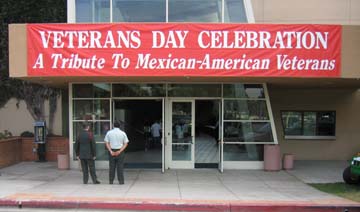
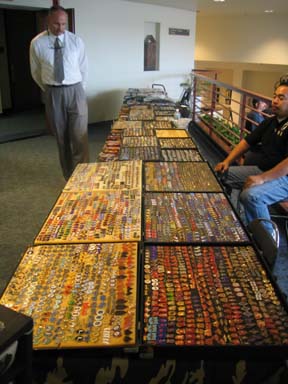
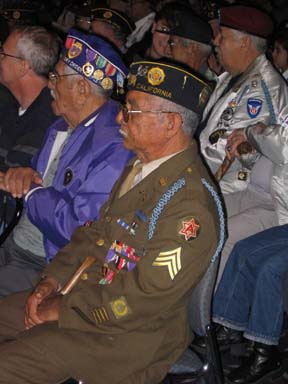
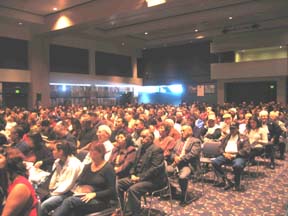
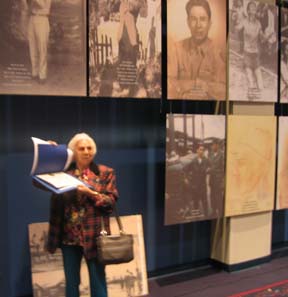
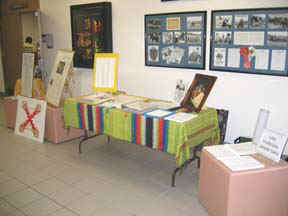
Photos: Celebration of Mexican American Veterans Santa Ana Public Library, 1st Annual Family History |
|
THE PHILHARMONIC SOCIETY OF ORANGE COUNTY |
|
 |
SPECIAL
OFFER!
The Philharmonic Society presents: FIESTA NAVIDAD Tuesday, December 9, 2003, 8pm, at the Orange County Performing Arts Center A lively Christmas tradition featuring Mariachi Los Camperos de Nati Cano, Ballet Folklorico Ollin, City of Angels Ballet, Los Cenzotles, and special guest
JOSE FELICIANO!
Tickets are $69, $45, $30, $20 RECEIVE 50% OFF THE TICKET PRICE (MINIMUM 4 TICKET PURCHASE) Call
(949) 553-2422 for more information |
| 50% OFF TICKET PRICE |
MINIMUM 4 TICKET PURCHASE *limited seating available *no adjustments to prior purchases Mention
code : FIESTA
|
| philsoc@philharmonicsociety.org voice: (949) 553-2422 ext.230 http://www.philharmonicsociety.org | |
|
Grammy Award winner guitarist Jose Feliciano joins mariachi bandleader Nati Cano as part of the tenth annual Fiesta Navidad concert, presented by the Philharmonic Society of Orange County. This year’s concert takes place on Tuesday, December 9, 2003 at 8 p.m. at the Orange County Performing Arts Center. Tickets for Fiesta Navidad are on sale now. Fiesta Navidad, featuring the musicians of Mariachi Los Camperos, takes the audience on a musical journey through the various regions of Mexico while exploring their holiday traditions. The dancers of Ballet Folklorico Ollin colorfully complement the 12 musicians and singers with dances from colonial Mexico. Nati Cano is a pioneer of the mariachi renaissance in both the United States and Mexico. He is credited with taking the mariachi form from the streets to prestigious concert halls throughout the United States. Born in Ahuisculco, Jalisco in 1933 to a family of day laborers, Cano studied the violin at the Academia de Musica in Guadalajara. Since bringing Los Camperos to Los Angeles from Tijuana in 1969, Cano has successfully built the ensemble’s reputation as one of the best mariachis in the world. Most recently, Los Camperos appeared on the PBS television special, Americanos, filmed at the Kennedy Center. Born in Lares, Puerto Rico in 1945, Jose Feliciano has been acclaimed by critics throughout the world as "the greatest living guitarist." Being constantly in demand to appear all over the world, Jose has performed with may top symphony orchestras including the London Symphony, Los Angeles Philharmonic, and the Vienna Symphony. His love affair with music began at the age of three when he first accompanied his uncle on a tin cracker can. When he was five, his family migrated to New York City. Young Jose learned to play the concertina at age six, using a handful of records as his teacher, and at nine, Jose performed at The Puerto Rican Theater. Wanting to venture beyond the accordion, he taught himself to play the guitar with undaunted determination and again, with nothing but records as his teacher for as many as 14 hours a day. Exposed to the rock-and-roll of the 50’s, Jose was then inspired to sing. Jose’s major break in the industry happened in the Spanish market in 1966, the RCA executives in Buenos Aires encouraged Jose to stay there and record an album of Spanish music. The first single, "Poquita Fe" was a smash hit. Jose had taken long-time standards and made them brand new. He re-worked and re-fashioned them with his own style of acoustic guitar artistry and the vocal inflections of his jazz and American influences he had acquired during his adolescence. By the time he was 23, Jose Feliciano had earned five Grammy nominations and won two Grammy Awards for his album "Feliciano!" had performed over much of the world, and had recorded songs in four languages. Jose has recorded over 65 albums in his impressive career. Still humble with all the success he has had, Jose feels that his career is just beginning and that he has just started to share his talents with the world. Tickets for Fiesta Navidad are $69, $45, $30 and $20. Tickets are available at all Ticketmaster outlets, www.ticketmaster.com, and the Orange County Performing Arts Center box office.For more information about Fiesta Navidad, call the Philharmonic Society of Orange County, Chantel Chen at (949) 553-2422, ext. 231, email: chantel@philharmonicsociety.org or visit the website http://www.PhilharmonicSociety.org TICKETS: $69, $45, $30 and $20. Tickets on sale now. Available at all Ticketmaster Outlets, http://www.ticketmaster.com, and the Orange County Performing Arts Center box office. |
|
"Navidades"with Ballet Folklorico
de Mexico de Amalia Hernandez |
|
*** LA POSADA MÁGICA *** |
|
Photos by Stephen
Hussey |
||
 |
|
|
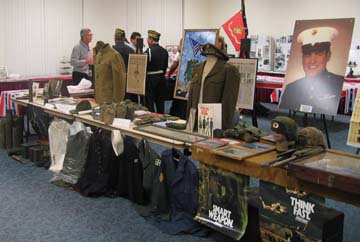 Photos, military items, personal and family treasures displayed. |
 |
 |
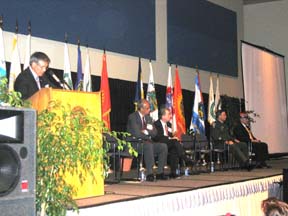
| Chair and Master of Ceremony Hon. Frederick P. Aguirre, Orange County Superior Court Judge | |
 |
 |
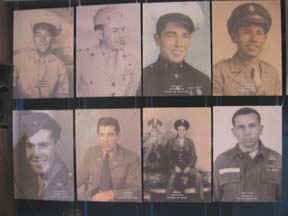 These large photos hung from the walls all around the auditorium. A start your family history area was manned by Dr. Granville Hough, Steve and Yolanda Ochoa Hussey and Mimi Lozano. |
 |
|
|
 |
|
|
|
| Strengthening
Families The East Los Angeles Community Union The Southern California Public Affairs Council |
The North
America West Area Public Affairs Office LA City College Family History Conference LA Consular Family Picnic "Fiesta" |
|
|
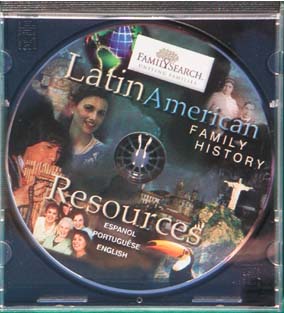 Resources distributed at the luncheon to promote family unity was a CD for family history and a 8½ x11 books (Eng/Span) on strategies for conducting weekly family night. |
|
| To receive complimentary copies of the above items, please contact the Los Angeles LDS Public Affairs Office, Attention: LeAnne Hull, hullla@ldschurch.org Organizations can request sufficient numbers for distribution to their members of the Family Night book in English or Spanish. |
|
On November 21st a luncheon and roundtable
discussion was held at Tamayo's, hosted by The East Los Angeles Community Union and the Southern California Public Affairs Council of The Church of Jesus Christ of Latter-day Saints. This collaboration came about through the thirty-year friendship between Carlos Garcia, a co-founder of TELACU and who now serves as an Area Authority of the Church of Jesus Christ of Latter-day Saints (LDS), and David C. Lizárraga, Chairman of the East Los Angeles Community Union. |
|
The East Los Angeles Community
Union, TELACU was founded in 1968 for the purpose of providing people with tools or empowerment and self-sufficiency through education, job training and business assistance. TELACU has built hundreds of quality, affordable homes, created thousands of quality jobs and lent millions of dollars to families and small business entrepreneurs to enhance and empower the community. TELACU Education foundation has also provided millions of dollars to fund scholarships to more than 400 talented high school students each year. Recently partnered with Brigham Young University Marriott School of Business Management's scholarship program, even more students of merit will have the opportunity to pursue their dreams of higher education. |
|
|
Chairman, President and Chief Executive Officer
since 1974 TELACU (The East Los Angeles Community Union) David C. Lizarraga is internationally recognized as one of the country's top Hispanic leaders. He is sought after as a resource for his guidance on issues involving the Hispanic community, business and civic affairs, inner-city lending and real estate development. For the past 28 years, he has overseen the growth and expansion of TELACU. http://www.nahrep.org/Directors/DLizarraga_Bio/dlizarraga_bio.html |
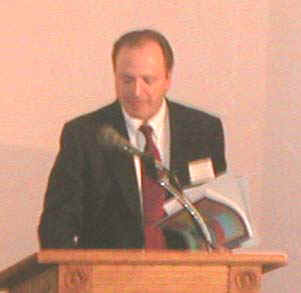 |
The keynote speaker was Elder Lynn G. Robbins, President of the North America West Area of The Church of Jesus Christ of Latter-day Saints. Edler Robbins oversees the administration of the Church's temporal and spiritual affairs in the North America West Area - which includes California and Hawaii - with a membership of nearly 800,000 Later-day Saints. Prior to accepting a full-time calling to serve in Church administration in Salt Lake City, Utah, he was founder and executive of Franklin-Covey. |
|
The Southern California Public Affairs
Council The Council consists of dedicated professionals from the fields of administration, business, journalism, law, education and public relations who volunteer their time and expertise to the creation and development of community service projects and the building of relationships with various community, civic and interfaith organizations throughout Southern California. Reaching from San Luis Obispo in the north to San Diego in the south, literally hundreds of projects each year benefit youth, law enforcement, schools, hospitals, food pantries, shelters and literacy programs - directed toward bettering the quality of life for all within its reach. The North America West Area Public Affairs Office Since 1988, the North America West Area Office of the LDS Church Public Affairs Department has been working closely with eh Consular Corps, major print and electronic media, the film and television industries, the interfaith community, and civic and government organizations throughout California. Partnering with TELACU, this Leadership Roundtable Discussion and Luncheon is the most recent of many programs meeting the interests and needs of the Southern California community it serves. |
|
First Annual Los Angeles City College Family History Conference |
|
|
|
|
| From left to right, SHHAR Board member Viola Rodriguez Sadler, Tesya Harris, Rosetta Williams, Ishmael Arredondo (Director of LDS Public Affairs, Huntington Park,) and Marjorie Higgins, President African-American Genealogical Society, Los Angeles. Photo, November 20, 2003 | |
| "American Originals;
Treasures from the National Archives" will be on display at the Los
Angeles Central Library from October 4th through January 4, 2004.
The exhibit features 25 historic documents, including the Louisiana
Purchase Treaty, the Emancipation Proclamation and Thomas Edison's
patent application fro the electric lamp. the emancipation
Proclamation issued by President Abraham Lincoln in 1862 to end slavery
in the confederacy will be on display four days in December. Source: California African American Genealogical Society, Heritage Newsletter, November 2003 |
|
|
|
|
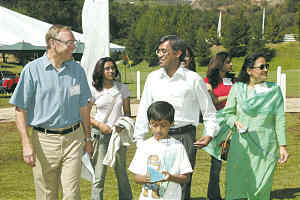
Photo courtesy LDS Church Public Affairs |
Los
Angeles Consular Family Picnic "Fiesta" Sent by David Lewis dclewis@jps.net MALIBU, Calif. — Consuls general and their families from 20 Los Angeles foreign consulates joined the festivities of the fifth annual Los Angeles Church Foreign Consular Family Picnic recently. More than 500 diplomatic employees, families, friends and others enjoyed a "Fiesta" highlighting the culture, food and talent of Central America at the Calamigos Ranch here. Complementing the food, games and activities was a performance by the colorfully dressed BYU dancers "Latin Living Legends." The delegation from Mexico came out of their seats as they applauded the BYU dancers. |
| The Church was honored with special proclamations by Consul Lai Bo of the People's Republic of China, and from Panama's Consul General Fernando Daly. Another highlight of the day was a tribute to international singer Yma Sumac whose career spans several decades. Since she now lives in the Los Angeles area, the Peru Consulate asked if she could be recognized at the picnic and during the program, Ambassador Jorge Arturo Colunge of her native Peru proclaimed her a national treasure and a gift to the world. The 84-year old singer was overwhelmed on the special occasion. She said: "I have never thought that I was great. My gift was always natural and from God. But I worked and I found good teachers, discipline was always my life, but my voice was always a gift. I am so delighted that people in the world have enjoyed it, but I am really a very simple person." Sponsored by the Southern California Public Affairs Council, the picnic was attended by diplomatic representative from Armenia, Austria, Belize, Brazil, Burundi, People's Republic of China, Colombia, Czech Republic, Ecuador, El Salvador, France, Germany, Guatemala, Guyana, Honduras, Hungary, Iceland, Ireland, Indonesia, Jamaica, Latvia, Liberia, Malaysia, Malta, Mexico, Pakistan, Panama, Paraguay, Peru, Philippines, Poland, Romania, Saudi Arabia, Singapore, South Africa, Thailand and Turkey. Consul General Roy G. Young of Belize said, "This is the third time we attended. My grandchildren look forward to it and so do we. I thank the LDS Church for giving us this great opportunity to get to know your people, and for being interested in our country." |
|
New Website for Sergio Hernandez ChicanarteYQue.com http://www.chicanarteyque.com/ The Museum's show, titled, Dia de los Muertos: Reflections of the Soul, includes artworks by artists from through out the Southwest of the United States as well as artists from Mexico. Sergio is also exhibiting artworks at Tia Chucha's Cafe Cultural along with good friend and fellow painter, Mark Vallen. The two will be presenting their works of figurative and social realism from November, 2003 to the end of December, 2003. To find out more about the Mexican Fine Arts Museum and Tia Chucha's showings. Tia Chucha's is located at 12737 Glenoaks Blvd. # 22 Sylmar, CA. Phone: 818-362-7060. For explicit directions to the Café, visit their website, at: http://www.tiachucha.com/dir.html |
|
| Call
for Paper and Participation Reaching for the Sky: The Chicano Struggle Death Index of WWII California Military |
California Deaths,
1905-29 &1930-39 The Historical Text Archive |
| CALL
FOR PAPERS AND PARTICIPATION Spanish and Mexican California: History and Cultural Legacy, April 23-24, 2004 55th California History Institute, sponsored by: The John Muir Center for Environmental Studies, University of the Pacific, Stockton, California johnmuir@pacific.edu http://ets.uop.edu/muir/index.htm The conference organizers are seeking academic participation by scholars who focus on California under Spain and Mexico as well as Mexican-American and Latino issues during the American period. They are especially interested in proposals that help inform such topics as: Spanish impact on the land and California's native peoples Social history of Spanish California Economic enterprise in of Spanish California Case studies of individual communities during the Spanish period Transition to Mexican rule of California Role of the missions during the Mexican Period Social and economic conditions in Mexican California California during the Mexican-American Was California's native peoples and Mexican residents during the Gold Rush California's bi-lingual Constituent and its significance Mexican-American since California since 1850 Latino demographics in modern California Latino cultural persistence in modern California Mexican-American/Latino economic importance in modern California Cultural continuities in today's Latino community within California Presentation of Spanish/Mexican California in Museums and Historical Societies |
|
|
On May 13, 1846, the United States Congress, at the request of President James Knox Polk, declared war on the Mexican Republic. And thus began the Mexican-American War. The war in California ended less than a year later with the Treaty of Cahuenga, signed on January 13, 1847. Another year later, on February 2, 1848, the Treaty of Guadalupe Hidalgo forced Mexico to hand over to the United States 525,000 square miles of landing, including California. Of the treaty's twenty-three articles, four defined the rights of Mexican citizens and Indian people in the territories. Californians were given the freedom to live in ceded territories as either American or Mexican citizens. The new American citizens would be entitled to "the enjoyment of all the rights of citizens of the United States according to the principles of the constitutions." A year later, forty-eight delegates met in Monterey to put together the first California Constitution. For six weeks from September to November 1849 the Constitutional Convention created a constitution that would guarantee rights to all citizens living within California's borders. The final Constitution - written in both English and Spanish - provided that all major legislation in the future would be written in both English and Spanish. Article XI, Section 21 of California's 1849 Constitution reflected the Treaty of Guadalupe Hidalgo's guarantee, declaring, "All laws, decrees, regulations, and provisions, which from their nature require publication, shall be published in English and Spanish." Article II, "Right of Suffrage," Section 1, stated that "Every white male citizen of the United States, and every white male citizen of Mexico, who shall have elected to become a citizen of the United States, under the treaty of peace exchanged and ratified at Queretaro, on the 30th day of May, 1848 of the age of twenty-one years, who shall have been a resident of the State six months next preceding the election, and the county or district in which he claims his vote thirty days, shall be entitled to vote at all elections which are now or hereafter may authorized by law." Section 5 decreed: "Every citizen of California, declared a legal voter by this Constitution, and every citizen of the United States, a resident of this State on the day of election, shall be entitled to vote at the first general election under this Constitution, and on the question of the adoption thereof." Eight Californios - six of them Mexican Californians - represented Hispanic interests at the Convention. They were as follows: 1. Antonio M. Pico from San Jose 2. Jacinto Rodriguez from Monterey 3. Pablo de la Guerra from Santa Barbara 4. M.G. Vallejo from Sonora 5. José Antonio Carrillo from Los Angeles 6. Manuel Dominguez from Los Angeles 7. Miguel de Pedrorena - a native of Spain - from San Diego. 8. José M. Covarrubias - a native of France - representing Santa Barbara. The sad reality of this bilingual convention is that - even before the ink was dry on the official paper - certain Anglo-American interests were taking steps that would lead to a gradual and continuous appropriation of Chicano suffrage. This action, to some people, may have been regarded as the logical prerogative of a conquering people over a conquered people. But the conquerors - once Mexico had requested peace - signed a treaty and wrote a constitution that guaranteed citizenship and voting rights to the Californios who had well-established roots in this region. This had been a promise and - by 1893 - most of these guarantees had been eliminated through legislation and plebiscites. During the first couple of decades, several prominent Californio families of Spanish and Mexican origin who held large tracts of land called ranchos, shared the reigns of power with the Anglos who were arriving in their territory in ever-greater numbers. But, in the First California Constitutional Legislature, which commenced on December 15, 1849 in San Jose, was attended by a nineteen delegates from the northern states of the U.S. Another ten hailed from the southern states, but no natives of California were represented in the Assembly. Jose M. Covarrubias, a Californio landowner in the Santa Barbara area, but a native of France, was one of the few Assemblypersons with any strong California ties going back more than a decade. The first California Senate in 1849 was composed of nine members from northern states, five members from southern states, and only two members who were native Californians. The session last four months and adjourned on April 22, 1850. Less than half a year later, on September 9, 1850, California would be admitted as the thirty-first American state. The first session of the California Legislation after statehood commenced on January 6, 1851 and lasted until May 1, 1951. One of the delegates representing Los Angeles for the Whig Party was a well-known Californian named Andres Pico. Andres - the brother of the last Mexican Governor, Pio Pico - was the Mexican military officer who had fought the American forces under his commander, General Jose Maria Flores. In the early days of 1847, General Flores, recognizing that he was losing control of the situation, turned over command of his forces to his deputy, Andres Pico, and fled south to unoccupied Mexican territory. On January 13, 1847, Andres, seeing his own situation as untenable, met with Lieutenant-Colonel John C. Fremont, the commander of the American forces who was occupying the San Fernando Mission. On this date, Fremont and Andres Pico, Commander-in-Chief of the remaining Mexican forces in California, signed the Treaty of Cahuenga in the San Fernando Valley. Article 5 of the capitulation declared, "equal rights and privileges are vouchsafed to every citizen of California as are enjoyed by the citizens of the United States." Andres Pico became the first Californio to be elected to the Assembly as the representative of District 2 in the 2nd (1851) and 3rd (1853) legislative sessions. He changed his party affiliation to Democrat and was elected to the Assembly from District 2 once again for the 9th (1858) and 10th (1859) legislative sessions. Another Californian landowner, Jose M. Covarrubias, served on the California state assembly off and on from 1849 to 1862, representing Santa Barbara district. For the first three decades after statehood, some Chicanos were able to find the occasional support of their constituency and represent their home districts. Pedro C. Carrillo of Santa Barbara served as a delegate from the 2nd District in 1854-55. Manuel A. Castro of San Luis Obispo served as a delegate from the 2nd District in 1856-57 and from the 6th District in 1863. Esteban Castro from Monterey served in the State Assembly as a delegate to the 3rd District (1857-58) and the 6th District (1863-65). Ygnacio Sepulveda of Los Angeles became a member of the California State Assembly in 1863-65 as the representative of the 2nd District. Ygnacio went on to become a Judge of the Seventeenth Judicial District, one of the first two Superior Court Justices in Los Angeles County. Another Californio, Mariano G. Pacheco served as a representative of California's 3rd District from 1852 to 1854. It was Mariano's brother who stands as the most spectacular Chicano legislator during California's Nineteenth Century. Born in Santa Barbara in 1831, Romualdo Pacheco was a proud Californian who also had roots in the Mexican state of Guanajuato. Señor Pacheco originally served as superior court judge in San Luis Obispo from 1853-1857. Romualdo moved on to serve in the State Assembly in 1853-55 and 1868-70. In 1857, he first started serving in the California State Senate and he continued to serve intermittently, also in 1861-63 and 1869-70. But Romualdo Pacheco's best days were ahead of him. Governor Leland Stanford appointed him as a brigadier general in command of the First Brigade of California's Native Cavalry during the American Civil War. During the Republican State Convention of 1863, Governor Stanford nominated Pacheco for the position of state treasurer. Fluent in both Spanish and English, Romualdo Pacheco was a popular politician who got along well with both Californians and Anglos-Americans. In June 1871 Pacheco received the Republican Party nomination for Lieutenant Governor of California. In 1875, when Governor Newton Booth was elected to the U.S. Senate, Pacheco became the Governor of California. His stay in the Governor's office was relatively short and, in November 1876, Romualdo ran for and was elected to the U.S. House of Representatives to serve in the Forty-fifth Congress (1877-1878), winning by a margin of one vote. He later served in the Forty-sixth and Forty-seventh Congresses (March 4, 1879 to March 3, 1883). Even when Pacheco's career as a representative drew to a close, her served in his later years as a minister to several Central American countries before his death in 1899. Loren Nicholson is one of several authors who has written about Romualdo Pacheco's extraordinary career as a Chicano politician in his 1990 publication, "Romualdo Pacheco's California!: The Mexican-American Who Won," a California Heritage Series (San Luis Obispo: California Heritage Pub. Associates, 1990). However, as the Nineteenth Century wore on, a gradual erosion of Mexican-American's rights as citizens took place. The Fifteenth Amendment of the Constitution of the United States, ratified in 1870, had promised "the rights of citizens of the United States to vote shall not be denied or abridged by the United States or by any state on account of race, color, or previous condition of servitude." In theory this amendment gave all Californian Mexican-Americans and other minorities a voice in both local and national politics. In practice, however, the Fifteenth Amendment was flagrantly violated in the years to follow by the California Legislature. One of the most blatant examples of this was the adoption of the 1879 California Constitution. The revised Constitution officially rescinded the linguistic protective provisions of the 1849 Constitution, providing that "no person who shall not be able to read the Constitution in the English language and write his or her name, shall ever exercise the privileges of an elector in this State." With one fell swoop, the guarantee of bilingual publication of laws was revoked and no documents relating to elections were thereafter published in Spanish. Then, in 1891, Assemblyman A. J. Bledsoe introduced an English literacy requirement as a proposed constitutional amendment in the State Assembly. Bledsoe had earlier belonged to the vigilante Committee of Fifteen that had expelled every person of Chinese ancestry from Humboldt. In his introduction, he lamented the "the increased immigration of the illiterate and unassimilated elements of Europe, and believe that every agency should be invoked to preserve our public lands from alien grasp, to shield American labor from this destructive competition, and to protect the purity of the ballot-box from the corrupting influences of the disturbing elements ... from abroad." Although the Assembly voted down the proposal on January 21, 1891, a flood of petitions from the public favoring the literacy requirement flooded Sacramento. With such overwhelming support from their constituents, the Legislature hastily adopted Bledsoe's proposal as a constitutional amendment subject to ratification at the next general election. In 1894, the people of California voted to approve the English literacy requirement, which henceforth before part of Article II, Section 1. The anti-immigrant attitude - directed at Asians, Mexicans and Eastern Europeans - prevailed into the first half of the Twentieth Century to the point that it was even written into the California election laws. Section 5567 of the California Elections Code, as adopted in 1941, required that elections be conducted in the English language and prohibited election officials from speaking any language other than English while on duty at the polling stations. Such actions violated the equal protection clause of the Fourteenth Amendment and, therefore, were unconstitutional. But the literacy law remained on the books in California until it was challenged in the California courts many decades later. In the landmark court case, Genoveva Castro et al. versus the State of California, the constitutionality of the English literacy requirement was challenged [CASTRO v. STATE OF CALIFORNIA, March 24, 1970. L.A. No. 29693. 2 Cal. 3d 223] In analyzing the causes of the literacy legislation, the Court found that "fear and hatred played a significant role" in promoting California's lawmakers to pass the voting requirement. Although it may have appeared to be "a genuine desire to create an intelligent and responsible electorate," the court concluded "the English literacy requirement was a direct product of the narrow and fearful nativism rampant in California politics at the end of the nineteenth century." For the first half of the Twentieth Century, anti-immigrant legislation and sentiment did, in fact, prevent fair political representation of Chicanos and other minorities groups in California. One of the most devious means of limiting minority representation was a practice known as gerrymandering. In California, legislatures were able to divide a county or city into oddly shaped representational districts to give political advantage to Anglos in elections. Gerrymandering resulted in voter dilution, in which the political representation of a political unified minority was obstructed or diminished so severely that political representation of Latinos was nonexistent. Even a majority Chicano community like East Los Angeles was not able to send Hispanic representatives to Sacramento or Washington, D.C. In some parts of Los Angeles, Chicanos were actually forcibly prevented from working. In 1961, Los Angeles City Councilperson, Edward Roybal, testifying before the Reapportionment and Elections Committees of the Senate and Assembly, complained about the fragmentation of the Chicano communities in L.A. He stressed the importance of creating Hispanic districts. Although most of the redistricting that took place in 1961 resulted in obvious and continued gerrymandering of the Latino community in the Los Angeles area, one congressional district was created that would pave a way for Mr. Roybal to run for Congress. In 1962, Philip Soto and John Moreno, both local Council members, became the first two Latinos from Los Angeles County to be elected to the California State Legislature in the Twentieth Century. They were also the first Latinos to be elected to serve in the State Assembly since the election of Miguel Estudillo of Riverside County in 1907. The election of these two men set a precedent for a long line of Latino legislators committed to the service of their communities. An important factor in the rise of Chicano power in the 1960s was World War II. Hundreds of thousands of Hispanic Americans served in the U.S. military, many receiving numerous decorations for their service. These proud veterans returned to their native land, but still experienced various forms of discrimination and prejudice. But, for the first time in a long time, one piece of legislation presented Chicano veterans with an opportunity for advancement in California. The G.I. Bill Act of June 22, 1944 - or the Servicemen's Readjustment Act [Public Law 346, 78th Congress, Title III, §§500-503, 58 Stat. 284, 291-293 (1944)] - put higher education within the reach of thousands of Mexican-American veterans. The Veterans' Readjustment Assistance Act of 1952 [Public Law 550, 82nd Congress, July 16, 1952, Ch. 875, 66 Stat. 663, 38 U.S.C. 997] provided similar privileges to Korean War veterans. Over the next decade, Mexican-American veterans attended local and nationwide colleges to obtain college degrees. In many cases, these vets were the first members of their families to receive a higher education. Armed with the weapon of education, many of these Chicano veterans became the politicians of the 1960s and 1970s. John Moreno, a World War II veteran, was a Democrat from Los Angeles and served as a representative of the 51st District to the California State Assembly. Unfortunately, in 1964, when Moreno tried to run again, he was defeated in the Democratic Primary by Jack Fenton. In 1964, Soto won reelection by 2,178 votes in the general election. Facing the same opponent in 1966, however, he lost by 4,309 votes, possibly due to boundary changes of his district by the 1966 reapportionment. On November 6, 1962, the Democrat Edward Ross Roybal became the first Hispanic from California to serve in Congress since the 1879 election of Romualdo Pacheco. A native of Albuquerque, New Mexico, Roybal had come to the Boyle Heights Barrio with his family when he was six years old. After serving in the U.S. Army during World War II, Edward Roybal ran for a seat on the Los Angeles City Council in 1947, but was defeated. Soon after, Roybal became one of the founders of the Community Service Organization (CSO). In 1949 the CSO held voter registration and get-out-the-vote drives in East Los Angeles and supported Roybal's bid for election to the Los Angeles City Council in 1949. He won, and was subsequently reelected and served until 1962. Edward Roybal took his seat in the House of Representatives on January 3, 1963 at the start of the 88th U.S. Congress. He would serve for twenty years from the 88th Congress to the 102nd Congress, retiring on January 3, 1993. At the start of his Congressional career, Representative Roybal represented the 30th District from 1963 to 1975. From 1975 to 1993, he served in the 25th District. In 1976, Roybal became one of the founding members of the Congressional Hispanic Caucus. In 1992, he chose not to run for reelection. That year his daughter, Lucille Roybal-Allard, was elected to the U.S. House of Representatives, where she represented part of his old district, which had been divided in redistricting. The rights of Latinos were further reinforced by the passage of the Voting Rights Act of 1965. This legislation, as amended in 1975 and 1982, prohibited the use of voting laws or procedures that discriminated against anyone on the basis of race, color, or membership in a minority language group. The provisions of this act outlawed the literacy tests that had kept so many Latinos out of the voting booth. In 1968, when the California Legislature was once again without Latino representatives, Alex Garcia, a Democrat from Los Angeles, was elected to the Assembly. Mr. Garcia had been a field Representative for Congressman Ed Roybal for five years before he decided to run for office in the State Assembly. Assemblyman García was the lone Latino in the California Legislature until 1970, when Peter Chacón, a Democrat from San Diego, was elected to office. In the 1972, three more Latinos won election to the State Assembly: Joseph Montoya, Ray Gonzáles, and Richard Alatorre. Aware of their unified strength, the five Latinos serving in the State Legislature officially formed the Chicano Legislative Caucus. The establishment of the Caucus marked a significant turning point in the political empowerment of the Latino community. For the first time in California's legislative history, an agenda was established and legislative priorities were put forward to protect and preserve the rights of Latinos throughout California. The Chicano Assemblyman and Congressional delegates of the 1960s and early 1970s forged an important path for other people to follow, and Latino representation slowly, but steadily, increased. After the November 2002 elections, Latinos representatives to Congress numbered seven. In the State Senate, the elections brought the number of Latinos Senators to nine, while Hispanic membership in the Assembly reached 18. The struggle has been long and hard-fought. But, with the Latino population increasing at a significant rate, Hispanic political analysts see that time is on their side. DEDICATION: This work is dedicated to three men who forged a path for others to follow: Philip Soto, John Moreno, and Edward Roybal. Suggested Readings: Ralph Guzman, "Politics and Policies of the Mexican American Community, in "California Politics and Policies," 350, 367 (Eugene P. Dvorin & Arthur J. Misner, eds., 1966). Lawrence (or Larry) Kestenbaum, "The Political Graveyard: California: State Assembly, 1850s." http://politicalgraveyard.com/geo/CA/ofc/asmbly1850s.html [Last full revision was done on September 1, 2003]. Library of Congress: "Hispanic Americans in Congress, 1822-1995: List in Chronological Order." http://lcweb.loc.gov/rr/hispanic/congress/chron.html Mexican American Legal Defense and Educational Fund and William C. Velasquez Institute, "California Congressional Redistricting Plan" (Submitted July 17, 2001, Los Angeles). http://www.maldef.org/publications/pdf/Congressional_Plan_Supplement.pdf |
Death Index of WWII California Military Sent by Bob Smith Regriffith6828@aol.com Here is a basic listing of some of the service members who died in WWII from California, listed by counties. The National Archives has the listing of all of the World War II dead according to different categories: one is for Navy, Marine Corps and and Coast Guard; the other for Army and Air Force. The war dead are listed according to state; however the index is not totally complete. All California casualties in the Navy, Marines, and Coast Guard, . http://www.archives.gov/research_room/arc/wwii/navy_marines_ coast_guard_casualties/california.html#list This link is for the army and Air Force dead from every county in Calilfornia. http://www.archives.gov/research_room/arc/wwii/army_aaf_honor_list/california.html |
California Deaths, 1905-29 &1930-39 Sent by Joan De Soto Work has begun in rescanning the 1905-29 &1930-39 CA Deaths from the original source documents. Expected completion time in second quarter 2004 an over laping three-camera-pass ie a three-framed document per page x.42 magnified or roughly doubled the present magnification. A partial release is expected shortly. You can see an example here: http://www.vitalsearch-ca.com/gen/03131-00.htm For Premium Search Members, you can also search year-segment 1905-20, pages 3131 thru 4979 (“Ely” to about “Holland”) by visiting this link: http://www.vitalsearch-ca.com/gen/restrict/_2level/ca/cade905-29_3zm.htm |
The Historical Text Archive, Arnold J. Mabry http://employees.oneonta.edu/jacksorh/colonization/index.htm Another great find, sent by Joan De Soto This subdivision on Colonial Mexico has 30 files . . . Collection of essays and links,
|
|
Basque Library database project launched Center for Basque Studies, University of Nevada, Reno |
Basque
American versifiers Shooting from the Lip All-Spanish Christmas Celebration, |
Basque Library database project launched Work has begun on a bibliographic database of materials on Basque language, culture, and history, which will include records for about 30,000 books, articles, documents, and films from 1995 to the present. Full text of the materials will be linked to the database when possible. Information will be accessible to the public via the Internet, with multilingual searching capabilities. The database is funded by a two-year grant to the University Libraries in the amount of $248,000 awarded by the National Endowment for the Humanities. |
|
Center for Basque Studies, University of Nevada, Reno Newsletter, now online at http://basque.unr.edu/ Oroitzapenak Memories Voices from Basque America http://basque.unr.edu/oralhistory |
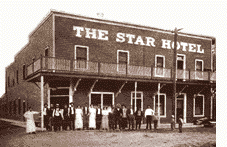 |
|
Basque American versifiers |
|
|
|
|
|
From left: Jesus Goñi, Jesus Arriada, Johnny Curutchet, and Martin Goikoetxea |
|
| The
National Endowment for the Arts recently awarded a National Heritage
fellowship to four Basque American versifiers, or bertsolaris.
The fellowships are the nation's highest honor for folk arts.
These four bertsolaris attended the Center's conference last May
on Old Songs, New Theories: A Symposium on Oral Improvisational
Poetry.
"We are proud to honor these master artists whose compelling work demonstrates the extraordinary diversity and depth of our nation's cultural wealth," NEA Chairman Dana Gioia said in the away announcement. “These talented individuals are not only renowned practitioners of their art forms, but also teachers and preservers of artistic heritage, passing on their skills and passions for future generations.” Zorionak! to these men who are carrying on a unique Basque tradition. |
|
|
|
Center for Basque Studies |
The National Endowment for the Arts recently awarded a National Heritage Fellowship to four Basque American versifiers, or bertsolaris. The fellowships are the nation’s highest honor for folk arts. The four honorees are Jesus Arriada of San Francisco; Johnny Curutchet of San Francisco; Martin Goicoechea of Rock Springs, Wyoming; and Jesus Goni of Reno, Nevada. These four bertsolaris attended the Center’s conference last May on Old Songs, New Theories: A Symposium on Oral Improvisational Poetry. |
| http://basque.unr.edu/02/2.1t/2.1.1.news.htm#Urazandi | ||
|
This book is a compilation of the bertsoak (improvised Basque verses) of North American bertsolariak (improvisers) including Johnny
Curuchet, Jesus Arriada, Jesus Goñi, and Martin Goikoetxea. Each verse appears in the original Euskara and also in English translation. The book’s introduction includes an explanation of the art of the bertsolari and some verses of Fernando “Xalbador”
Aire, a renowned bertsolari from Urepele in the Basque Country, about his visit to North America. Compiled, edited and translated by Joxe Mallea-Olaetxe Published by North American Basque Organizations ISBN: 0-615-12403-8; hardcover, 437 pages, $24.95. The book may be ordered online from the NABO web site at: http://www.basqueclubs.com. Or you may order by mail by sending $35.95 ($24.95 plus shipping/handling) in check or money order to NABO, 705 Nicklaus Lane, Eagle, ID 83616. |
||
|
Church Opens Doors of Marriott Center to Hispanic Community for All-Spanish Christmas Celebration, SALT LAKE CITY — The Church of Jesus Christ of Latter-day Saints has announced a Hispanic Christmas Celebration at the Marriott Center on the campus of Brigham Young University in Provo, Utah, on Sunday, 14 December, at 7:00 p.m. It is the second year in succession that the Church has staged such an event — a reflection of the growing importance of the Spanish language within the Church. Conducted entirely in Spanish, the program will feature music by BYU's Living Legends and the Young Ambassadors, as well as a Hispanic choir. The event is free to the public, and tickets are not required. This celebration is for everyone in the Hispanic community — not just Latter-day Saints. |
| Vicente
Martinez & Procora Vergara Family U.S. recruits professionals in Mexico Oñate Statue renamed The Equestrian Enlace con Sevilla Origen de Nuestras Raíces |
Univ of AZ, Library's Southwest
Electronic Text Desert Documentary Apache Tactics Spanish Colonial Tucson Computer and Internet Use in Education |
|
Vicente Martinez and Procora Vergara Arizona Family |
| Susan/ Faustino Sandoval 1)Johanna/ Dale Butcher i)Rachel/ Daniel Butcher 2)Michael i)Angela ii)Anthony iii)Michael R. iv)Avita v)Vincent vi)Tyler 3)Margie/
|
Helen/ Shorty Gonzales 1)Kathy/ Fritz Rush i) Maria/ a) Angel 2) Cynthia 3) Caitlin |
Jose/ Jayme Deppe 1) Capri/ Pablo Astiz i) Marisa ii) Adrian iii) Ana 2) Mario 3) Neo 4) Tanya/ Glen Foster 5) Ancesl/ Gina Lombardi i) Santiago ii) Olivia 6) Rene/ Amy Waterman i) Isabel ii) Ria |
Maria/
1st Ed Phelan 1) Clay/ Doreen 2) Tess/ Svekovnova 3) Cindy/ Rudy Gutierrez i) Nathanial ii) Jessica Maria/
2nd 1)
Rita/ |
Matilde/ Bill Liebe 1)Mitchelle/ Rick Taylor i) Eric/ Robyn Doubt ii) Rebecca iii) Kyle 2) Rod/ Holly 3) Melissa/ Cory Rade i) Ryan ii) Gibson 4)
Camilla/
|
Cecilia/ Pedro Cuevas 1) Pedro 2) Clara/ Lee Addis |
Eddie Vergara (nephew)/ Ricci 1) Steven/ Christy i) Brynna 2)
Nanci/ 3) Vincent
|
|
For information on the family contact Capri Martinez Astiz, Capri.Martinez@marriott.com |
Extract: U.S. recruits professionals in Mexico By Louie Gilot, El Paso Times, November 12, 2003 http://www.hispanicvista.com/html3/111403ln.htm The Dallas Independent School District was in Juárez late last month seeking bilingual professionals to turn into pre-K teachers. The week before, a staffing company under contract with U.S. hospitals courted Juárez nurses to go work in the United States. When America needs workers, it often turns to Mexico. In the past, farm hands and other manual workers have been welcomed. These days, educated professionals are actively sought after to fill specific shortages. The Dallas Independent School District, where about a third of the students are predominantly Spanish speakers, started taking recruiting trips to Juárez and other Mexican cities last year because the district needs 200 to 300 new bilingual teachers a year while only 200 get certified in the state annually. So far, recruiters have hired 57 people from Juárez to become pre-kindergarten to second-grade teachers once they pass the Texas Examinations of Educator Standards test. In Mexico, they were university professors and engineers, and many have master's and doctoral degrees, although that won't necessarily help them in their new jobs, district officials said. "What's important is the ability to adapt," said Nell Ingram, the program coordinator. Better pay When the Chihuahua state unemployment office in Juárez started recruiting nurses for the United States on behalf of Global Medical Staffing, a Mexico City-based staffing firm, 500 nurses applied in less than two weeks. For many Mexican professionals, working in the United States means a huge pay raise. Nurses make as little as $5,000 a year in Mexico, compared with $36,000 a year in the United States. At the Dallas school district, teachers get a starting salary of $41,500 a year. Foreign workers can obtain temporary working permits from U.S. immigration officials if they are sponsored by an employer. They can bring their families with them and later apply to become permanent residents and naturalized citizens. An unlimited number of agricultural workers are allowed to work in U.S. fields each year, and up to 500 registered nurses get working permits, among others. Even Republican legislators are pushing for decriminalization of immigrant labor because the demand for it remains so high. Three Arizona GOP lawmakers -- Sen. John McCain and Reps. Jim Kolbe and Jeff Flake -- have sponsored a guest worker measure to allow millions of foreigners, including undocumented immigrants already in the United States, to live and work here with temporary visas for up to six years. |
|
Oñate Statue renamed The Equestrian In El Paso, Oñate name gets boot - Council gives $713,000, renames controversial statue By Charles K. Wilson, El Paso Times, 11- 5-03 http://www.hispanicvista.com/html3/110703mn.htm The man credited with opening the Southwest to colonization and naming El Paso in 1598 is creating controversy for the El Paso City Council in 2003. The council on Tuesday voted 4-3 to remove the name of Don Juan de Oñate, a Spanish conquistador whose travels have sparked intense debate about his conquests, from a yet-to-be-completed statue once envisioned to commemorate his name. After 2 1/2 hours of debate on completing the 37-foot-tall sculpture of Oñate on a horse, the council voted 4-3 to call the statue the Equestrian and to give $713,000 to the struggling project. The sculpture's new name is intended to mark the arrival of Spanish culture in the Southwest, but critics of the council's action said it disregards history. "It's like saying Columbus didn't discover America," said Sandra Braham, a member of the 12 Travelers committee, which is the project's sponsor. To get the money to finish the statue -- parts of which are in artist John Houser's studio in Mexico City while others are ready for completion in a New Mexico foundry -- project supporters survived an attempt to kill the sculpture outright and an onslaught of derisive commentary on Oñate, who led the first Spanish expedition through "El Paso del Rio del Norte" in 1598. The issue brought Texas Rep. Norma Chávez and about 20 others to advocate that the project be killed. Historian Leon Metz and a half-dozen supporters urged the council not to abandon the effort initiated in November 1992. After refusing to drop the project on a 3-5 vote, the council voted 4-3 to revive it. The project has run out of money with the work 70 percent complete, members of the 12 Travelers told the council. The board has raised and spent about $1.25 million in private money. The amended contract requires the pieces of the statue to be completed by Aug. 31 and the statue to be finished by March 2006, nearly eight years after its initial deadline of April 25, 1998. "I have come forth now," said Chávez, speaking individually but reminding council that she represents 134,000 people, "because of what the statue of Oñate symbolizes and because of the stain of oppression that his reckless image will have on our community, consciously and subconsciously." Chávez led a parade of speakers who called Oñate a murderer, a kidnapper, a terrorist and more. Opponents of the statue waved black-and-white signs saying, "Oñate? My foot!" during the debate, referring to accounts that he chopped off the feet of some people to keep them from fleeing their servitude. Metz countered that Oñate conducted the First Thanksgiving in North America at a site probably near present-day San Elizario. "He led the first European settlers here," Metz said. "He gave us our name." Though the vote was proposed as a resolution to move the project from Downtown to the airport, it quickly evolved into a debate over Oñate's behavior. In the end, the council set new dates for completing the final components of the project as well as banning Oñate's name from the work. An additional $200,000 will be needed to build a base for the statue, airport Director Pat Abeln told the council. "We got 90 percent of what we wanted," said local artist and 12 Travelers co-founder Antonio Piña, who brought photos of the completed faces of Oñate and the horse. "The work will get done. That's the way we've been doing it for 13 years. This will make it a reality." Petuuche Gilbert, an Acoma Indian, gave an emotional appeal to stop the project. "I speak on behalf of Acoma men who had their feet severed and who were then enslaved for 20 years," said Gilbert, citing historians who said Oñate was ruthless in his pursuit of New World treasures. "It is simply wrong to honor a person who caused so much grief, pain and destruction." Yselta del Sur Pueblo Tribal Gov. Arturo Senclair said in a letter to the council that "the time for debate on the relative merits of the project has long since passed." Nonetheless, council members also turned the debate over whether Oñate was worthy of greeting El Paso visitors at the airport into a question of whether this would be the last time the council would see the issue -- or the statue. In the end, a desire to see the project through kept the statue alive. Longtime civic activist Debbie Hester said the project would be a benefit to all of El Paso. "When I look at the effort, the substance and the support of what it means for the 12 Travelers board to raise over a million dollars," Hester said, "it speaks deeply and significantly to what the majority of our citizens would like to see in El Paso." Charles K. Wilson may be reached at cwilson@elpasotimes.com Article URL: http://www.borderlandnews.com/stories/borderland/20031105-41230.shtml (In accordance with Title 17 U.S.C. Section 107, this material is distributed by HispanicVista.com (www.hispanicvista.com) without profit to those who have expressed a prior interest in receiving the included information for research and educational purposes.) |
Enlace con Sevilla Sent by Roberto Camp mexicomarketing@yahoo.com UNESCO Recognition of the Camino Real Tierra Adentro A major digital genealogical interface between Paso del Norte y el Archivo General de las Indias Visita de la Familia Real a Paso del Norte |
Origen de Nuestras Raíces http://www.gomezrobledoydelbarrio.com [[ Beautiful website with links, photos, poetry, historical, and genealogical information. From the website you click to more information. The information is very diverse, migration from Europe, and stops along the way to the U.S.. Note the list of surnames.]] GOMEZ ROBLEDO |
|
Lista de
Apellidos |
The University of Arizona, Library's Southwest Electronic Text Center http://www.library.arizona.edu/swetc/projects.html Sent by Joan De Soto |
|
|
|
About The Center:
Significant changes in publishing have occurred as a result of electronic publishing technology and its blending with networked information. Since the summer of 1996, librarians have complemented other electronic publishing projects by creating electronic texts from print materials. In some cases, the electronic texts were part of larger World Wide Web exhibits. In others, they represent an electronic version of rare, out-of-print works related to the Southwest. There are 41 books in this selection of Electronic Text books |
FRONT COVER, Illustrated by José Cisneros, El Paso TABLE OF CONTENTS From the site you can link to each of the following. DOORWAYS TO THE PAST: AN INTRODUCTION 1 1. ANZA IN ARIZONA 5 2. A NEW BEGINNING IN THE MISSIONS 8 3. APACHE TACTICS 11 4. BUILDING BEGINS AT TUCSON 16 5. MINING ACTIVITY EXPANDS 19 6. THE FOUNDING OF TUCSON 25 7. ALLANDE DEFENDS HIS HONOR 27 8. TUBAC REVISITED 31 9. THE YUMA MASSACRE OF 1781 35 10. ALLANDE'S MILITARY MEMOIR 41 11. ALLANDE VINDICATED 49 12. ARIZONA'S CONTRIBUTION 51 13. ALLANDE'S FAREWELL 57 14. ARAVAIPA APACHES SETTLE AT TUCSON 64 15. THE BUILDER OF SAN XAVIER REPORTS 65 16. A PIONEER REMEMBERS 72 17. SPANISH ARIZONA IN 1804 82 18. TUCSON'S FIRST MURDER TRIAL 93 19. MILITARY AWARDS OF 1817 111 20. SPANISH TUCSON'S LAST ROSTER 133 NOTES |
|
Chapter 3: APACHE TACTICS http://dizzy.library.arizona.edu/desertdoc/apache.htm Why did the Spaniards decide to establish a fort at Tucson? The two documents translated in this section answer that question. The first is a letter of Juan de Pineda, governor of Spanish Sonora, transmitting to the viceroy information received from José Antonio de Huandurraga, ensign at Tubac. Huandurraga was endeavoring to defend San Xavier and the Indians living near the future site of Tucson, operating from the royal Spanish presidio at Tubac - a position obviously too far south. His captain, Juan Bautista de Anza, was absent trying to put down the Cerro Prieto rebellion even farther south. The Huandurraga report reveals an Apache pattern often repeated before the founding of Tucson: a raid on San Xavier and then a running battle through what is now east Tucson to the pass between the Catalina and Rincon Mountains. The ambush at La Cebadilla (now called Redington Pass) was evidently not part of the pattern but a highly successful surprise move by the wily Indians. Though the Tubac report declared that two soldiers stationed at San Xavier were killed in the ambush, Garcés reveals in the second document that they were only captured. page 11 Whether they were dead or captured, the fort at Tubac was too far away to do much about them, or even to know exactly what was going on. Garcés had been at San Xavier less than a year when he composed the document, a report to Governor Pineda on yet another attack on San Xavier. The letter is full of ethnographic detail on both the attacking Apaches and the defenseless Pimas of the Tucson area. His implication throughout, corroborated by his first-hand observations, was that Tucson needed a presidio. Horcasitas, October 17, 1768. TO THE VICEROY, MARQUES DE CROIX I have just received word from the ensign of the Tubac presidio of an Apache attack on the livestock at San Xavier Mission. The raid occurred between eight and nine o'clock on the morning of October the second. The two soldiers stationed at the mission, together with the warriors and native governor of the San Xavier village, gave chase and recaptured some of the cattle. In the hope of recovering at least the mares of the horseherd as well, they engaged the fleeing Apaches in a running battle all the way to La Cebadilla pass. Another band of Apaches, unbeknown to our forces, had joined the fugitives and waited in ambush at the pass. Our side defended itself with great valor and the two soldiers, together with the native governor of San Xavier, gave up their lives in the battle. When word of the raid finally reached Tubac, the ensign and twenty-five soldiers went in search of the enemy. JUAN DE PINEDA page 12 San Xavier del Bac, February 21, 1769. TO GOVERNOR JUAN DE PINEDA. Around eight-thirty yesterday morning Apaches attacked this village of San Xavier and at the same time began rounding up the horses and cattle that had just been let out of the corral. The few of us who were here began to defend the village. In the exchange of arrows one Pima was wounded in the arm. The Apaches were thirty or more in all, most of them mounted on good horses. The few who came in afoot were even more effective, dashing into and behind the native huts nearest the church to take advantage of the safety of these vantage points to pin down anyone who might be in the church and the attached convento where our escort of two soldiers stay. They kept hurling their lances into the doors of both church and house to discourage exit from these strategic buildings. The attack was over in a matter of minutes, the time it took to make off with the livestock, which was most of what we had. There remain only three yoke of oxen, a little over thirty head of cattle, twenty mares and a few colts. We were able to save our riding horses, which were out to pasture. I gave orders that they be brought in and only one or two were missing. I also insisted that we give chase immediately, but because of the number of Apaches and the superiority of their horses nothing could be done. Word was sent to the mountains where most of the San Xavier villagers are gathering agave. The Tubac presidio was also advised. The ensign there assures me that he is preparing a detachment for a retaliatory campaign and urges me to call everyone back to participate. Of course all of this will be done, but we simply do not have the forces needed for effective control of the Apaches here. page 13 There were formerly two Pima villages between Tucson and the Gila River settlements, but last August both of them were abandoned due to Apache pressure. The Gileño Apaches will now sweep through that gap down into the Altar Valley. Something must be done! If the Pima rebels of the Cerro Prieto have meanwhile come up to influence their Papago cousins, we are in even greater trouble. Last year I wrote you a letter which through someone's carelessness never got past Guevavi. In it I explained how things are here at San Xavier and Tucson. During the greater part of the year my escort of two soldiers, the Pima in charge of the livestock, the native governor of the village and myself are practically alone in the village. The rest of the people are either working their fields along the river or gathering agave in the mountains. During the agave seasons the Tucson village is completely abandoned. This was the reason for yesterday's raid. Those thirty Apaches came right through Tucson. They are so overconfident that they have abandoned the element of surprise, for as they left San Xavier, they drew three circles in the sand boasting that in three moons they would return.3 Then they shouted that the Apache band that lived east of San Xavier and had carried off the two mission soldiers last year were planning to attack San Xavier at night.4 Now you know, Sir, something of the seriousness of the situation. We have great hopes that with the momentarily impending arrival of the visitor general of the Indies, José de Gálvez, to this province of Sonora, your advice to the visitor will provide a definitive remedy to this problem. Fray Francisco Garcés page 14 |
|
Spanish Colonial Tucson http://southwest.library.arizona.edu/spct/index.html Sent by Joan De Soto Chapter 9. Peace With the Western Apaches, 1793–1821 Up: Contents Previous: 8. Harassing the Western Apaches, 1782–1792 Next: 10. Peacetime Presidio, 1793–1821 [page 97] THE ROYAL SPANISH GARRISON AT TUCSON in itself created a bi-ethnic population there. It also led to adding yet another distinctive Native-American component, Apaches, to the local populace. This ethnic increment can be considered to be the best possible index of the resounding success of the military reforms that King Charles III had ordered in 1772, the establishment of the Frontier Provinces by José de Gálvez, and the policy shift that Viceroy Bernardo de Gálvez had instituted on the northern frontier of New Spain in 1786. The Spanish colonial system succeeded so well with these policies that southern Apache bands settled peacefully beside royal posts, including San Agustín del Tucson, ending centuries of inter-ethnic conflict. The Apachería Achievement The magnitude of this Spanish colonial achievement was so great, yet remains so little known to residents of old Apachería today, as to bear summation here. One historian has pointed out how rapidly Apache resistance crumpled after Gálvez's pacification policy allowed objective measurement of the effectiveness of the presidial forces of the Frontier Provinces following King Charles III's 1772 model based upon recommendations by the Marqués de Rubí and José de Gálvez.1 Some Chiricahua Apache bands sued for peace as early as September of 1786, and moved to Bacoachi in the eastern Sonoran mountains. Other Chiricahua bands followed suit, so by March of 1787 over 250 Chiricahuas under Chief Tisonsé lived at Bacoachi. They even began presenting their infants for baptism.2 After a brief test of Bacoachi Spanish hospitality, another chief the Spaniards called El Chiquito led his band back into the Apachería, and fended off Spanish overtures and military pressures alike.3 By mid-year of 1786, several Chiricahua bands still ranging freely sent emissaries to either Bacoachi or Tucson to excuse their failure to accept an amnesty offered by Don Jacobo Ugarte y Loyola, commandant general of the Frontier Provinces.4 Mimbreño Apache leaders appeared at Janos presidio in Chihuahua seeking peace in March of 1787. Commandant General Ugarte required the Mimbreño bands to settle near San Buenaventura. By late May, 800 to 900 Mimbreños had congregated there.5 Then they fled back into the Apachería where they eluded a number of Spanish search-and-destroy missions later that year.6 Mescalero Apache bands settled meanwhile at El Norte presidio, only to flee after Colonel Juan de Ugalde attacked them. [page 98] Over half of the Chiricahua Apaches at Bacoachi fled on 20 June 1787.7 The independent Chiricahuas attacked those remaining at the post on 7 February 1788, lancing to death Chief Tisonsé.8 Viceroy Flores seriously modified the Gálvez Apache policy in 1788,9 and more Chiricahuas deserted Bacoachi in September. Captain Echegaray replaced them by others who surrendered during his campaigns in the Apachería.10 Continued Spanish military thrusts into Apache territory brought Mimbreño Apache leaders to Janos seeking peace again in March of 1790. Consequently, one Mimbreño band led by Chief Ojos Colorados (Red Eyes) settled there at the end of May.11 The earliest known settlement of Western Apaches at San Agustín del Tucson presidio occurred in January of 1793.12 Certainly the presidio seethed with excitement on 5 January, when these enemies of centuries appeared to ask for peace. Nautilnilce, recognized by the Spaniards as principal chief of the Vinictinines, or Arivaipa Band, brought in 51 men, women and children. Forty-three more individuals followed the next day.13 This chief later persuaded 13 more Apaches to settle in peace at Tucson on 19 January,14 bringing the total Western Apache population to 107 persons. That was a significant increment to the local population, especially in view of the continued decline in numbers of native Northern Piman-speaking Indians. By the first month of 1793, settlement of Apache bands seeking peace at various frontier posts had become more or less routine to superior officers, as the tone of the following dispatch from Manuel de Echegaray, by then promoted to commandant of arms of Sonora, indicates: Sir Brigadier Don Pedro de Nava15 Sir Commanding General, The commander of the Presidio of Tucson, Don José Ygnacio Moraga, on the 6th of this month informed me that the day before the Arivaipa chieftan Nautilnilce had presented himself in peace with thirteen warriors and some women and children to the number of fifty-one persons. He informed said captain that the following day the rest of his relatives would come in, as was effectively verified on the day set by forty-one persons, according to the dispatch of the same commander on that date. In consequence of all this, I am sending that commander the advice which has appeared to me best in order to keep these newly reduced Indians happy, inasmuch as the tranquility of the towns of Upper Pimería depends on it. I have ordered them rationed in conformance with that which Your Honor provided in your Instruction of the 12th of October of 91, that the ordinary people be taken care of with some sweetmeats and that the captain who is the leader of this tribe known as the Vinictinines should be taken care of with distinction and should be given a gift of clothes. Said captain sent me one of the Apaches of this band in order to gain my permission for their admission to peace, and with it Your Honor's superior approval. I have outfitted him completely with clothes. I find that all the reduced Apaches are of good faith, having shown the commander of Tucson the ears of eight warriors whom Chief Nautilnilce killed, evidencing their faithfulness. [page 99] The ensign Don Agustín Márquez, who belongs to the command of that presidio, is now here as quartermaster for that company. I have given him such advice as has seemed to me in order so as to consolidate the peace which those Indians have contracted, and to assure myself of a successful outcome, inasmuch as it is so important to the good of the state and the province. Within a few days I shall go to that presidio so I can inform Your Honor of the results with more certainty. In order that the necessities for the subsistence of those Indians shall not be lacking at the place in the interim before the superior measures of Your Honor take effect, I have taken my own steps, one of them being that of purchasing fifty head of cattle to ration them, because without this prerequisite these avaricious ones would live discontented, seeing that they had not bettered their luck. I am hoping that the prudence and long experience of Your Honor shall have the grace to approve these measures, with the assurance that I am moved to them only by the zeal which I feel for the good of His Majesty's service. God preserve Your Honor for many years. Arispe. 21 January 1793. MANUEL DE ECHEGARAY16 Beef and Sugar Peace By 1793, the colonial policy toward “Peaceful Apaches” had been well worked out. The Chiricahua Apaches who settled at Bacoachi late in 1786 had stimulated Spanish colonial officials to take a series of actions that set precedents for treatment accorded later bands settling at other presidios. Quite clearly the “Peaceful Apaches” utilized the threat of their abandoning settled life beside the frontier posts to obtain increasing economic support from colonial officers. The first enumeration of 68 Chiricahua Apaches at Bacoachi showed them receiving a relatively inflexible almud of rations per person, or two almudes per family, regardless of household numbers. The nature of the rations was not even specified. Probably it consisted of cereal grains. The governor of Sonora and Sinaloa, Pedro Corbalán, established at the beginning of the program the practice of issuing Indian rations weekly. His initial order to the man who became in effect Indian agent to the peaceful Chiricahua Apaches at Bacoachi set sufficient bureaucratic precedents to merit translation here: Beginning next Sunday, that is three days from now, Your Honor shall provide those rations indicated on the attached enumeration to the Apaches who are reduced to Peace and settled in that Pueblo up to that date. For that purpose, you shall lay hands on such grains as you may have at your disposal, upon a reimbursable basis, or, with the idea that their value shall be paid at the current price at the expense of the Royal Exchequer. In case Your Honor does not have enough grain, he shall solicit it on loan from the stores of that garrison, under the same arrangement for reimbursing it as may be convenient, or he shall purchase it at the lowest price that may be possible from whomever has it. You are advised that a list must be drawn up weekly showing the family heads who [page 100]receive rations, expressing their names, in order to know what increases or decreases may occur in their number in the future. These are to be remitted to me monthly for my use. God protect Your Honor for many years. Arizpe, first of December of 1786. PEDRO CORBALÁN17 Whatever rations the Spaniards initially provided the Chiricahua Apaches at Bacoachi, by January of 1787 they had already settled on the pattern that continued. Wheat constituted the mainstay of the ration, supplemented by maize — about five measures of wheat to three of maize. Unrefined brown sugar or panocha such as still is sold in Latin American markets in cone-shaped blocks tempted the Apache sweet tooth. Apparently each person received half a cone of panocha each ration-day. Finally, the royal tobacco monopoly sold the Indian agent packs of cigarettes to be issued to the Apaches. Chief Tisonsé, who received the given name “Leonardo” after the Indian agent, garnered two measures of wheat, two of maize, four reales worth of panocha and three of cigarettes for eight persons in his family.18
Excellency the Viceroy of this New Spain, the Count of Venadito, The Story of a Boy |
|
Two New Reports Look at Computer and Internet Use in Education Internet access soars in schools, but “Digital Divide” still exists at home for minority and poor students. HispanicVista, October 29, 2003 While public schools have made huge improvements in providing computer and Internet access, minority and poor students lack computer access outside of regular school hours, according to two new reports released today by the department's Institute of Education Sciences (IES). "The pace of technological change is truly astounding and has left no area of our lives untouched, including schools," said U.S. Secretary of Education Rod Paige. "These reports are good news and show how much progress has been made in connecting nearly every school in the nation to the Internet. But there are still big differences in home computer use that need to be addressed before we can declare the digital divide closed. "We need to address the limited access to technology that many students have outside of school. There is much more we can do. Closing the digital divide will also help close the achievement gap that exists within our schools." The No Child Left Behind Act continues to support enhancing education through technology and helps to support those students who need it most. Approximately $700 million has been appropriated for educational technology programs in 2002 and 2003. The first report, "Internet Access in U.S. Public Schools and Classrooms: 1994-2002," is an annual department survey conducted to report on the availability and use of technology in schools. Among its findings: · In 1994, 3 percent of classrooms in U.S. public schools had access to the Internet; in the fall of 2002, 92 percent had Internet access; in 1994, 35 percent of schools had access; and in fall 2002, 99 percent had access. · In 2002, the ratio of students to instructional computers with Internet access in public schools was 4.8 to 1, an improvement from the 12 to 1 ratio in 1998 when it was first measured. · In 2002, the ratio of students to instructional computers with Internet access was higher in schools with the highest poverty concentration than in schools with the lowest. Despite this gap, in schools with the highest poverty concentration, the ratio improved from 6.8 students per computer in 2001 to 5.5 in 2002. · In 2002, 53 percent of public schools with access to the Internet reported that they made computers available to students outside of regular hours (96 percent after school, 74 percent before school, 6 percent on weekends). · Eighty-six percent of public schools reported that they had a Web site or Web page (75 percent in 2001). · Eighty-seven percent of public schools with Internet access indicated that their school or school district had offered professional development to teachers in the schools to help them integrate the use of the Internet into the curriculum in the 12 months prior to the survey. · Schools used various means to control student access to inappropriate material on the Internet. Ninety-six percent used blocking software, 91 percent reported that teachers monitored students' access, 82 percent had a written agreement that parents have to sign, 77 percent had contracts that the students had to sign, 41 percent had honor codes and 32 percent allowed access only to an intranet. To access the report, visit http://nces.ed.gov/pubsearch/pubsinfo.asp?pubid=2004011 The second report, "Computer and Internet Use by Children and Adolescents in 2001," shows that computer and Internet access has become an important component of schoolwork, but that a digital divide still exists: · Many children use technology to complete school work: 44 percent use computers and 77 percent use the Internet for their assignments. · The digital divide still exists in homes: 41 percent of blacks and Hispanics use a computer at home compared to 77 percent of whites. · Only 31 percent of students from families earning less than $20,000 use computers at home, compared to 80 percent of those from families earning more than $75,000. · White students are more likely than black and Hispanic students to use computers for completing school assignments (58 percent vs. 28 percent vs. 27 percent). · However, racial and ethnic differences in the use of computers seem largely to be a function of home access. No significant differences in usage to complete homework assignments were detected between racial/ethnic groups who had computer access at home. This report can be downloaded at http://nces.ed.gov/pubsearch/pubsinfo.asp?pubid=2004014 |
|
| Ballard
Brothers on Montel Williams, Dec 12th U.S. Museum of black history OKd |
Blacks return to the South at a
record pace Book: Our Land Before We die: Seminole Negro |
| Congratulations to Christopher and Joshua Ballard, the brothers that presented a patriotic musical reading at the Long Beach Galvez event October 12th. They will be appearing on the Montel Williams TV show, Friday Dec 12th. For air time in your area: http://www.MONTELSHOW.com |
U.S. Museum of black history OKd Orange County Register, 11-21-03 Congress on November 21st approved the vreation of a national museum of black history and vulture, where visitors from around the world can learn about "400 years of struggle and progress," Senate Majority Leader Bill Frist of Tennessee said. The Senate, on a voice vote, agreed to fund a black history museum as part of the Smithsonian Institution. the House passed the bill on Wednesday. If President George W. Bush signs the bill into law, it would clear the way for fund raising and for the Smithsonian board of regents to choose a site for it within a year. The estimated $400 million initial price tag would be split evenly between the federal government and private sources. The bill authorizes $17 million in the first year to start the project. |
Blacks return to the South at a record pace In a reverse of historic patterns, many see the region as a new land of opportunity. By Genaro c. Armas, the Associated Press More than 680,000 blacks age 5 and older moved to the South from another region between 1995 and 2000, out-numbering the 333,000 who moved away by a better than 2 to 1 margin, a Census Bureau report released October 30th said. "Many blacks left not only because of economic opportunities but because of the political and social constraints of segregation," said Charles Ross, historian and interim director of the African-American Studies program at the University of Mississippi. "Those things have changed dramatically in the South." |
Book: Our Land Before We die: the Proud Story of the Seminole Negro by Jeff Guinn. New York: Jeremy P. Tarcher/Putnam [a member of Penguin Putnam, Inc.], 2002 Source: Mary De Luz, Sequoia Genealogical Society, Inc., Volume 30, Number 9, Nov 2003 |
| National American Indian Heritage Month California Indians in Riverside County, 1928 Native Voices at the Autry |
Life Among the Choctaw Indians Encounters in America |
National American Indian Heritage Month Sent by Elsa Valdez Elsa.Valdez@med.va.gov For Immediate Release, Office of the Press Secretary, November 14, 2003 National American Indian Heritage Month, 2003 By the President of the United States of America A Proclamation During National American Indian Heritage Month, we honor the accomplishments and culture of American Indians and Alaska Natives and recognize their contributions to our country. To help educate Americans and illustrate the important role of these native people to our Nation, the new National Museum of the American Indian will open next year. American Indians and Alaska Natives have a long tradition of serving with pride and accomplishment in the United States Armed Forces. Today, their patriotism is reflected in the more than 13,000 American Indians and Alaska Natives serving on active duty and the more than 6,400 reservists. In Iraq, Specialist Lori Piestewa of the Army's 507th Maintenance Company and a member of the Hopi tribe, was the first American servicewoman killed in Operation Iraqi Freedom and the only known American Indian woman killed in action in any conflict. Her bravery, service, and sacrifice are an inspiration to our men and women in uniform and to all Americans. To ensure the future success of America's tribal communities, my Administration is committed to improving education, increasing employment and economic development, and ensuring better access to health and human services for all American Indians and Alaska natives. Government-wide, we proposed in the 2004 Budget to spend over $11 billion on Native American programs. The Department of Education's Office of Indian Education is working to implement the No Child Left Behind Act of 2001 within the Native American community. Indian tribes, schools, and local education agencies that serve American Indian and Native Alaska children will have access to nearly $122 million in grants to improve education opportunities. In addition, the Department of the Interior's 2004 program includes over $49 million for America's tribal colleges and universities. This investment will help American Indian students reach their full potential and achieve their dreams. We are also working to address the healthcare needs of American Indians, particularly the rising incidence of diabetes. The United States has a strong relationship with American Indian tribes and Alaska Native entities. By continuing to work on a government-to-government basis with these tribal governments, we are fostering greater understanding and promoting tribal self-determination and self-governance. NOW, THEREFORE, I, GEORGE W. BUSH, President of the United States of America, by virtue of the authority vested in me by the Constitution and laws of the United States, do hereby proclaim November 2003 as National American Indian Heritage Month. This month, I encourage citizens to learn more about the rich heritage of American Indians and Alaska Natives and the role they have played in building and sustaining our Nation and to commemorate this month with appropriate programs and activities. IN WITNESS WHEREOF, I have hereunto set my hand this fourteenth day of November, in the year of our Lord two thousand three, and of the Independence of the United States of America the two hundred and twenty-eighth. GEORGE W. BUSH # # # Return to this article at: http://www.whitehouse.gov/news/releases/2003/11/20031114-15.html |
|
| California Indians in Riverside County, California1928 The Costanoan-Ohlone Indian Canyon Resource http://www.indiancanyon.org/pics/census1928names/Riverside.html Sent by Joan De Soto Imported from a Filemaker Database which is about 1/2 complete. The final database will be about twice the size it is now. This 2 year old project is getting to the point where we will have the complete 1928 California Indian Census online for you. At this point, May 4 1998, we sorted the database by county and last name, creating web pages for each county. If you are searching for your family here, scroll down until you find the last name. The BIA number in the last column will help you get a copy of the INDIVIDUAL ORIGINAL INTERVIEW from the BIA. |
|
Native Voices at the Autry Supporting emerging Native American playwrights By Yadhira De Leon | Web Published 11.4.2003 Sent by Anthony Garcia agarcia@wahoo.sjsu.edu Native Voices at the Autry is a yearlong initiative that is devoted to developing new works for the stage by Native Americans. The year includes a workshop for young playwrights, a playwrights’ retreat, a commissioned playwright position, and the Festival of Plays in November that involves an open casting. This theatre initiative was launched in 2000 and brings established, mid-career, and/or emerging writers to the museum to work with professional directors, dramaturges, and actors. As part of the process, three plays are presented in the form of table readings and staged readings before live audiences during our annual Festival of Plays. These readings take place each November in the museum’s 207-seat Wells Fargo Theatre and are free to the public. Native Voices is led by co-creator and Executive Director Jean Bruce Scott, whose experience includes the development of over thirty new plays, and the production of six festivals, thirty-one play readings, and five plays; and by co-creator and Artistic Director Randy Reinholz, who has twenty years of experience in theatre, film, and television in the United States and Canada as an actor, director, producer, and script developer. An advisory board made up of leaders in the Native American community is also a driving force behind the success of the initiative. The 2003 Native Voices at the Autry Festival of Plays will feature three works by Native American playwrights. The plays were selected from a group of submissions earlier this year and the playwrights were in residence working on their plays with professional directors and actors prior to the staged readings. Synopsis of the three plays below: Standing Up Stories by Julie Pearson-Little Thunder (Creek) This family play explores how Indian women extend their families by asking other women to be their adopted relatives. The usually informal process of intertribal adoption is a lifelong commitment to be there for the adopted relative, sharing the duties as well the privileges of a family member. The stories include those of a young professional woman’s relationship with her adoptive Yuchi grandmother, a Cheyenne woman who rescues her adopted niece from an abusive relationship, and a Cherokee language class, the night after 9/11. Kino and Teresa by James Lujan (Taos Pueblo) This two-act play, set in seventeenth-century New Mexico, tells the story of Kino and Teresa, young lovers from two different peoples, Indian and Spanish—two contentious cultures holding together an uneasy peace, always on the verge of erupting into full-scale war. An adaptation of Romeo and Juliet, the play borrows Shakespeare’s classic structure and characters, matching them with actual historical events and personalities. Please Do Not Touch the Indians by Joseph A. Dandurand (Kwantlen) With Sister Coyote, Brother Raven, Mister Wolf, a tourist, and two wooden Indians, Dandurand’s tender and heart-wrenching tale portrays the struggles and dreams of Native Americans through history. Dandurand’s powerful storytelling style uses animal imagery and social stereotypes to create a strong and moving depiction of Native Americans’ ability to love, laugh, and survive despite tragic loss. A full Equity Production of Please Do Not Touch the Indians is scheduled for March 19 through April 4. The new year will start off with the Young Playwrights Workshops and Readings, with workshops taking place January 19 through 25. The final staged readings will take place on Sunday, February 1, at 2:00 p.m. For more information, visit the Autry Museum’s website at http://www.autry-museum.org For more information about Native Voices at the Autry, please contact Jean Bruce Scott, Executive Director, or Randy Reinholz, Project Artistic Director, at nativevoices@autry-museum.org Yadhira De Leon is the Community and Public Relations Manager at the Autry Museum of Western Heritage and a LatinoLA correspondent. She can be reached at ydeleon@autry-museum.org . © 1999-2003 LatinoCities, Inc. | 10811 Washington Blvd., Suite 400, Culver City, CA 90232 Phone: 213-688-7695 | Fax: 603-805-8112 | Email: info@latinola.com Please submit your requests for listings in our Calendar here, and feature stories here. |
|
|
For the complete text, go to: |
|
| Introduction by T. A.
Morris, Cincinnati, January 1860 Our American Indians are objects of interest to the, philanthropist and of sympathy to the Christian. If left in their heathen state, nothing can rescue them from utter extinction. Their once powerful tribes, noted for deeds of valor, are reduced to broken fragments, "scattered and peeled." Their cemeteries where their fathers sleep are, in some instances, the sites of flourishing villages. The plains where once they pursued the buffalo are cultivated fields. The valleys where they securely kindled their camp-fires, around which to narrate the incidents of the chase and enjoy the merry laugh, are thoroughfares of travel, operated by noisy locomotives, conveying millions of passengers on excursions of business or pleasure. Already the aboriginals of this western world have receded before the aggressions of the white race from the Atlantic Ocean to the west boundary of the United States. A similar movement has commenced on the Pacific coast, driving them eastward. Comparatively little territory remains to them free from the intrusion of white men. It requires no prophetic vision to foresee, that at no very distant period the last Indian council will adjourn in hopeless despair, perhaps in some dark ravine of the Rocky Mountains; each member retiring in silence to some sequestered cavern to sleep his long sleep, saying to himself, "Our council-fire is forever extinguished, and our name is blotted out of the record of nations!" Now, it may be that this rapid disappearance before a superior race is in the order of an overruling Providence. It is declared in the book from which there is no appeal, "For the nation and kingdom that will not serve thee shall perish; yea, those nations shall be utterly wasted." Isaiah lx, 12. Heathenism and Christian civilization can never flourish as cotemporaries on the same soil. The life of one is the death of the other. There is, however, a marked difference between the destruction of paganism and that of its subjects. Christ came not to destroy men's lives, but to save them. And whatever can be done to save the Indians from their delusion and wretchedness, should be accomplished. We owe them this kind office for depriving them of their country. If it be objected, "They have been guilty of much cruelty," the answer is, They have had great provocation. The course of our Government toward them has usually been parental. This is as it should be. It is magnanimous in the strong to favor the weak. The same can not be said of traders and hangerson. They follow the paymasters with their "fire-waters," to cheat the Indians out of their annuities, to intoxicate their young men, seduce their young women, benevolent purposes of the Government have, to a great extent, been defeated. The only hope of the Indians, in my opinion, is in their conversion to Christ, not nominally by bribery and beads, but savingly by the simple Gospel, attended by the power of the Holy Spirit. Our Indian missions, though not as successful as we could desire, have not all proved failures. Thousands of savages have been soundly converted; that is, changed in heart and life, and made "new creatures in Christ." All such abandon the uncertain chase, and adopt the more reliable business of tilling the soil. This is the last resort promising success against the process of extinction. Some of the border tribes, embracing Christianity and agricultural pursuits, have experienced a favorable reaction, followed by an increase of population. These facts are illustrated in the pages of this new work, "Life Among the Choctaw Indians." I am well acquainted with Rev. Henry C. Benson, the author of this book. He is a competent scholar and a consistent minister of the Gospel. Whatever he narrates from personal knowledge is reliable. Moreover, he has been a practical missionary, with favorable opportunities of information, and furnishes facts and incidents more valuable than more theory. His observations are confined chiefly to the tribes on out Western border, of whom I had some personal knowledge previously. I learned much of the Creek Indians during their transit to their new home west in 183G, and something of the Choctaws the same year. I visited the Cherokees at their old home in Georgia in. 1837, and subsequently at their present home west of Arkansas. I have also visited the Delaware, Wyandott, Shawnee, Pottawattomie, Quapaw, and Seneca nations; so that many references in this volume to persons and localities were to me like meeting with old friends . I heartily commend it to the favorable consideration of the reader. |
|
| To the Reader by Rev.
Henry C. Benson, Placerville, California, September 3, 1859. Intervals of leisure are ordinarily rare and brief in the life of an itinerant minister in a new country; he seldom has an hour to devote to miscellaneous reading or literary effort, apart from his appropriate work. At the session of the California conference, held in Sacramento City, September, 1858, the writer was appointed to an extensive and laborious field of labor in the foothills of the Sierra Nevada Mountains, where it was not probable that he could have any time to devote to book-making. But during the prevalence of a winter storm of several days' continuance and unusual violence, he found himself effectually housed. His meager library was fully read up, and he was at a loss to know how profitably to spend the stormy days and long evenings. In searching among old papers and manuscripts, the notes and sketches which had been written in the south-west were overhauled. The scenes and events of the past were called up, and he lived over the years of his early ministry in the Indian country. The notes were very brief, but memory was astonishingly faithful in filling up every chasm of the meager outline. During the continuance of that and subsequent storms the following pages were hastily written. If this little volume shall serve to contribute information, or rescue from oblivion items of interest for the future historian of the Church, or in any degree awaken new interest and zeal in behalf of Indian missions, the writer will feel himself amply compensated for the labor thus expended. The Indian tribes of the south-west are the largest and most hopeful on the continent; and yet not a single volume has been written, setting forth their history, their state of advancement in religion and the arts of civilized life, or of their future prospects. Whatever may be the judgment pronounced upon this unpretending volume, the writer has the consolation of knowing that his purpose has been to write the truth, and to record such facts as, with God’s blessing, might edify and instruct the reader. http://www.accessgenealogy.com/native/choctawlife/index.htm |
|
Table of Contents
|
|
 |
ENCOUNTERS IN AMERICA The Hispanic and Portuguese World http://lcweb.loc.gov/rr/hispanic/guide/encameri.html |
|
|
|
| FamilyTreeDNA | Hispanic connections with Ashkenazi Jews |
A Message from the President of FamilyTreeDNA to this Surname Project "One item for you to be aware of... If you are testing male members of the founding families of Mexico, especially the founding families of Northern Mexico, you will probably see a strong % of Semitic DNA evidence of Crypto Jews who were among the Spanish conquerors of Mexico from the 1500's. We have clearly seen these foot steps in the testing we have done to date." Best Regards, Bennett Greenspan, President Family Tree DNA - Genealogy by Genetics, Ltd. World Headquarters 1919 North Loop West, Suite 110 Houston, Texas 77008, USA Phone: (713) 868-1438 | Fax: (832) 201-7147 Contact Us http://www.FamilyTreeDNA.com Why a Surname Project? With DNA we can confirm theory's of Crypto Jewish origins (Cohanim test). We can see how ancestors with the same surname migrated and consequently which branches of the family settled at what locations. We would be able to see if similar sounding surnames are related. We can connect those with the same surname and merge paper trails effectively saving genealogical work and money. Also we may find out if a maternal name was taken as a surname at some point in time. By sharing information we can piece together our family's history. The possibilities are endless! See how other Surname Projects are doing. |
||
| Hey folks, This is my new web page link which will explain about my DNA test and about the Villarreales of Texas and Northern Mexico. http://members.aol.com/daniel5822/dna.htm or Facts about: Recently I took a DNA test which tests your Y chromosome which is passed on from generation to generation from father to son without change. This test is able to link you to 18 different male genetic types which are like our families greatest grandfather (Such as Viking) (Mongolian) (Native American) (African) etc. I ended up being Haplo group E3b which makes me a descendant of Jews. These Jews migrated to Eastern Europe. Others still living that have been tested who matched my genetic profile were all Ashkenazi Jews who lived in Belarus, Austria, Poland, Hungary, Greece and Russia. In other words we are descendants of Eastern European Jews who migrated to the Mediterranean about 2,500 years ago. These are the same Jews who were persecuted during
World War II. |
||
| E3b Belarus Ashkenazi 3 E3b Austria-Hungary Ashkenazi 1 E3b Austria-Hungary Ashkenazi-Levite 1 E3b Belarus Ashkenazi 2 E3b Belarus Ashkenazi (Minsk) 1 E3b Greece 1 |
E3b Russia Ashkenazi (Kallis) 1 E3b Ukraine Ashkenazi 1 E3b Australia Greek 2 E3b Austria-Hungary Ashkenazi 1 E3b Belarus 1 E3b Belarus Ashkenazi 1 |
E3b Lithuania Ashkenazi 3 E3b |
|
The Luevano's Family Journey to America Taft Civic Leader, Local Hero Remembered Five days on horseback for the sake of history Book: San Diego, Texas photos Book: Marriages of Monclova, 1689- 1822 Book: San Fernando Marriages, 1742 -1850 Museum of South Texas History in Edinburg History Channel and The Alamo movie Teacher materials on The Alamo movie |
Resources for the Study of the Texas Revolution The Alamo: Legacies of Manifest Destiny Texas History 101 Restored 1834 portrait of Davy Crockett. Northern Mexico Resources Law of the Land Grant: Spain and Mexico Texas Newspaper Holdings Index Catholic Church Texas History/Genealogy Documenting Spanish Colonial Period Texas Online Newsletter |
|
The Luevano's Family Journey to America |
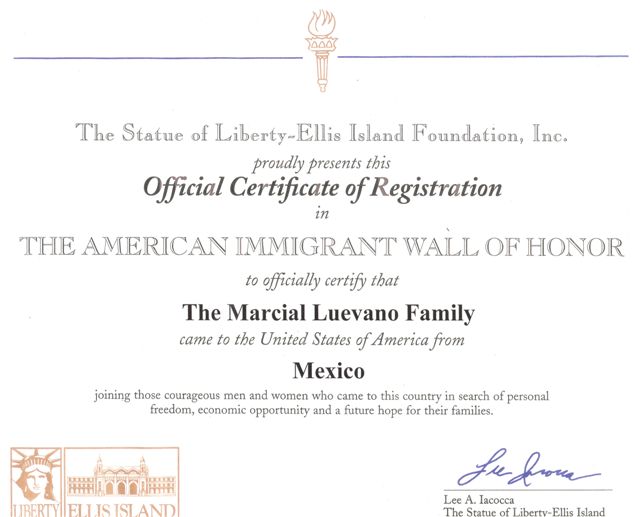 |
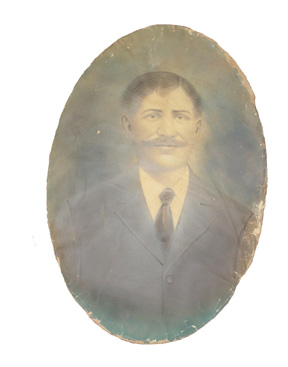
|
Luevano's
Family Journey |
|
This past year I decided to visit the grave site. It had been about 45 years since my last visit with my father and many things had changed. My father had passed away and the Charlotte Mexican Cemetery had grown old and much of it was in disrepair. Memories grow old and faded and I was unable to locate my grandfathers grave site. I left Charlotte Texas with as sense of sadness and emptiness . It was at this moment that I embarked on my personal journey to explore the genealogical history of the Familia Luevano. Our family’s history starts with the birth of Francisco Luevano in Zacatecas Mexico around 1780. Francisco and his wife Ignacia Chavez gave birth to a son named Pedro Luevano around 1800. Pedro Luevano Married Refugia Rodarte around 1821. They had three
sons named Jose My Great Grandfather Silvestre Luevano Married Bernardina Bernal around 1860. They gave birth to a son and two daughters. The son was named Marcial Luevano born 1860. The daughters were named Maria Longina Luevano born 1861 and Maria Balvina Luevano born 1863. My Grandfather Marcial Luevano at the age of 22 married Antonia Ortega. They had a son named Jose Luevano. Our family referred to him as Jose Grande. Marcial and Antonia separated shortly thereafter and Marcial and his son Jose Moved from Zacatecas Mexico to the city of Real De Catorce in the state of San Luis Potosi, Mexico. While in Real De Catorce, Marcial met and Married Patricia Hernandez. The Silver Mines in Real De Catorce soon began to go dry and Marcial and Patricia moved to Monterrey Mexico. While in Monterrey, they gave birth to their children Maria Luevano, Petra Luevano, Ricarda Luevano, Jose Luevano, Dolores Luevano, and Luis Luevano. In 1907, as with many Mexican Immigrants, the American dream beckoned Marcial Luevano and his eldest son Jose Grande. Jose Grande was the first to immigrate to the United States. In 1907 Jose Grande, his wife Sara Davila and their children Francisco and Vicente left Mexico and settled in Crown , Texas. In 1925 Jose Grande moved his entire family to Detroit Michigan. My Grandfather Marcial Luevano followed his eldest son and Immigrated to the United States in 1909. Marcial his wife Patricia and their six children also settled in the small farming community of Crown Texas. It was in Crown Texas that my father and their last child, Juan Luevano, was born. I had decided to put together a small book of the Luevano history as a gift for my family. I collected many old pictures and stories from all my family members. The booklet eventually grew to sixty pages long. I thought that I was at the end of my journey and was about to present my family with their copy of the Luevano history, when one of my family members suggested that I contact a lady by the name of Sylvia Shiflette. To my surprise, Sylvia was the grand daughter of Jose Grande Luevano. Jose had moved his entire family to Detroit Michigan in 1925. Thru her we met an entire new lineage of Luevano cousins from Detroit. My booklet grew from its sixty pages to over one hundred pages. It now includes the families of Sylvia Luevano Shiflette and Robert Shiflette, Carolyn Luevano Anderson and Allen Anderson, Patricia S Luevano Burns and John Burns. Maria Luevano Romo and Joseph Romo, Refugio Luevano Garza and Gregory Garza sr. |
|
|
|
|
My Journey was finally over when the first ever Luevano family reunion was held this October in San Antonio Texas. John and Pat Luevano Burns and Allen and Carolyn Luevano Anderson from Michigan came down for the event. They toured the city and then we took a trip to Crown Texas and visited the grave site of our family Patriarch Marcial Luevano at the Charlotte Mexican cemetery in Charlotte Texas. A grand time was had by all and I was sorry to see my new found cousins leave. The Luevano family history is not over. It will be carried on by our children. We are the family of Mexican immigrants who came to America seeking a new beginning and a better future for their families. Their legacy is us, their children and grand children. We are their
testament to their dream of becoming Americans. |
|
Miguel R. Garcia By Joseph J. Garcia & Michael D. Garcia, P.E. Friday, November 14, 2003 Almost twenty years ago, Miguel R. Garcia and eight other citizens of Taft formed an organization of 200 minority residents, called the Concerned Citizens of Taft. Mr. Garcia a charismatic, 40 year old, Vietnam Veteran came back to Texas to live in Taft and found a town divided racially by railroad tracks – paved streets where the Anglos lived on one side and broken streets on the other side where the minorities lived. Mr. Garcia, founded and organized the Concerned Citizens of Taft, and brought a federal lawsuit against the Taft City Council in January of 1985. The lawsuit was filed in order to change a discriminatory at-large election system in Taft. The group’s position was that the at-large election system served to work against the election of minority candidates and that the Southside residents were not receiving enough representation or federal revenue-sharing funds for municipal projects and maintenance. The Concerned Citizens of Taft were supported in their efforts by the Mexican American Legal Defense and Education Fund (MALDEF), the League of United Latin American Citizens (LULAC), and the National Association for the Advancement of Colored People (NAACP). The plaintiffs for the federal lawsuit were: Miguel Garcia, Santiago J. Adame, Jesus Lucio, Lupe Aparicio, Willie J. Laws, Loreto Moreno, Leopaldo Ramirez and Armando Galindo. Jose D. Garza of the Mexican American Legal Defense and Education Fund was the lead attorney for the group. On March 6, 1989; Haden W. Head, Jr., United States District Court Judge, Corpus Christi, Texas, signed the order implementing a new dual-member district election system in Taft. Mr. Garcia had worked tirelessly for several years in order to organize the citizens group in Taft. Mr. Garcia had also worked very hard as the spokesman for the group in cooperation with the press and the attorneys on the case. Almost one year after the initiation of the lawsuit, Mr. Garcia was sworn in as a new Trustee of the Taft Independent School District. Mr. Garcia had once again worked tirelessly on a grassroots campaign in order to elect several Hispanic candidates to the Taft ISD School Board. Unfortunately, he was only able to serve a few months on the School Board and was not here to see the court order in favor of the new election system. Mr. Garcia pasted away on August 28, 1985 after a long battle with leukemia. Miguel R. Garcia was born on September 9, 1944 in Beeville, Texas. He graduated from A.C. Jones High School in Beeville in 1964, and attended Howard Payne College in Brownwood, Texas. He moved to Taft in 1974 and was a member of the Immaculate Conception Catholic Church of Taft, The Knights of Columbus, Taft Shool Board, Concerned Citizens of Taft, San Patricio Democratic Club, and the Corpus Christi Crucillo Organization. He was the founder and first Post Commander of the Taft V.F.W. Post #9318. Mr. Garcia worked oversees in Germany and Venezuela and for Reynolds Aluminum in Ingleside for 13 years and Champlin Petroleum for 10 year. Mr. Garcia served in the United States Marine Corps during the Vietnam Conflict where he sustained two combat injuries and was awarded the Purple Heart and Purple Heart Ribbon. In 1990 Mr. Garcia’s widow, Maria R. Garcia, received on his behalf, a Civil Rights Award from the late Dr. Hector P. Garcia of the American G.I. Forum for service and dedication to the Hispanic Community of South Texas. Mr. Garcia’s two sons, Joseph J. Garcia
and Michael D. Garcia, P.E., encourage everyone to get involved in the
decision making process and get out to vote for each and every election.
His sons also encourage the residents of Taft and the Coastal Bend to
take a personal interest in the current political issues within their
communities. |
Five days on horseback for the sake of history By John Moritz, Star-Telegram Austin Bureau, posted on Sat, Nov. 15, 2003 Sent by latejana3000@aaahawk.com "If you're a Texan, you've got to have an appreciation for Mexican culture," said Benny Martinez, setting out from his native Goliad. GOLIAD - Astride his horse and sitting under a mesquite tree backlit by a hazy half-moon just before dawn Friday, Benny Martinez prepared to ride off on a mission to save a culture he fears might be forgotten. Ahead of him were 130 miles, the distance he plans to cover over five days to re-enact the old Texas trail rides from the historic town of Goliad to the Capitol in Austin. Behind him were his sister and brother-in-law, his daughter and some family friends. Inside of him was quiet, determined pride. At 70, Martinez is making the trip to celebrate his 50 years with the League of United Latin American Citizens. More important to him, Martinez wants the ride to generate interest in and money for a 3-year-old effort to build a Capitol grounds monument to the Tejanos who helped tame Texas, including his ancestors, who arrived from the Canary Islands in 1749. "I love my culture and the history of my people," Martinez said. "If you're a Texan, you've got to have an appreciation for Mexican culture, even if it's only when you go to a restaurant and order enchiladas. "But look at our language," he continued. "Words like rodeo and corral came from the Tejanos. Even buckaroo. That's what the Anglos called the Mexican cowboys because they couldn't pronounce vaquero." Two years ago, the Legislature gave its blessing for a Tejano monument on Capitol grounds among the statues and plaques dedicated to the Alamo defenders, Confederate soldiers, women pioneers and others. But the Legislature appropriated no money to design or build the Tejano memorial. LULAC and other organizations hope to raise at least $1 million to get the project started. Laredo artist Armando Hinojosa has submitted a proposal to the Texas State Preservation Board that includes such images as a vaquero, a horse, a longhorn steer and a pioneer family. Formal approval could come by spring. Martinez, an Army veteran who served in Korea, has received pledges from organizations around the state for set amounts for every mile he rides. Elementary schools have conducted penny drives to help with the project, he said. State Rep. Ismael "Kino" Flores, a Mission Democrat who carried the legislation to start the monument project, said the effort should be important to all Texans. "The Tejanos need to be recognized for the contribution to our state," Flores said. "We were the first cowboys, the first ranchers. There's nothing on the Capitol grounds that mentions that. It's time for our story to be told." Martinez, a Goliad native who moved back to his hometown after retiring from the Harris County Mental Health/Mental Retardation Authority, said he is sometimes shocked by how little is known about Tejanos. As the 15-year-old mare he calls Brooke Shields ("after the movie star," he said with a wink) clip-clopped alongside U.S. 183 just outside Goliad, Martinez recalled asking about 40 students in a University of Houston class whether they had heard of Cesar Chavez, the late farm-labor organizer. "Do you know how many hands went up? One," Martinez said. "Cesar Chavez is like our Martin Luther King, and even the young Hispanics never heard of him." Martinez said much of what he knows about his culture he learned after his formal education. But he can recite the names and accomplishments of Tejanos as naturally as a baseball devotee might extol the virtues of Nolan Ryan. "They never taught us about Juan Seguin or Lorenzo de Zavala," he said. "The only Mexican we ever heard about was Santa Anna." Seguin led a Tejano cavalry unit against the Mexican army in the war for independence; de Zavala signed the Texas Declaration of Independence. Martinez's sister, Estella Zermeno, said their family, which goes back 11 generations in Texas, has always nurtured cultural pride. As Martinez prepared Brooke Shields for the journey from Goliad State Park, Zermeno nodded toward the local sights. The large building rising from a hilltop in the park, she said, is the Espirito Santo de Zuniga mission, where European missionaries sought to covert Indians to Christianity. Across the river is the site of the executions at Goliad, where Mexican solders put dozens of captured Texans to death in 1836. "We think it is important to celebrate our heritage," Zermeno said. Martinez's daughter, Loretta Williams, said she was not about to doubt her father's ability to spend the better part of a week in the saddle on the ride to Austin. "He has an amazing zest for living," Williams said. "He knows he can do this, and he is determined to make this monument a reality." Martinez said his desire to preserve the past is motivated by his hopes for the future. "What we are trying to build is something that will last for hundreds of years," he said. "This is something we can give to future generations, something that says, 'Our people were here, and they made a contribution.' " To make a donation, write to The Tejano Monument, 501 Mockingbird Lane, McAllen, Texas 78501. For more information contact Benny Martinez directly on his cell phone at 361-579-8700 |
|
TEJANO WOMEN MAKING A DIFFERENCE TOO |
|
|
|
 |
| 100
photographs taken between 1898 and 1909. An introductory historical chapter by Ana Carolina Castillo Crimm and Sara Massey constitutes the first published history of Duvall County, an important area of South Texas in the early 20th century. Information 800-776-7651 rreyes@utsa.edu |
For a
photo and more information on Mickey Margot Garcia, please go to
the November issue of Somos Primos. Below are some entries, selected
randomly as an example of the wealth of social information that these
marriage records contain. Cost is $55 (includes postage) for
the 272 page book. Contact by email at MMG8938@aol.com |
|
Entries from Marriage of Monclova, Coahuila, Mexico 1745 |
|
| 270 | 11 January 1745 Pablo Joseph de Cárdenas, legitimate son of don Nicolás de Cárdenas and Gertrudis Flores de Abrego, married Isabel Tijerina, legitimate daughter of Fernando Tijerina and Maria Garcia, all Spaniards from Monclova. Dispensation granted. Witnesses were don Franciso Flores, don Pedro Monzón, and don Joseph de Castro, who was also sponsor with Josefa Valdés, his wife. |
| 271 | 13 January 1745 Francisco de Esquivel, mulato, employee of Governador don Pedro de Rábago y Terán, married Lugarda Fuentes, Spanish, natural daughter of Estacia de Hinojosa. Witnesses were Juan de Salazar, Felipe de Aguilar, and don Pedro de Monzón, who was also sponsor with Teresa Maldonado. |
| 272 | 5 February 1745 Juan Joseph de la Cruz, negro slave of don Joseph Vásquez Borrego, married Maria Rosa flores. Witnesses were Juan de Salazar, Francisco de Castro, and Antonio Vásquez Borrego, who was also a sponsor with Maria Josefa Mendez. |
| 273 | 26 April 7145 Astancio de los Rios, mestizo, legitimate son of Cristóbal de los Ríos and Rosa de Treviño, mestiza, married Ana Maria de Salazar, mulato, legitmate daughter of Juan de Salazar, mulato, and Jacinta Flores, mestiza, all from Monclova. Witnesses were Nicolás Flores, Juan Victor Rodríguez, and Francisco Rodríguez, who was also sponsor with Maria Rosa Jiménez. |
|
|
Index to San Fernando Marriage Records 1742-1850 by Yolanda Patino Sent by George Gause ggause@panam.edu Source: Larry Kirkpatrick elindio2@hotmail.com Index to the marriage records of San Fernando Cathedral, located in San Antonio, Texas, for the years 1742 to 1850. Paperback, 8 ½ X 11, Published 2003 104 Pages including bride index Price is $22.00 plus 1.75 postage. Los Bexarenos P.O. Box 1935 San Antonio, TX 78297 |
|
Museum of South Texas History in Edinburg Sent by George Gause ggause@panam.edu Saturday, November 22, the Rio Grande Valley gets its first glimpse of the largest and most state-of-the-art Historical Museum the region has ever had. The Museum of South Texas History, or MOSTH, located on the Courthouse Square in Downtown Edinburg, will be open and free to the public from 10am to noon on Saturday. Regular admission fees will be charged after noon, prices listed below. STCC Visual Arts Faculty member Rachael Brown has been spending time as a volunteer at the Museum, helping to do research, and installing some of the final touches in the exhibit areas. 'This Museum is premier in the Valley for a historical look at the place we call home', says Brown. 'It features the prehistory of the Valley, from the time of the dinosaurs, and follows up with about 10,000 years of human habitation. The new wing that has just opened focuses on the Coahuiltecan Indians, the Spanish exploration and colonization of the region, then the various military conflicts that involved our area between 1810 and 1865. Finally, the eras and artifacts of the Riverboats and the Cattle Kingdom are featured in large-scale settings that really make the history come to life'. 'A separate wing is planned to focus on the history of the Valley in the 1900's; there's so much intricate detail in the lives led here, it wouldn't all fit into the original proposed space!' Started in 1970 as the Hidalgo County Historical Museum, the institution has undergone several renovations and is now reincarnated as the MOSTH, Brown encourages all faculty and staff, whether they've lived in the Valley their whole life, or are new to the area, to visit the Museum often to get a feel for the incredible historical scope of the region. MOSTH has regular open hours of Tues-Fri, 9-5, Saturday, 10-5, and Sunday 1-5. Admission costs are $4.00 for adults down to $2.00 for children, and $3.00 for students with ID or senior citizens. Mention it to your students, too. For more information, call the Museum at 383-6911, or if you want a guided tour by Rachael Brown, call her at 973-7606 or email at rfbrown@stcc.cc.tx.us. |
|
| The
History Channel website to accompany the new movie, The
Alamo. http://www.historychannel.com/alamo/ Unfortunately the same old message, good guy/bad guy is being presented. http://www.historychannel.com/classroom/admin/study_guide/archives/thc_guide.1136.html Below are the two introductory paragraphs for the classroom materials. Note, no reference to the Spanish/Mexicans who also died defending the Alamo and all the emotionally packed words describing the Americans. Also, observe how the second paragraph in reference to the founding of San Antonio in 1718 and the abandonment of the ancient Mission, suggests that city itself was depopulated. |
|
The Alamo, teacher materials “Remember the Alamo!” The most famous battle cry in American history echoed across the Texas countryside in 1836, rallying its settlers in their valiant struggle for independence from Mexico. Their inspiration was a heroic band of soldiers who fought to the death to defend the City of San Antonio, and the site of their courageous stand was a small mission-turned-fort called the Alamo. The Alamo invites you to take a trip back in time to the bloody showdown between Mexican dictator Santa Anna’s 4,000 man army and 189 brave American volunteers led by the legendary Davy Crockett, William Barret Travis, and Jim Bowie. The Alamo would be useful for classes on American History, Mexican History, Civics, Geography and Texan History. It is appropriate for middle school and high school. Founded in 1718, the ancient
Mission San Antonio de Valero had long been abandoned when
American settlers came to Texas in the 1820s. By 1835, with the Texan
War of Independence from Mexico in full swing, the chapel was a roofless
ruin surrounded by a high, three-foot-thick rock wall. When Lieutenant
Colonel William Barret Travis and his band of Texas Volunteers
captured the city of San Antonio from the Mexicans, the Alamo
became their refuge. It was here that 189 soldiers prepared to face
Santa Anna’s troops. By the time the Texans were joined by Davy
Crockett and his Tennessee Volunteers, the stage was set for tragedy. |
|
|
|
|
|
The area chair for Manifest Destiny invites paper or panel proposals that deal with the legacy of westward expansion from the early nineteenth century to the present. Considering the conference locale, topics on the importance of the Alamo as a historical space and cultural symbol are especially welcome. How does the Alamo embody contested historical meaning? How does the Alamo figure in Anglo American or Chicano/a film? How do representations of
the Alamo utilize gender, race, or national identity? Other topics on the Southwest might include: the cultural relations
between Native, Mexican, and Anglo Americans; the history or literature of the Texas revolution, U.S.-Mexico War, or the Spanish-American War; captivity narratives and gender relations; contemporary Southwestern literature and environmental, ethnic, gender, or regional studies; journals, diaries, or travel literature; the Civil War in the borderlands; food, literature, and the consumption of Southwestern ethnic culture. There was a request for papers: 200-word abstract and a short CV. Panel proposals with a description of the panel, individual abstracts; and short CVs of each panelist, but the deadline was November 15, 2003 to send materials to: Professor Jesse Aleman jman@unm.edu University of New Mexico Department of English MSC03 2170 Albuquerque, NM 87131-0001 Phone: (505) 277-3209 Fax: (505) 277-5573 SOURCE: Roberto Calderon beto@unt.edu and Jesse Alemán jman@unm.edu |
|
Texas History 101 Sent by Albert Seguin C. Gonzales ASeguin2@aol.com Juan Seguin may not be as familiar as Sam Houston or William Travis, but his impact on Texas was just as important. by David Doerr, Texas Monthly + Juan Seguin Students in Texas public schools are required to take two courses in Texas history: one in the fourth grade and another in the seventh grade, when kids learn about the great heroes who fought for Texas's independence from Mexico, the establishment of the Republic of Texas, and Texas as part of the United States. Much of that time is spent studying the causes of war, the major battles, and the legendary men whose names adorn cities, streets, and buildings across the state—Austin, Travis, Bowie, Houston. But Juan Seguin, another legendary man in Texas history and the only documented Tejano officer in the Texan army, is barely mentioned in seventh grade textbooks. Seguin, who was present at both the Battle of the Alamo and the Battle of San Jacinto and was a key figure in bringing Anglo settlers to what was then known as Tejas, is often overlooked in the study of the state's history, or is, at best, immersed in controversy, having been branded a sell-out to fellow Mexicans or as a traitor to Texas by some historians. Despite Seguin's obscurity to most Texans, he will play an important role in the new film The Alamo, which is scheduled for release in April. The movie's director, John Lee Hancock, called Seguin a "moral bellwether of the story" in the January 2003 issue of Texas Monthly. According to Hancock, the most interesting thing he learned while researching the revolution was that the men inside the Alamo "all had different ideas of what they were fighting for." This was certainly true for Seguin, who had served as a prominent figure in San Antonio before the war (as well as during and after), including time as the political chief of the Department of Bejar, a captain of a company of mounted volunteers, Travis's messenger for reinforcements at the Battle of the Alamo, a participant in the Battle of San Jacinto, a Lieutenant Colonel in the Army of the Republic, a three-term Senator from the district of Bexar to the Republic of Texas, and as mayor of San Antonio. Seguin also helped Stephen F. Austin bring Anglo settlers to Texas. Some members of later-generation Hispanics have labeled Seguin a sell-out for this, claiming that Anglo settlers discriminated against Hispanics and implied that they were inferior. However, considering the political and economic conditions of Mexican controlled Tejas, efforts to bring in settlers were intended to help foster commerce in a region Mexico had largely neglected. Other critics of Seguin have accused him of being a traitor to Texas. In his personal memoirs, Seguin wrote that he was made to feel "a foreigner in my native land" as a result of his decision to move to Mexico to escape Anglo harassment. His participation in the Woll Expedition, which led to the capture of San Antonio on September 11, 1842, didn't help matters. The press, including papers such as the Telegraph and Texas Register and the New Orleans-based Crescent City, was especially harsh on Seguin's participation in the expedition and printed articles that relied heavily on rumors and exaggerated truths. The controversies surrounding Seguin's life are sure to persist after The Alamo is released, but hopefully the film, which aims to be the most accurate telling of the story of the Texas War of Independence, will help revive interest in an essential figure of Texas history—Juan Nepomuceno Seguin. On October 25th, 2003, the 14th Annual Juan N. Seguin Memorial Celebration
was held in Seguin. |
|
|
|
Associated Press, Nov. 19, 2003 SAN ANTONIO - Davy Crockett has returned to the Alamo, but visitors to the shrine of Texas independence say the frontiersman's oil-and-canvas version appeared kinder and gentler than his rough frontier image. Crockett, who had posed for fewer than 10 portraits, had complained that the previous works made him "look like a Methodist minister." So the artist had him wear buckskins instead of his more common suit. Sent by Bill Carmena, |
| Restored 1834 portrait of Davy Crockett | |
The restored 1834 painting of Crockett has not hung in the Alamo since 1977. Crockett was likely 47 when he sat for the portrait by artist John Gadsby Chapman two years before the Tennessee statesman's death at the famous battle against the Mexican Army led by Antonio Lopez de Santa Ana, president of Mexico. "He was really trying to live up to his developing image of the `Lion of the West,'" said Stephen Hardin, a professor of Texas and American history at Victoria College. "He didn't normally dress that way." "What people need to remember is he had been a backwoods man, but when he was elected to Congress he became a gentleman," said Hardin. To visitors, Crockett looked more like a well-groomed, studious gentleman than a tamer of the wild frontier. "He looks a lot more refined and scholarly," said Donna Flynn, who lives in the Washington area. "The typical image of him is with a coonskin cap, out in the nature. I expected him to look more rugged." |
|
|
|
|
| General Works General Reference Index Vertical Files Manuscripts Maps Biography Campaigns |
Causes Finance Law and Legislation, Mexico Law and Legislation, United States/Texas Velasco, Treaty of Military Affairs Personal Narratives |
| Brazos Santiago Pass Sent by George Gause ggause@panam.edu QUESTION: Brazos Santiago Pass Is Brazos Santiago Pass (translated) the oldest specific place name on today's maps of the country?. Don Hockaday (Director, The University of Texas-Pan American, Coastal Studies Lab, South Padre Island, TX hockaday@panam.edu asks the following question of me. Pre-Columbian Europeans and, in 1497, John Cabot visited the North American Continent in present day Canada and probably the present northeastern seaboard of the United States. Ponce de Leon sighted and named Florida as a general geographic area in 1513, and landed at an unknown location on the east coast of present United States. In 1519, Alonso Alvarez de Pineda landed in southeastern Cameron County, Texas at "a great river" and an inlet. This is the first historical record of a European setting foot at a known specific location in present United States, and Brazos Santiago Pass is the oldest specific place name on today's maps of the country. |
|
Remembering the Alamo: Foundational Fictions, Cultural Memories, & Legacies of Manifest Destiny Sent by George Gause ggause@panam.edu Popular Culture, American Culture, and Southwest Texas Popular Associations National Conference San Antonio, Texas April 7-10, 2004 The area chair for Manifest Destiny invites paper or panel proposals that deal with the legacy of westward expansion from the early nineteenth century to the present. Considering the conference locale, topics on the importance of the Alamo as a historical space and cultural symbol are especially welcome. How does the Alamo embody contested historical meaning? How does the Alamo figure in Anglo American or Chicano/a film? How do representations of the Alamo utilize gender, race, or national identity? Other topics on the Southwest might include: the cultural relations between Native, Mexican, and Anglo Americans; the history or literature of the Texas revolution, U.S.-Mexico War, or the Spanish-American War; captivity narratives and gender relations; contemporary Southwestern literature and environmental, ethnic, gender, or regional studies; journals, diaries, or travel literature; the Civil War in the borderlands; food, literature, and the consumption of Southwestern ethnic culture. Individual papers: send a 200-word abstract and a short CV. Panel proposals: send a description of the panel, individual abstracts; and short CVs of each panelist. Deadline: November 15, 2003 to send materials to: Professor Jesse Aleman University of New Mexico Department of English MSC03 2170 Albuquerque, NM 87131-0001 Phone: (505) 277-3209 Fax: (505) 277-5573 SOURCE: Roberto Calderon beto@unt.edu Jesse Alemán jman@unm.edu |
|
Northern Mexico Resources Organized by University of Texas-Pan American Guerrero Viejo (Tamaulipas)
El Manana de Nuevo Laredo |
|
| Law of the Land Grant: Spain and Mexico http://home.sprintmail.com/~sanchezj/1-title.htm Sent by George Gause ggause@panam.edu Jane C. Sánchez, from Alburquerque, Nuevo México, has published this information on the web for all to read and peruse. Dated January 5, 2000, Jane is both the editor and translator and uses both archival, secondary, and periodical sources in her writing. This is an excellent bibliography on land law, sources old and new. Introduction Recopilación de Leyes de Las Indias Laws Promulgated from 1680 to 1753 Laws Promulgated from 1754-1782 The Plan of Pitic and Related Material, 1778-1789 Laws Promulgated from 1786 to 1799 Laws Promulgated from 1800 to 1820 The Land Laws of Mexico Water Law Glossary Bibliography SOURCE: Roberto R. Calderón beto@unt.edu |
|
| Texas Newspaper Holdings Index: Center for American History at The University of Texas at Austin. http://www.cah.utexas.edu/newspapers/newspapers_fa.pdf Sent by George Gause ggause@panam.edu Source: Roberto R. Calderón beto@unt.edu Provides an overview of what Texas newspapers and for what periods, etc. are available for research during the 19th and 20th centuries. |
|
Local Catholic Church History and Genealogy in Texas http://home.att.net/~Local_Catholic/CatholicUS-SanAntonioTX.htm Sent by John Inclan fromgalveston@yahoo.com Bookmark, definitely bookmark. Great resource. . . |
|
Documenting Spanish Colonial Period South Texas Archives at Texas A&M University-Kingsville Acquires Microfilm Sent by A. Garza AGarza0972@aol.com Source: Homero S Vera hsvera@granderiver.net http://www.tamuk.edu/news/2003/may/microfilm For more information contact Cheryl Cain at 361-593-2138 or c-cain@tamuk.edu KINGSVILLE (May 29, 2003) --- Scholars interested in the Spanish Colonial period in Mexico need now look no further than the South Texas Archives and Special Collections at Texas A&M University-Kingsville for information. The university's archives recently obtained 134 volumes of microfilmed Spanish government documents covering the late 1600s to 1821 and a region that spread from northwestern Mexico to the northeastern Gulf Coast. The region includes what is now South Texas and was once referred to as the Provincias Internas. Homero Vera, field historian for the archives, said the new collection contains thousands of documents, including genealogical records of the founding families of the region. The collection also contains many military documents such as service members' records, lists of presidios and maps of the area. Vera said the collection also documents the Native Americans living in the area during the time period as well as some information on Spanish land grants. The collection is entirely in Spanish and will be of most interest to historians, genealogists, archivists and cartographers. Vera said the collection is a significant addition to the archives not only because of its historical value, but also because A&M-Kingsville is one of only three universities in the United States to have all or a portion of the collection. The University of Arizona owns the entire microfilm library of the Spanish Colonial period while A&M-Kingsville was permitted to obtain half of it. The Benson Library at the University of Texas at Austin owns small portions of the microfilm. "The importance of this is that we have the earliest documents of this region, all the earliest history," Vera said. Vera hopes to someday complete the collection, but he said the process is very time consuming and complicated. He worked with staff at the National Archives in Mexico City to obtain the collection spending more than a year and a half working to close the deal. He renegotiated the deal several times due to multiple staff changes at the National Archives and made several trips to Mexico at his own expense in pursuit of the microfilm. "There is a tremendous amount of bureaucracy involved in using the Mexican archives as compared to ours," Vera said. "We had to prove that we weren't going to gain anything monetarily by having this collection, only that we were going to let South Texas scholars gain knowledge about their own people and the history of the region." Mexican officials expressed concern that historians and scholars would cease to visit Mexico to study these documents if they became readily available in the United States. In order to finally obtain the collection, Vera said the South Texas Archives and Special Collections had to agree to terms that included not permitting the microfilm to be photocopied or distributed outside the facility. The collection may only be used for scholarly research purposes and must be viewed within the South Texas Archives and Special Collections. The process of making the deal took about a year and a half. "It was definitely worth the effort," Vera said. "This is a one of a kind collection. Texas A&M-Kingsville is one of only two universities in the country that has a large portion of this collection." Vera said he had visited the National Archives in Mexico City and knew of the collection's existence, and that led him to pursue a grant to purchase the microfilm. He also obtained a complete index of the collection from the University of Arizona, which he said makes it much more user-friendly. So far, Vera has only had time to look at about three of the reels from the collection. He said the microfilm is high-quality and very readable --- and also very exciting. "I get to see my direct ancestors' names on there. That's something a lot of people can't do," he said. The collection was purchased through a grant from the Coastal Bend Community Foundation. |
|
Texas Monthly Online http://www.texasmonthly.com/register Online newsletter to keep up on the activities of the Hispanic genealogical and historical groups, in addition to leads, resources, new information, etc. Sent by John Inclan fromgalveston@yahoo.com |
|
| Catalog, Heart of Spain Update | Louisiana Purchase:
Faces & Cultures, Yesterday & Today The Cajuns, Genealogy, History and Culture |
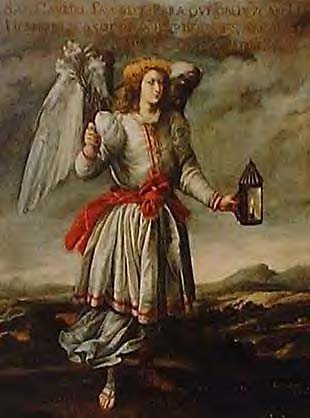 |
Heart of Spain Update Sent by Ian West ian_west@hotmail.com (318)443-0032 Although the Heart of Spain Exhibit has
concluded, the catalog as a stand alone resource for teachers is
available. There were 21 students and instructors from Louisiana College that worked together
to develop it for area teachers. The curriculum is a 1600-page document
that contains lesson plans, activities, resources, and instructional
details for teachers and students. The curriculum was
developed to work directly with the exhibit but it can stand alone
to teach about the historical, religious, and geographical content
of Spain and Spanish heritage.
|
|
The catalog is 29.95 +tax for soft back and 39.95 +tax for hard back. These can be purchased over the phone by contacting our offices (1-880-443-0032). The curriculum can be purchased over the internet at http://www.heartofspain.com for $15 a CD. The catalog and curriculum are two different resources. The catalog is designed to correspond with the art on exhibition, and the curriculum was designed for teachers and students to learn about Spanish History, Spanish artists, Spanish connection with Louisiana, Royalty, Columbus and other topics. |
|
|
The Louisiana Purchase: Faces and Cultures of Yesterday and Today http://www.lsu.edu/lapurchase/Program_Text.htm This site is the agenda and schedule for a five day conference dealing with all aspect of the Louisiana purchase, the history, implications, and present descendants and cultural contributions. Sent by Bill Carmena JCarm1724@aol.com |
|
The Cajuns, Genealogy, History and Culture http://www.thecajuns.com/ Sent by Jerry Benavides Jgbenavide@aol.com Source: Mr. Stanley LeBlanc Blessings; Jerry Benavides [[ A wealth of information. The index below is a table of contents, each is a link to resources on the topic. Bookmark if you have Louisiana history. You'll go back to this one.]] Families & Associations Parish Genealogy & History Cajun-Acadian-LA Links Flags Maps Militia Lists Books & Publications For Sale LA History: French & Spanish Arrival of the Acadians 1st Acadian Nuns Belle-Isle-en-Mer Native American Tribes Genealogy & Census Research General Galvez Cajun/Zydeco Music Gator 2-Step Resources |
|
|
Extract: |
Educating students about Hispanic beliefs and traditions and giving Hispanic students a sense of community on campus are among the goals of several Hispanic organizations at Boston University. Junior Evelyn Ortega, vice president of Latinos Unidos, said students often join these groups to acquire a sense of the community they left back home. "We provide a sense of family and community," Ortega said. "Latinos Unidos provides a place for Latino students to learn about their culture." Freshman Camila Castellanos said staying in touch with her Hispanic background is important, and the Colombian student said she hopes to become involved with one of BU's Hispanic groups. "I want to join something to do with Latin America because when you're away, it's good to join something to do with your country," Castellanos said. Latinos Unidos and other organizations such as La Fuerza and Danzon primarily promote awareness of Hispanic culture on the BU campus. According to senior Imelda Avila, the secretary of La Fuerza, the organization tries to appeal to the entire BU community. "Members do not have to be Latino," Avila said. "They just have to have an interest in the culture." Through events such as workshops, discussions, dinners and guest speakers, groups such as La Fuerza and Latinos Unidos try to educate students about Latin American beliefs and traditions, according to Ortega. |
| DNA The Genealogy of Mexico Rio Bravo Association: Call for Papers Presidentes Municipales de Parás Spanish American Genealogical Association |
Como Encontré y Organice a Mis Ancestros Siglo XIX Notarías de Morelia, Michoacán Comité Mexicano de Ciencias Históricas Latin American Manuscript The Marquis of Oaxaca, Hernan Cortez |
|
Hi, This is something I feel is very important and if at all possible we should all participate in. Have you heard about family tree DNA its a special project where people are submitting DNA samples so that we can see if we have a common ancestor. If you want I will send you more information. The web site for the project is The Genealogy of Mexico. I hope we can get some interest in this so that we can find our roots with more accuracy. Thanks, Danny Villarreal Villarreal Genealogy Daniel5822@aol.com Also sent by Tom Ascencio |
The Genealogy of Mexico http://members.tripod.com/~GaryFelix/index63.htm Within each of us our ancestors have left clues about our ancient origins and our family lines.DNA StudiesDNA studies on Mexican-Americans show a higher European admixture. *Anthropologist Andrew Merriwether and colleagues conducted a study on Mexican-Americans living in Colorado. Using classic genetic markers they estimated an admixture of 67% European and 33% Native-American. He further tested their mitochondrial DNA (mtdna) which is a test to find the origins of your great, great...grandmother, going back 10's of thousands of years. This one ancestor which is your families "Eve" so to speak, showed up as Native-American 85% of the time and European in origin 15% of the time. Thus showing that the majority of unions in this admixture were of European males and Native-American females. Other findings in Mexico showed varying results depending for the most part on what the cultural influences were on the population under study.*Source:How Human History is Revealed in Our Genes - Reflections of Our PastWhat DNA Will Tell UsWith DNA testing today we can determine our ancient great, great...grand-father and grandmother along strict paternal (DNA handed down strictly from father to son) and maternal lines (DNA handed down strictly from Mother to daughter) going back thousands of years. These tests are called the Y-dna and mtdna tests respectively. With the Y-dna test we can also determine if two people have a Most Recent Common male Ancestor (MRCA) within 7 generations with a 50% probability or 23 generations (around the time of the Conquest) at a 90% probability. We can determine if our surname goes back to the Conquistadors by comparing a proven Y-dna line. We can begin to put together the pieces of Native American lines which have been particularly hard to trace conventionally. Now we can know if others on a surname message board are related to us or not. Genealogy made easy! Follow this MSNBC news article to learn more. DNA takes on a family’smysteries. |
|
|
| Rio Bravo Association: Call for Papers Sent by George Gause ggause@panam.edu The Rio Bravo Association solicits proposals for its meeting on April 1-3, 2004. on the campus of Texas A&M University-Kingsville. The Rio Bravo Association is a group of scholars both from the United States and Mexico who have an interest in the culture along the Rio Grande. Scholars include those from fields such as history, political science, languages, sociology, engineering, architecture and urban design. The theme for the 15th Annual Meeting is: "Sustainable Development in the Rio Bravo/Rio Grande Borderlands." Proposals may consist of individual papers or of papers grouped for a session. For a session proposals, two, or, preferably, three papers should relate to a common theme. For each paper proposed, please submit an abstract of 250 to 500 words, indicating the thesis of the paper, the sources and methodology employed in research, and how it enhances or expands knowledge of the subject. Papers should have a reading time of twenty to twenty-five minutes. also, please submit a curriculum vitae for each participant. Proposals should be postmarked by December 31, 2003 and mailed to the address below. Inquires are welcome by email, but please send proposals by mail or fax. Professor Cecilia C. Rhoades cecilia.rhoades@tamuk.edu Southwest Borderlands Cultural Studies MSC #177 Texas A&M University-Kingsville Kingsville, Texas 78363-8202 Phone: (361) 593-2687 Fax: (361) 593-2707 |
|
Extracted and computerized church records available for sale from Mira Smithwick via e-mail Sagacorpus@aol.com or by mail P. O. Box 794, Corpus Christi, TX 78403-0794. The listings of names are in alphabetical order and include parents names and grandparents names when available. This listing is as of October 2003. Special books can be prepared for a specific surname should you not wish to purchase the entire book for a town. The specific surname book would include baptisms, marriages, and death records of one specific surname only. STATE OF TAMAULIPAS, MEXICO: CAMARGO: Marriage records 1764-1875 (Brides and Grooms; 125 pages in
each book) GUERRERO: Marriage records 1753-1925 (Brides and Grooms; 173 pages in
each book) MATAMOROS Marriage records 1801-1848 (Brides and Grooms; 256 pages in
each book) MIER Marriage records 1767-1925 (Brides and Grooms; 199 pages in each
book) STATE OF NUEVO LEON, MEXICO: AGUALEGUAS: Death records 1821-1880 (147 pages) CADEREYTA: Marriage records 1710-1880 (Brides and Grooms; 384 pages
in each book) CERRALVO: Marriage records 1761-1880 (Brides and Grooms; 219 pages in
each book) SABINAS HIDALGO: VALLECILLO: Marriage Records 1768-1863 (Brides and Grooms; 71 pages in each book) SOURCE: e-mail from Mira Smithwick |
|
|
Como e mencionado, durante mas de 20 años solo tenia 6 o 7 ancestros, y nadie me proporcionaba información porque no la tenían, empecé a organizar primero en cuaderno haciendo los árboles genealógicos, posteriormente con la conmutadora en el programa de Excel, pero como no tenia muchos ancestros seguí con la familia que contaba, y empezó a dificultar la visibilidad del árbol en determinado momento llega a mi el Internet, y lo primero que encuentro es un articulo de un periódico de Zacatecas con relaciona la feria de Jerez Zacatecas de 2001 del Sr. Leonardo de la torre Berumen cuyo titulo era “La desconocida prole y sus ancestros” Donde me da mas luz para continuar. En eso navegando en Internet encontré la página de la Iglesia de Jesucristo de los Santos de los Últimos Días, http://www.familysearch.org/ y algunos otros portales de paga. Pero no me ubicaba además que encuentro el PAF en Español, y en ese momento de7 ancestros paso a 20 pero desconocía el uso del programa, después por el mismo Internet me entero que la información que tenia la iglesia, la avía obtenido de los archivos de la iglesia Católica y que además, contaba con el Centro de Historia Familiar en cada una de sus iglesia Donde concertó una entrevista y recibo la orientación del Maestro Benicio Samuel Sánchez García, Presidente de la Sociedad Genealógica del Norte de México, http://www.ancestros.com.mx/ y de es momento se resolvieron los problemas de organizar, visibilidad de los formatos y en la actualidad tengo cerca de 200 ancestros encontrados con mas de 800 hijos de los ancestros, Con el PAF, que es gratuito y se baja en la misma pagina de la iglesia se puede hacer impresiones de los árboles , convierte en pagina web, libros de Ascendentes o de Descendientes según lo que uno necesite, y algunas otras cosas que no domino. También es importante rentar los film que se piden en los Centros de Historia Familiar, tanto los de Nacimiento, Bautizo, Defunciones, Informes Matrimoniales, estos ultimo sen ocasiones traen algo de la historia del matrimonio, o sea que este documento es importante. Y seguir buscando información dentro del a Internet por si alguien ya escribios obre la familia Entre las cosas interesante de los ancestros que encontrado son; Diego Pérez del a Torre Gobernador de Guadalajara. Hernando Flores Fundador de Guadalajara. Diego del a Torre, Capitán Miguel Caldera mestizo Fundador de San Luis Potosí. Diego de Velasco Alcalde de Tomiño. Francisco del Árbol y Bonilla Alcalde de Juchipila y Aguascalientes. Pedro Fuentes. Etc. Esto no significa que sean los mas importantes, son los de mayor trascendencia, para mi en lo personal todos y cada un de los apellidos de los ancestros tiene igual de importantes, aunque estos apellidos olvidados son los de las abuelas, porque la mayoría de la gente considera nada mas el del padre, siendo que ella san marcado un matriarcado desde todos los tiempos ya que los hombres hemos sido machistas no por la educación del padre sino por la educación del a madre. Los apellidos de las abuelas se ha nido perdiendo a través del tiempo porque nadie sea cuerda de ellos, pero son apellidos igual de importantes que el del los abuelos, Además si no los consideráramos nuestros árboles genealógicos quedarían truncos como en mucho de los casos que tenemos por no tener ese segundo apellido, leyendo un libro “Torreón en las letras nacionales” me encontré un poema el cual transcribo. ¡¡ HONOR A MIS VIEJOS TRONCOS!! I Como las aguas del río Nilo Van aumentando en su recorrido De muchos ríos y arroyuelos. Que van quedándose en el olvido. De agrestes picoso de colinas Que en la distancia y ase han perdido. II Asi apellidos de muchas madres En lo profundo de tiempo idos. Se van perdiendo y solo del padre Nos va quedando el viejo apellido, Pero la sangre de todas ellas Sigue en mis venas su recorrido III Yo ago un recuerdo de troncos viejos Que inexorable sen su caída Les van marcando tiempos muy lejos Y cuya savia no esta pérdida, Van aflorando en retoños nuevos Que al nuevo árbol le inyectan vida… IV Como las aguas del grane Nilo Mi sangre añejan o esta perdida… Diciembre 1° de 1981 Este poema es de la Autoría de José León Robles del a Torre, también autor del libro “Filigranas, Fundaciones y Genealogías, Tepetongo Zacatecas” que se encuentra agotado. Retomando lo anterio a este poema, En la actualidad mi investigación sea extendido a mas de 18 municipios del a Republica Mexicana y dos de España. Y todavía faltando encontrar más, con el portal nuevo obre los pasajeros de indias http://aer.mcu.es/sgae/index_aer.jsp. Así que les recomiendo a los que empiecen a formar su árbol genealógico baja el PAF de Familysearch, y empezar organizar. Y por ultimo una reflexión a quien corresponda, los film tomados por Iglesia de Jesucristo de los Santos de los Últimos Días, aparte de ellos se encuentran también en el Archivo General del a Nación en la Ciudad de México, donde se pueden consultar, y si es cierto, como tengo entendido la iglesia católica tiene una copia, podría abrirlos para que sean consultados por toda la Gente ya que serán un alternativa mas para los que no pertenecemos a la Iglesia de Jesucristo de los Santos de los Últimos Días, ya que en algunos momentos se encuentran saturados los Centros de Historia Familiar Por Salvador Cabral Valdés http://cabral.galeon.com http://genealogia_cabral.galeon.com http://genealogiavaldez.galeon.com http://genealogiagonzalez.galeon.com http://genealogiacamargo.galeon.com Salvador Cabral Valdes Pagina Personal http://cabral.galeon.com Colaborador en; http://www.ancestros.com.mx |
|
del Archivo Histórico de Notarías de Morelia, Michoacán. Armando M. Escobar Olmedo Morelia, Michoacán. Octubre 27 de 2003.
|
|
De los diversos repositorios que se encuentran en la ciudad de Morelia, la antigua Valladolid, capital del vasto obispado de Michoacán, varios de ellos destacan por la gran riqueza de su información: El Archivo Histórico del Obispado dividido en dos acervos, el que se encuentra en la Casa Sitio de Morelos y el que se resguarda en la Catedral; el Archivo Histórico Municipal, ubicado en el edificio de Ayuntamiento; el Archivo del Estado; el Histórico del Poder Judicial; el Musical del Conservatorio de Las Rosas, y el Histórico de Notarías, por mencionar algunos de los más importantes. De este último por diversas razones he estado consultando los libros de Protocolos del Partido Judicial de Jiquilpan a finales del siglo XIX, me permito dar algunas noticias sobre el diferente material que contienen por si resulta de alguna utilidad para algún interesado en esta región por esas fechas. Protocolos del Lic. Rafael Moreno, Jiquilpan 1890. Libro 593. Este libro contiene los protocolos de Rafael Moreno en la segunda mitad de dicho año, solamente se utilizaron 31 hojas. Las demás se encuentran testadas por no haber sido usadas. Los protocolos contenidos son 17 y a grandes rasgos el contenido de cada uno es el siguiente. Escritura 1.- 31 de julio de 1890, Jiquilpan. Escritura de venta de don Diego Moreno, de 47 años de edad, vecino de Guadalajara a favor de don Antonio Carranza, de 73 años, casado, comerciante, vecino de Cotija. Vende el primero unos potreros ubicados en Cotija, uno de ellos llamado "Del camposanto" otro "La Bueyera" y una casa en aquella ciudad, que se encuentra en la calle del Cerrito. Escritura 2.- Agosto. Jiquilpan. Hipoteca. El Licenciado don Agustín Orozco realiza una hipoteca a favor de las señoras doña Soledad y doña Ignacia Macías, vecinas de esa ciudad. Escritura 3.- Agosto 8. Jiquilpan. Escritura de venta. El licenciado don Agustín Orozco, apoderado de doña Esther Castillo viuda de Ortiz, albacea testamentaria de su esposo don Manuel María Ortiz, dice que su marido adquirió la Hacienda de La Magdalena por compra a don Manuel Gutiérrez en el año de 1882, ahora la venden a don Inocencio Acuña. Vienen en detalle los límites y extensión de la misma hacienda, monto de la venta y otros detalles. Escritura 4.- Agosto 18. Jiquilpan. Escritura de Mandato. El Licenciado don Alejandro Abarca recibe instrucciones por parte de don Mateo González, como albacea de doña Josefa Guizar. Escritura 5.- Agosto 28. Jiquilpan. Poder. La señora doña Gracia Ochoa da su poder cumplido y bastante a favor del licenciado Agustín Orozco a fin de que realice las gestiones ahí enunciadas. Escritura 6.- Agosto 31. Jiquilpan. Testamento. Testamento abierto de doña Josefa Cubo, la cual vive en la Plaza Principal, en el Portal llamado "Del Parían", dice tener 62 años, hija de don Cayetano Cubo y de doña Aleja Sanabria. Tiene una hija llamada María de los Ángeles, a la cual nombra su heredera y detalla sus bienes. Escritura. 7.- Septiembre 2. Jiquilpan. Albaceazgo. La señora doña Gracia Ochoa, vecina de Sahuayo, de 45 años, que vive en la calle 2ª de la Parroquia, dice que fue nombrada albacea por su hermana política doña Soledad Gálvez Gutiérrez, hija de don J. Dolores Gálvez y de doña Marcelina Gutiérrez. Doña Gracia delega su albaceazgo a favor del Lic. Agustín Orozco. Escritura. 8.- Septiembre 4. Jiquilpan. Venta. Escritura de venta que realizó don José María Loza, de 54 años de edad, a su hija doña Carlota Loza, de 33 años, soltera que viven en la Calle de la Siempreviva, a la salida de la ciudad rumbo a Sahuayo, en la cantidad de 549 pesos. Da los lindes de la casa y como se obtuvo. Escritura. 9.- Septiembre 5. Jiquilpan. Venta. Escritura de venta de una casa que doña Soledad Loza realiza a favor de su hermano don Francisco Loza, ambos viven en la casa enumerada en la escritura anterior. Escritura. 10. Septiembre 17. Testamento. Testamento público abierto por parte de don Francisco Sandoval, vecino del rancho de "La Rana", de 46 años de edad, natural de la "Hacienda del Cerrito Pelón", hijo de don Benito Sandoval que vive y de doña Ignacia Silva, ya fallecida. Declara estar casado con doña Librada Sandoval desde hace más de 20 años y que tuvieron en su matrimonio 10 hijos, cinco que viven: María, Felícitas, Crispina, Cármen y Francisco. Y cinco que murieron y da sus nombres. Enumera sus propiedades y el reparto que debe hacerse entre sus herederos. Escritura 11.- 24 de septiembre. Jiquilpan. Poder. Don Manuel Anaya, da su poder cumplido y bastante al Lic. don Antonio Ibarrola, vecino de Morelia, para que realice las gestiones que ahí se enumeran. Escritura 12. Octubre 4. Jiquilpan. Protocolización. Se protocolizó la escritura de venta realizada en Cotija por parte de don José Dolores González a favor de don Ildefonso Valencia. Escritura 13. Noviembre 5. Jiquilpan. Protocolización. Se protocolizó el testamento público abierto por don José Trinidad Sánchez, hecho ante el Alcalde primero de Sahuayo el 1 de noviembre. Declara ser de 65 años, que vive en el Portal Hidalgo de esa población, comerciante, hijo de don Francisco Sánchez y doña María Gómez. Contrajo nupcias con doña Josefa Sánchez desde hace mas de 40 años y tuvo los siguientes hijos: Maclovia, Jacoba, Susana, José María, Federico, Sara, María, Constanza, Lepoldo, Josefa, Esther, Carlota y José Trinidad, los 4 últimos fallecieron siendo menores. Declara sus bienes y la manera en que se deben repartir entre sus herederos. Escritura 14. Diciembre 3. Jiquilpan. Protocolización. Se protocolizó una Información ad Perpetuam, por parte de don José María Guizar González, vecino de Cotija sobre un terreno que tiene en la región y uno de cuyos lindes es la Laguna de la Magdalena. Escritura 15. Diciembre 23. Jiquilpan. Poder. Don José Barragán González, vecino de Cotija, otorga su poder cumplido y bastante a Lic. don Alejandro Abarca y otros a fin de que realicen las gestiones ahí mencionadas. Escritura 16. Diciembre 24. Jiquilpan. Fianza. Fianza que realizó el Lic. Alejandro Abarca a favor de la Administración de Rentas de dicha ciudad. Escritura 17. ( y última) Diciembre 31. Jiquilpan. Protocolización. Se protocolizó un poder general dado ante el Alcalde primero de Tingüindín por varios indígenas del lugar a favor de don Gorgonio Alejandre. Son todas las escrituras que contiene dicho libro como ya se ha mencionado en 31 hojas. Cada escritura tiene sus timbres correspondientes. El libro se encuentra en buenas condiciones. Debo aclarar que por razones especiales no es posible obtener reproducciones de estos materiales (ni en fotocopia ni en microfilm u otro medio) por lo que su consulta debe ser necesariamente en dicho acervo y trasladar su contenido sea a mano o en computadora, sin escasear. Espero como dije
al principio que esta información pueda resultar de alguna utilidad. |
|
Latin American Manuscript, Mexico, 1502-1925 http://www.indiana.edu/~liblilly/lilly/mss/html/latinammex.html Sent by Joan De Soto The Latin American mss. Mexico, 1502-1925, is an extensive collection covering much of Mexican history in depth. The colonial period has much material about governmental administration and finances, the Catholic Church and religious orders, and the Indians and missions to the Indians in Florida, California, and Texas, as well as in Mexico. There is also a large body of decrees and royal cedulas concerning a wide variety of topics. Several manuscripts deal with the sale and condition of slaves in Mexico. Land grants, deeds, titles, and transfers for all periods of Mexican history are in the collection. One important manuscript is the Chronica Evangelica y Seraphica de las Probincias de los Texas Reyno de la Nuevas Philipinas by the missionary Francisco Celiz, written in 1719. This is apparently an incomplete, earlier draft of a diary published by Vito Alessio Robles as "Unas paginas traspapelados de la historia de Coahuila y Texas" in Universidad de Mexico, Tomo V, no. 25/26 (nov.-dic., 1932): 48-69 and Tomo V, no. 27/28 (ene.-feb., 1933): 217-239, and then translated into English and published as Diary of the Alarcon Expedition into Texas, 1718-1719, Los Angeles, The Quivira Society, 1935 (Ellison F389 .C3). A box of materials relating to the Discalced Franciscans of the province of San Diego de Mexico covers the period Dec. 17, 1596 to the nineteenth century. The thirty-seven items in this collection contain administrative and biographical information about the Discalced Franciscans and their mission. Another box of materials contains correspondence and documents relating to Jose Servando Teresa de Mier Noriega y Guerra and covers the period from 1794 to 1823. There are notes and drafts of his famous sermon about the Virgin of Guadalupe, information about his trials and his invasion of Mexico with Francisco Javier Mina in 1817, and an apparently unpublished Manifiesto apologetico. The wars of independence are covered in depth. Registers, payrolls, and correspondence of the Spanish army are in the collection, as well as extensive information by and about the insurgents. Of particular interest is a large amount of correspondence by Spanish army officers and soldiers in Oaxaca in 1815. There is much propaganda material by both sides in the conflict. One such item is the Originales que sirvieron para la impresion del "Manifiesto del Exmo. e Ilmo. Senor Obispo de Puebla, con otros documentos para el desengano de los incautos", Sept. 15, 1811-Jan. 13, 1813, by Manuel Ignacio Gonzalez del Campillo and has been published as Manifiesto del Exmo e illmo senor obispo de Puebla, con otros documentos para desengano de los incautos ... Mexico, Arizpe, 1812 (Lilly F1232 .G64). The manuscript version also has one document not published, dated Jan. 13, 1813. There is considerable material about the national period of Mexican history until the late nineteenth century. There are several items by and about the colorful Agustin de Iturbide, including correspondence and documents concerning an attempt to restore him to the throne shortly before his death and a eulogy Los ultimos Suspiros de Yturbide ... by Carlos Beneski de Beaufort which was translated into English and published as A narrative of the last moments of the life of Don Agustin de Iturbide, ex-emperor of Mexico, New York, Printed by Tyrell and Tompkins, 1825. Most of the material for the national period concerns the political and military events taking place. The entire period from 1821 to 1861 is covered, including the revolution of Texas in 1835-1836 and the war with the United States, 1845-1848. There is also material on the European intervention, 1861-1867, particularly from the military standpoint early in the intervention. Virtually no information for the Diaz period is available except for some correspondence. There is one item related to the United States' occupation of Vera Cruz in 1914 and two items pertaining to the Revolution: a proclamation by Venustiano Carranza in 1913 and a dossier concerning the attempt to capture Francisco Villa in 1916. There are several bound volumes in the collection. The Escrituras Casa En la Calle Real, Mexico was bound in the mid-eighteenth century and contains land transactions. The earliest item in this is a land grant by Hernando Cortes to Juan Ximenez in 1524. The volume Letters patent of nobility for Juan de Vargas, Mar. 9, 1502-June 19, 1582, has a full morocco extra binding and the Vargas coat of arms on leaf 1. There are also coats of arms at leaves 17 and 19 and a drawing of San Nicolas de Bari at leaf 20 in the Filiacion y ampara de Noblessa Que Pertenesen y estan Declarado a fabor de Don Nicolas de Rosas Vargas y Valades ..., July 12, 1625-Sept. 1, 1687. The Libro Del Estado y Mayorazgo del Marquesado de Villamayor del apellido por Varonia de Cordova ... is dated Aug. 12, 1734, but contains information on the family previous to that date. Juan de Palafox y Mendoza's Al Rey Nuestro Senor Satisfaccion Al memorial de los Religiosos de la Compania de Jhs de la Nueba Espana has been published as Al rey nvestro senor. Satisfacion al Memorial de los religiosos de la Compania del nombre de Iesvs de la Nveva-Espana ... [n.p.] Ano de M.DC.LII. (Lilly BX4705 .C3 C3). There are two eighteenth century copies of Juan Bautista Zappa's seventeenth century work El Dulce Panal De La Devocion ..., edited by the Jesuit Miguel Venegas. There is also a two volume work by Venegas on the life and virtues of Zappa with the title Templo Mystico De La Gracia ... Y Delineado En La Vida Admirable y Virtudes heroicas del Venerable Padre Juan Bautista Zappa ... This may be the same as the published work by Venegas, Vida, y virtudes del v. p. Juan Bautista Zappa ... Barcelona, P. Nadal, impresor, 1754. The Nomina de los Religiosos de que se compone esta Provincia ... contains the ages, places of birth, and occupations of the Franciscans of the province of Santo Evangelio in Mexico. A biography of the Franciscan Antonio de Jesus Maria Linaz is contained in the Breve Relacio De Algunas Virtudes Del V. P. F. Antonio Linaz de Jesus ... by Pedro de la Concepcion Urtiaga y Salazar, written Feb. 15, 1705. The Miscelanea de Documentos Historicos y curiosos Pertenecientes al Apostolico Colegio de N. S. de Guadalupe de Zacatecas, by Diego de la Concepcion Palomar, was completed between February of 1852 and January of 1853. This contains copies of documents, severa by Antonio Margil de Jesus. There is also biographical data on Franciscans associated with the college. Varios Papeles is dated Jan. 24, 1780-June 26, 1787, and contains first a copy of Joseph Perez Calama's Nuevo Arcano de Theolo-Chimia, O Metodo para propagar infinitamente los Stos Oleos ... There are also three essays pertaining to relations between the Catholic Church and Spanish crown. The five volumes of Cedulas Reales, sixteenth to eighteenth centuries, concern a variety of subjects relating to Mexico. The first item in Volume I was removed and transferred to the Book Department of Lilly on May 3, 1974. This was Francisco Maria Picolo's Informe del estado de la nueva cristiandad de California ... [En Mexico, por Carrascosco, 1702] (Lilly F851.5 .P598 Mendel Vault). A separate item is a Real Provicion by Felipe V, king of Spain, on Sept. 7, 1944, and pertains to the land tenure of the Indians of Coapan. An apparently unpublished treatise concerning finances of the Catholic Church in the Indies and relations with the Spanish crown is the Defensorio Memorial De las Santas Yglesias Cathedrales de las Indias by Lucas de las Casas Mota y Flores, written in 1738. An expediente from the Tesoreria of Zacatecas concerning ecclesiastical subsidies granted by the Holy See to the Spanish crown is entitled Expediente sobre el Subcidio Eclasiastico de America ... This has both manuscript and printed materials and dates from Mar. 8, 1721 to Feb. 21, 1794. The collection has two of thirty manuscript volumes, later published in six volumes as: Historia general de real hacienda ... Mexico, Impr. pro V.G. Torres, 1845-53. These two volumes, by Fabi n de Fonseca, are entitled De la razon general de Real Hacienda, tomos 10 and 13. The Extracto De los principales expedientes, que se han tenido a la vista, para deducir de ellos las refleciones, o pedimento Fiscal, que sigue en cumplimiento de los puntos que incluie la Real Orden de 20 de Octubre, de 1774, written May 26, 1776, concerns the Real Hacienda of Vera Cruz. The Ynstruccion Reservada del Reyno de N. E. Que El Exmþ. Sen Virrey Conde de Revilla Gigedo Dio A su Subsesor el Exmþ Sþr. Marques de Bransfort was written June 19, 1794 by Juan Vicente Geumez Pacheco de Padilla Horcasitas y Aguayo, conde de Revilla Gigedo. This was published as Instruccion reservada que el conde de Revilla Gigedo, dio a su succesor en el mando, marques de Branciforte, sobre el gobierno de este continente en el tiempo que fue su virey ... Mexico, Imprenta, a cargo del C.A. Guirol, 1831 (Lilly JL1226 1794 .A3). Alonso de Zurita's sixteenth century Manuscrito inedito ... was copied and annotated by Carlos Maria de Bustamante in the nineteenth century. This manuscript examines the laws and customs of the Aztecs and apparently differs from Zurita's published works. The Cronica Mexicana of Fernando Alvarado Tezozomoc was first published by Edward King, viscount Kingsborough, in his Antiquities of Mexico, London, 1848 (Lilly F1219 .K55) in Vol. IX, pp. 1-196. The original manuscript was once part of the Boturini collection and the manuscript in this collection is an eighteenth century copy. Kingsborough may have used this copy for his edition. Agustin de Villarroel's Ymbacion del Enemigo en esta ciudad de la Nueva Vercruz ... is a short piece giving information on a pirate attack on that city in May 1683. The Conspiracion de Abril is a dossier on insurgents charged with conspiracy and rebellion in April 1813. The title on the spine reads: Proceso Contra Insurgentes, 1813- 1819. Apuntaciones que en sus viages a Ultramar ha tomado el Oficial de infanteria ..., May 29, 1821-June 2, 1827, is the diary of the Spanish soldier Modesto de la Torre who was in Mexico. On pp. 415-529 are copies of letters and documents pertaining to Mexican history, on pp. 530-534 is a chronology of Mexican history, and on pp. 535-541 is a chronology of revolutions from 1808 to 1827. The Traduccion del Discurzo de JJR sobre esta cuestion; ¨Qual es la virtud mas necessaria a los Heroes, y quales son los Heroes, que han faltado a ella? is an eighteenth century copy and translation of Jean Jacques Rousseau's Discours ... sur cette question: Quelle est la vertu la plus necessaire aux heros, et quels sont les heros, a qui cette vertu a manque?, Amsterdam, 1769. Also in this volume is a treatise, in a different hand, beginning: Capit[ul]o 1 Division de la Obra ... which is a translation, with some revision, of Niccolo Machiavelli's Il principe ... A third section of the volume is entitled Formulario de causas criminales and is of unknown authorship. The manuscript Catalogo De La Celeccion De Manuscritos Relativos A La Historia De America by Joaquin Garcia Icazbalceta is the one owned by Nicolas Leon and published as Catalogo de la coleccion de manuscritos relativos a la historia de America ... Mexico [Impr. de la secretaria de relaciones exteriores] 1927. The correspondents in this collection are Juan Acevedo; Manuel Jacinto Acevedo; Juan Agea; Lucas Alama; Agustin de Alarcon; Manuel Alas; Francisco Alcalde; Antonio Alcalde y Barriga; Ramon Isaac Alcaraz; Lino Jose Alcorta; Jose Antonio Aldeco; Jose Aleman; Dionisio Francisco Alfaro; Gregorio Almada; Juan Nepomuceno Almonte; Diego Alvarez; Jose Francisco de Alvarez; Jose M. de Amador; Juan Valentin Amador; Francisco G. Anaya; Jose Maria Anorbe; Jose Maria Anzorena; Juan de Arande; Jose Antonio Arce; Luis Antonio Arguello; Juan Antonio de Aricochea; Mariano Arista; Ignacio de Arizpe; Jose Gabriel de Armijo; Angel Arrazola; Joaquin de Arredondo; Ponciano Arriga; Basilio Arrillaga; Jose M. Arrista; Jose Maria Audelo; Eleuterio Avila; Ignacio Ayala; Antonio Ayestaran; Juan Francisco Azcarate y Lezama; Ciro Azcoytia; Juan Baneneli; Matias Banos; Panfilo Barasorda; Manuel de la Barcena; Gabriel Barragan; Jose Luis Barragan; Miguel Barragan; Miguel Barreiro; Juan Miguel Barroso; Anslemo Batres; Jose Cleto Berdejo; Antonio Bergosa y Jordan; Jose F. Betancourt; Alonso Blanco; Miguel Blanco; Lorenzo Boturini Benaducci; Miguel de la Grua Talamanca y Branciforte, marques de Branciforte; John Davis Bradburn; Nicolas Bravo; Antonio Mari Bucareli y Ursua; David Gouverneur Burnet; Anastasio Bustamante; Juan Bustamante; Jose Antonio Cabrera; Jose Maria Calderon; Felix Maria Calleja, conde de Calderon; Juan Bautista Callejas; Santiago Camina; Servando Canales; Valentin Canalizo; Benigno Canto; Carlos II, king of Spain; Carlos IV, king of Spain; Luis Carrasco; Martin Carrera; W.C. Carson; Martin del Castillo y Cos; Pedro Catani; Juan Francisco Cavero y Echeverria; Manuel Ceballos; Pedro Ceballos; Jose Maria Cervantes; Vicente Cervantes; Jose Maria Chavez; Teodoro Chichery Fernandez de Cordova; Guillermo de Cis; Felipe Clavijo; Ignacio Comonfort; Jose Conde; Antonio Corona; Jose Maria Cos; Jose Rafael Costilla y Galicia; Jose Crespo; Antonio de Cueto Bracamonte; Porfirio Diaz; Romulo Diaz de la Vega; Manuel Diez de Bonilla; Manuel Doblado; Juan Jose Dominguez; Miguel Dominguez; Manuel Dublan; Jose Maria Duran; Jose Francisco Enriquez; Guadalupe Escobedo; Manuel Escobedo; Jayme Escude; Juan Jose Espinosa de los Monteros; Jose M. Faz y Cardona; Felipe V, king of Spain; Jose Fernandez; Tomas Fernandez; Fernando VI, king of Spain; Vicente Filisola; Rosalio Flores; Felix Flores Alatorre; Manuel Antonio Flroes Maldonaldo y Martinez de Angulo y Bodquin; Pedro Jose de Fonte y Hernandez; Juan Antonio de la Fuente; Lucas de Galvez y Montes de Oca; Jose Antonio Gamboa; Antonio Gaona; Francisco de Garay; Martin de Garay; Jose Garcia; Jose Maria Garcia; Gabriel Garcia Bringas; Francisco Garcia Conde; Diego Garcia Conde; Urbano Garcia de Malabear; Jesus Garcia Morales; Ignacio Garcia Rebollo; Pedro Garibay; Agustin Garijo; Pedro Benito Garrido; Juan Jose de la Garza; Francisco Gil y Bezares; Jose Vicente Gomez Rosete; Jose Maria Gomez Villasenor; Jose Vincente Gonzalez; Jose Maria Gonzalez de Mendoza; Pomposo Gonzalez del Campillo; Jesus Gonzalez Ortega; Jose Miguel Gonzalez Villar; Juan Jose Guerena; Vicente Guerrero; Jeronimo Gutierrez; Jose Ignacio Gutierrez; Manuel Gutierrez; Pascual M. Hernandez; Jose Joaquin de Herrera; Miguel Hidalgo y Costilla; Pedro Hinojosa; Liborio Irigoyen y Cardenas; Agustin de Iturbide; Jose de Iturrigaray y Arostegui; Francisco Jimenez de Saavedra; Benito Pablo Juarez; Karl V, emperor of Germany; Jose Maria de Lacunza; Jose Juan de Landero; Jose Ignacio de Lara; Jose Ignacio de Lavstida; Esteban Antonio Lazcano; Joaquin Leno; Jose Lenor Fernandez; Antonio Leon; Sebastian Lerdo de Tejada; Jose Domingo de Letona; Casimiro Liceaga; Antonio de Linares; Jose Linares; Francisco Javier de Lizana y Beaumont; Jose Mariano de Llaguno; Rafael Llobet; Francisco Loaeza; Manuel Maria Lombardini; Frncisco Maria Lombardo; Francisco Lopez; Gaspar Antonio Lopez; Lucas Lopez; Salvador Lopez; Juan Antonio Lopez de la Paliza; Ignacio Lopez Rayon; Jose Lopez Uraga; Jose Ignacio Lozano; Domingo Estanislao Luaces; Zeferino Macias; Felix de la Madrid; Rafael Mangino y Mendivil; Antonio Margil de Jesus; Mariana de Austria, queen consort of Felipe IV; Tomas Marin; Ildefonso Mariscal; Fernando Martin; Angel Martinez; Miguel Martinez; Agustin Martinez de Vargas; Maximilian, emperor of Mexico; Antonio de Medina; Ignacio Mejia; Luis Mejia; Facundo Melgares; Diego de Mendoza; Miguel de Michelena; Manuel Maria Mimiaga; Remigio Montanez; Ignacio Mora y Villamil, marques de Rivaschacho; Jose Moran y del Villar, marqes de Vivanco; Jose Maria Teclo Morelos y Pavon; Tomas Moreno; Frncisco Naranjo; Pedro Celestino Negrete; Canuto Neri; Andres Matias Nunez; Ramon Maria Nunez; Alonso Nunez de Haro y Peralto; Manuel Obeso; Francisco Antonio Olea; Mariano Onzuela; Juan Maria de Ortega; Juan de Ortega y Montanes; Jose Ignacio Ortiz; Ventgura Ortiz; Antonio Ortiz de Otalora; Francisco Ortiz de Zarate; Jose Maria Ortiz Monasterio; Pedro Ossorio de Cervantes; Francisco Pacheco; Carlos Palafox; Antonio Palafox y Hacha; Joaquin Palafox y Hacha; Juan de Palafox y Mendoza; Anastasio Parrodi; Francisco Miguel Pasqua; Ramon Pastor; Jose Maria Patoni y Sanchez; Jose Maria Payan; Francisco Paz; Manuel de la Pena y Pena; Alonso Luis Peon de Regil; Albino Perez; Benito Perez Brito de los Rios y Fernandez Valdelomar; Manuel Perez Suarez; Martin Perfecto de Cos; Juan de Dios Peza y Fernandez de Cordoba; Ignacio de la Pezuela; Antonio Porlier; Jose Maria Prejamo; Jose M. Prieto; F.B. Puga; Cristobal Ramirez; Francisco M. Ramirez; Jose Sirilio Ramirez; Pedro Ramirez; Miguel Ramos Arizpe; Jenaro Raygosa; Manuel Crecencio Rejon; Juan Vicente Guemez Pacheco de Padilla Horasitas y Aguayo, conde de Revilla Gigedo; Isidro Reyes; Jose Guadalupe de los Reyes; Juan Antonio Riano y Barcena; Jose Antonio Rincon; Manuel E. Rincon; Francisco Rionda; Mariano Riva Palacio; Vicente Riva Palacio; Julian Rivero; Francisco de Paula Rodriguez; Jose M. Rodriguez; Eulalia Rodriguez de la Vega; Juan Jose Rojas; Jose Mariano Rojo; Alejandro Roldan; Matias Romero; Juan Rondero; Vicente Rosas Landa; Juan Ruiz de Apodaca, conde de Vanadito; Juan Cruz Ruiz de Cabanas y Crespo; Jose Mariano Salas; Nemesio Salcedo; Jose Manuel Saldana; Juan Maria Salvatierra; Saturnino Samaniego; Genaro G. Sanchez; Antonio Lopez de Santa Anna; Sebastian Santos; Manuel Jose Schiafino y Urrutia; Nicolas de Segura; Ignacio Sepulveda; Ignacio Sierra y Rosso; Manuel Siliceo; Pablo Vicente de Sola; Manuel de la Sota Riva; Manuel Fernando Soto; Daniel Stuart; Juan Suarez y Navarro; Santiago Tapia; Patricio Tejedor; Fabian Antonio Teran; Luis Terrazas; Manuel Gumesindo Terron; Juan Bautista Topete; Jose Maria Tornel y Mendivil; Ildefonso Torre y la Quadra; Juan Bautista Traconis; Jose Urbano; Jose de Urquidi; Jose Urrea; Alejandro Vazquez del Mercado; Placido Vega; Francisco Primo de Verdad y Ramos; Rafael Jose Verger; Guadalupe Victoria; Santiago Vidaurri; Rafael Maria Villagran; Jose Ignacio Villasenor; Antonio Vizcaino; Bartolome Wolff; Ignacio Zaragoza; Felix Zavala; Cristobal J. Zenpoalteca; Carlos Zepeda; Fructuoso Zorayo; and Manuel Zouan y Pinel. Collection size: 3075 items or more information about this collection and any related materials contact the Manuscripts Department, Lilly Library, Indiana University, Bloomington, IN 47405 -- Telephone: (812) 855-2452. |
|
The Many Wives of the Marquis By John D. Inclan, © 2004 Edited by Bernadette Inclan |
|
Chronicles of the numerous battles and triumphs by Alexander the Great and Hernan Cortez are Mythical. Their conquered subjects saw in them the blond, blue-eye mortal god of prophecy and legend. Both share an undisputed self-determination to shape the world without regard to difficulties and danger. It is this allure of overwhelming power, wealth, and fame that predisposes the mortal man to brazen and audacious acts. The purpose of this article is genealogical and concentrates on the descendants of Hernan Cortez. It chronicles the women that produced the progeny and descendants of Cortez. Hernan Cortez was born in the small town of Medellin, Spain. He was the son of Don Martin Cortez de Monroy and Dona Catalina Pizarro Altamarino. The Cortez, Monroys, Pizarros and Altamarinos families were nobility from royal bloodlines. Francisco Pizarro, the natural born son of Colonel Gonzalo Pizarro and a farm girl, Francisca Gonzales, also was a great conquistador in his own right. He and Cortez would cross paths at various times during their discoveries. It is during Cortez’s military explorations that the progeny compilation begins. Dona Leonor Pizarro, probably a cousin, met Cortez in Cuba. She died in Lanlucar de Barrameda, Spain. Their liaison bore a daughter, Dona Catalina Pizarro. Cortez’s first marriage took place on the Island of Cuba to Dona Catalina Suarez Marcaida. When Cortez embarked on his conquest to Mexico, she joined him. Superb documentation exists regarding the lavish entertainment provided by Cortez. He entertained nightly, throwing lavish parties on solid gold dinnerware. A day in November of 1522, during an evening of entertaining, Cortez’s wandering eyes fell upon one of the guests in attendance. During a jealous rage, Catalina stormed from the dining room. She was found dead in her bed the next morning. Those close to her debated the cause of death, but it was generally believed and rumored that her husband, Hernan Cortez, killed her. Her death was one of several clouds which darkened Cortez’s reputation. At the start of Cortez’s campaign towards the Aztec capital, he found himself presented to Dona Marina la Malinche, the daughter of a Chieftain. Dona Mariana, enslaved by captors, unwittingly found herself in a position to avenge her captivity. Introduced to Cortez on April 18, 1519, at Tabasco, Mexico, she was intended as a gift to Alonso Hernandez de Puertocarrero, another conquistador. However, she succumbed to Cortez’s powerful charms and became his mistress. She was instrumental in helping Cortez during his march to the Aztec capital. As interpreter, she used her talents to take out revenge on the very people that had taken her from her village and enslaved her. Don Martin de Cortez was born from this union in Cuernavaca, Mexico. Later, Cortez would send this son to Spain where, he too, would entangle himself in courtly intrigue. Between July 16, 1566 and November 16, 1568, he was accused and tried for conspiracy against the King of Spain. During part of his trial, he lived under house arrest. He married Dona Bernardina de Porras. Of note, Dona Mariana, his mother, later legally married Juan de Jaramillo de Salvatierra, another conquistador, by whom she bore a daughter, Dona Maria de Jaramillo. Although chastised by her people, she died at her large estate outside Mexico City. At the request of Cortez she received a pension from the Spanish Crown and died the wealthiest woman in Mexico. The next matches result from Cortez’s conquest over the Aztecs. Princess Ana de Moctezuma, and Princess Inez de Moctezuma, daughters of Moctezuma II, Aztec Emperor. As Cortez’s Aztec mistress. they were killed trying to escape with the Spaniards on July 1, 1520, "La Noche Triste". Princess Tecuichpo de Moctezuma, also known as Dona Isabel de Moctezuma, daughter of Moctezuma II, Aztec Emperor and his Empress, Tecalco. She was married to Cortez by Indian custom. The Catholic Church did not recognize the union, which produced a daughter, Dona Leonor de Cortez y Moctezuma. When Leonor was 21 years of age, she married the conquistador Juanes de Tolosa, one of the founders of a silver mine in Zacatecas. Three children were born of this union. 1Don Juan de Tolosa Cortez Moctezuma. 2 Dona Leonor de Tolosa married Don Cristobal de Zaldivar y Onate, the son of Don Vicente de Zaldivar y Onate and Dona Magdalena de Mendoza Salazar. 3 Dona Isabel de Tolosa y Cortez Moctezuma married Don Juan Perez de Onate, the son of the Silver Magnate of Zacatecas, Count Cristobal de Naharriondo Perez de Onate and Dona Catalina Salazar de Cadena. Her young husband made his own mark in history. As an explorer, he founded the first European colony in the upper Rio Grande Valley of New Mexico. On April 30, 1598, as a Conquistador and in the name of King Felipe II of Spain, he took possession of all the kingdoms and provinces of New Mexico. His explorations extend from the Colorado River into the plains of Kansas. Widowed, and as a nouveau riche, Cortez returned to Spain in search of a suitable wife. He wanted one with aristocratic pedigree and wealth equal to his newly acquired Aztec gold. He found a match in the Dona Juana Ramirez de Arellano y Zuniga. She was the daughter of Don Carlos Ramirez de Arellano and Dona Juana de Zuniga, the Count and Countess of Aguilar, and the niece of the Duke of Bejar. Dona Juana married Cortez in Spain in 1529. Before long, however, Cortez returned to Mexico to tend to his vast estates. This led to rumors, which abounded in the Spanish Court regarding Cortez and his infidelities in Mexico. To confront the rumors, the very pregnant Dona Juana embarked on a transatlantic voyage to Mexico to be with her husband. However, expecting Cortez to greet her as a loving and devoted husband, she was shocked and deeply wounded when he demanded that she immediately return to Spain. Upon her return to Spain, she entered the convent Madre de Dios, in Sevilla, Spain. Never recovering from a broken heart, she spent the rest of her life in silence. She died on September 8, 1579. Six children resulted from this union. 1 Don Luis Cortez Ramirez de Arellano married twice. The first to his niece evoked the title of the Marquis of the Valley of Oaxaca. The current Marquis, Antonio Aragona Pignatelli Cortes and his American wife, Marquise Beatrice Molyneaux de Cortez, continue the title to this day. The second marriage was to Dona Magdalena de Guzman. His only known daughter, Dona Ana Ramirez de Arellano married her uncle, Don Luis’ brother, 6 Don Martin Cortez Ramirez de Arellano. 2 Catalina Cortez, died in infancy in Cuernavaca, Mexico in 1531. 3 Dona Maria Cortez who married Luis Vigil de Quinones. Only one child is known from this union, Dona Catalina de Quinones. 4 Dona Catalina born in 1536, entered the convent Madre de Dios, in Sevilla Spain where she died in 1565. 5 Dona Juana Cortez married Don
Gernando Enriquez de Ribera, the Duke of Alcala. Hernan Cortez, the Marqueses del
Valle de Qaxaca signed his last will and testament on October 11, 1547.
He died on December 2, 1547, at Castillejo de la Cuesta, Seville, Spain. |
| Ozomatli | Formell Part of Generation That Broke with Cuban Music's Past |
Extract: Ozomatli Albuquerque Journal November 16, 2003 http://www.hispaniconline.com/a&e/article.html?SMContentIndex=3&SMContentSet=0 If you like "polyglot Black-Chicano-Cuban-Japanese-Jewish- Filipino" music, Ozomatli is for you. That's how the 10-piece band describes itself on its Web site. So what does that mix sound like? . . . . The future. Broadly considered a Latin rock group, Ozomatli (named for the Aztec god of dance) sings most of its songs in Spanish. But it also tosses in hip-hop attitude, Afro-Latin rhythms, funk and traditional Hispanic flourishes into its upbeat, multiculti songs. Ozo, as the band's fans call it, makes music for the melting pot; you can hear the whole world in its joyous, emotional songs. It's been blurring the boundaries between musical genres since it arose from the Los Angeles suburbs in the mid-1990s. Its first, self-titled album took the music world by storm in 2000. Its second release, 2001's "Embrace The Chaos," won a Best Latin Rock/Alternative Album Grammy. But the digital streams of a CD only partially capture the manic wonder that is Ozomatli. To truly feel its power, one must see it live. It's like a Mardi Gras parade crossed with a second-line band crossed with a block party. It busts out into impromptu conga lines, drum circles and dancing. When it opened for Carlos Santana last summer at Journal Pavilion, Ozo left the stage in the middle of its set and ran out onto the amphitheater lawn, playing its drums and trumpets and saxophones as it went. It performed the final songs of its set on the lawn, amidst a churning sea of bodies. The scene was pure, joyous havoc. |
Extract: Formell Part of Generation That Broke with Cuban Music's Past The Miami Herald, November 25, 2003 http://www.hispaniconline.com/a&e/article.html?SMContentIndex=1&SMContentSet=0 MIAMI - Jamming at New York's Knitting Factory one night five years ago, Juan-Carlos Formell couldn't resist the urge to step out of history. He was belting out "Mango Mangue," an AfroCuban tune based on ""pregones," the calls used by street peddlers to sell their goods, an old favorite played by every Cuban-music lover from Celia Cruz to Charlie Parker. Right then and there, in mid-song, the young singer/songwriter came up with new words, and instead of pushing mangoes, his rhythmic "pregon" called for a little thing called freedom: "It's a new concept and it's radical because some of us Cuban singer/songwriters are like guerrilla warriors or missionaries," Formell says of his new music. "We come from a country that is different from the rest of the world and we feel a great need to express ourselves." Formell, 38, belongs to a generation of singer/songwriters who were born under Fidel Castro's regime and grew up with the vigilance of its apparatus and the banners of combative slogans. These musicians had parents who were, in the parlance of the Cuban regime, "integrated into the system," and they, the inheritors of it, were supposed to be" los nuevos hombres," the new and militant revolutionary men and women. Instead, they became outcasts and made music that broke the mold. Their lyrics reflected a disgruntled society and their rhythms incorporated the modern world of hip-hop and the sisterly grooves of samba and reggae. Among his contemporaries, Formell's story is more complicated than most because of his musical parentage. His grandfather, Francisco Formell, was the arranger for famed Cuban composer Ernesto Lecuona and a conductor with the Havana Philharmonic. His father is Juan Formell, leader of Los Van Van, Cuba's most popular dance band of the past three decades and a group publicly supportive of Castro's government. Formell songs, he says, are "simple and speak about the stuff of everyday life in Cuba, from the way a Cuban sees love in general to the way he sees the future as well." Other songs address the hardships of leaving everything behind and starting over. Formell wrote "Flores" ("Flowers") after accompanying Nogueras, one of the founders of the hugely popular Cuban dance band NG LaBanda, to peddle flowers in the streets of Miami. Nogueras played with Formell in his first CD," Songs From A Little Blue House" (Wicklow), which evolved from Formell's inaugural performances at Cafe Nostalgia when the trend-setting Miami nightclub was launched in 1995 at the site of Hoy Como Ayer. The CD was nominated for a Grammy in 2000 in the category of best Traditional Tropical. "It was there that I broke with what I had been doing in New York, which was performing with a big orchestra, playing dance music," Formell says. "When I returned, it was a revolution because that city - used to Latin jazz, to salsa - was not accustomed to a Cuban singer/songwriter exposing a new concept of Cuban music." "We belong to the same generation and we are scattered around the world, so whenever we find each other somewhere we want to get together and play" Formell says. "Many Cubans who left in the '60s, the '70s don't know this different Cuba and when we perform they ask us to sing what they know, but things are changing and people are now more open to hearing the new trends, the new artists." Unlike some of the Cuban musicians of his generation who temper their stance against the regime in public because they want to be able to visit the island, Formell is outspoken in his rejection of the regime. "I left Cuba because I could not endure the censorship and the lack of freedoms," he says. Formell points to the irony of a regime that sought to create egalitarianism and instead has produced a generation eager to embrace differences, to create new spaces. "In Cuba, every person is a world, every barrio, every corner is different and the richness is in the differences," Formell says. "Our mission as singer/songwriters is to reveal all of that Cuban flavor. We are musicians creating democracy." |
| Christmas
in the Philippines Christmas Traditions in Mexico Hispanic Heritage Plaza 2003 Link for World Maps Genealogía en Espanol, Spanish Genealogy |
Canary Islanders Heritage
Society of Louisiana
Canary Islands, Whistling Language Revived Survivors of First Voyage around the World Book: Fin de Semana, Luis Larios Vendrell LIBRO [[Fantastic website of Resources]] |
CHRISTMAS IN THE PHILIPPINES By: Rina D. Dungao, Ph.D MALIGAYANG PASKO SA INYONG LAHAT! (Merry Christmas to everyone!) With Christmas Eve and Day just around the corner, it is but fitting to write about how Filipinos prepare to celebrate the coming of our Savior Jesus Christ which, not surprisingly, is also similar to how most Hispanics prepare and celebrate the yuletide season. Just like most Hispanics, the Philippines has a "noche buena" which means a "good night" when literally translated but which actually is a custom or practice which consists of the whole family gathering together after hearing a Catholic (vigil) midnight mass on Christmas Eve usually scheduled between the hours of 9:00 - 10:00 p.m. After hearing holy mass, it is expected that each family go to their respective homes and head to the formal dining room to feast on an array of rice, meats, fish and sweets which have been painstakingly prepared by the females of the household headed by the grandmother (if she were still alive) and if not, the mother. For most well-to-do families, they even have hired help to assist them in cleaning, cooking and preparing the buffet table and whom they can supervise just in case they are too tired to cook or to prepare for the Christmas celebration. Since Filipino family ties are very close like that of the Hispanics, complete family attendance in the "noche buena de la familia" is expected, after which, follows the opening of Christmas presents under the Christmas tree (almost all Filipino families have a Christmas tree in their homes. Rarely did I ever see a Filipino family without a Christmas tree in their homes whether big or small!) inside the living room or family room. It is only after the opening of the Christmas presents and thanking each family member for their thoughtfulness can any of the family members (usually these are the teenagers or "yuppies") go out to meet or "hang out" with friends or to visit either their girlfriends or boyfriends. One of the most popular customs or practices done by Filipinos which has become our yuletide season "trademark" and which no other country in the world has been doing (or so I have heard) would be what we call "misa de gallo" or in Tagalog, "simbang gabi". Here, many Filipinos get up as early as 3:00 a.m. to hear either a 4:00, 4:30, 5:00 or 5:30 a.m. mass depending on what time the parish decides to schedule their dawn masses. Almost all Catholic churches, chapels or "capillas" would be full of people dressed in colorful sweaters in the chilly early morning hours huddled in prayer asking for the realization of a fervent wish or desire. It is believed that if one completes or finishes the nine (9) days of Christmas dawn masses beginning December 16 until the early morning mass of December 24, then one's fervent prayers shall be answered or granted. It is almost like a "nobena" (novena) or a "special prayer" to ask for one's wishes to be granted by the Almighty. For many Filipino, being sleep-deprived is a small price to pay for the fulfillment of their personal desires. After the famous "simbang gabi", since Filipinos love to eat, many buy what is popularly known as "puto bumbong" , a kind of seasonal Philippine pastry that is deep purple in color and rice-like but is sticky and quite filling to the stomach once eaten. "Puto bumbongs" are usually cooked only during the Christmas season and cannot be found on a regular basis. Usually, a lot of vendors are already strategically situated outside the church or chapels selling these "puto bumbongs", "kunchinta" (also another Philippine pastry that is orange in color, round and is also sticky and filling) and "palitaw" (white in color, sprinkled with shreds of coconut, also sticky and filling to the stomach). Occasionally, there would be "maja blanca" which is a kind of cake, whitish or yellowish in color, cooked with coconut and mixed with corn. Hence, the reason why most Filipinos have heart diseases due to high cholesterol levels!!! We simply love to eat good food! All in all, the Christmas season for the Filipinos is a joyous time for renewing as well as strengthening family ties, keeping the faith, giving and sharing with the less fortunate and most important of all, remembering that a Savior has been born unto us to save us from our sins. This Christmas of 2003, let us remember that "CHRISTMAS" means "Christ" is coming and that HE is the reason for the season!!! HAVE A BLESSED YULETIDE SEASON!!! |
|
Christmas in Mexico Website http://www.mexconnect.com/mex_/feature/xmasindex.html Sent by Joan De Soto |
|
| Hispanic Heritage Plaza 2003 http://www.hispaniconline.com/hh03/mainpages/religion/index.html The Virgin Mary it venerates as its national patron saint. These images of Our Lady are venerated with a deep love tied closely to national identity, and the traditions and legends that have arisen around these images often reflect the historical journeys, sorrows and the hopes of the Latin American people. A New Spirituality. There's a renewed spirituality in America, and the burgeoning Latino population has plenty to do with it. Explore how Hispanic Americans are influencing religious trends in the United States. Take our tour as we visit the history of each image, the miracles and traditions associated with las virgencitas, and the national shrines consecrated to Marian devotion throughout the Spanish-speaking Americas. |
|
Link for World Maps Sent by Lorraine Hernandez lmherdz@msn.com Here is a link that includes many maps of latinamerica. http://www.multimap.com/index/ |
|
Genealogía en Espanol, Spanish Genealogy http://www.topsitelists.com/start/genealogia/ Web Master: Luis del Pino Sent by Paul Newfield pcn01@webdsi.com Argentina, Bolivia, Chile, Colombia, Costa Rica Cuba, Ecuador, El Salvador, España, Estados Unidos Guatemala, Honduras, México, Nicaragua, Panamá, Perú, Paraguay, Puerto Rico, Republica Dominicana, Uruguay y Venezuela. In this database, I gather the web addresses containing genealogical data about each specific Hispanic surname. Instead of browsing through hundreds of pages trying to locate information, you can use this database to directly access the relevant pages. Similarly, if you have a web page with genealogical data about Hispanic surnames that you want to include in this database, let me know the address through the e-mail link in my main page. |
|
Canary Islanders Heritage Society of Louisiana http://www.rootsweb.com/~lacihs/officers.html My Canary Islands' roots go back to Roumaldo Carmena's marriage to Josefa Morales in 1796. Josefa's parents Josef and Antonia Viera Morales came from Aguimes , Gran Canaria on the Spanish navy frigate , San Ignatio de Loyola and settled in Galveztown (near Baton Rouge , Louisiana) ,in 1779. On my mothers side comes the Sanchez , Hernandez and Vega families. All from the little village of Aguimes on Gran Canaria. I visited the village in November of 1998 and met people who were of the same family names as I. It is indeed a "small world. Bill Carmena JCarm1724@aol.com |
|
 |
Extract:
Canary
Islands Nearly Extinct Whistling Language Revived Sent by Bill Carmena JCarm1724@aol.com SAN SEBASTIAN, Canary Islands (AP) -- Juan Cabello takes pride in not using a cell phone or the Internet to communicate. Instead, he puckers up and whistles. Cabello is a "silbador," until recently a dying breed on tiny, mountainous La Gomera, one of Spain's Canary Islands off West Africa. Like his father and grandfather before him, Cabello, 50, knows "Silbo Gomero," a language that's whistled, not spoken, and can be heard more than two miles away. |
|
http://edition.cnn.com/2003/TECH/science/11/18/whistle.language.ap/ |
|
|
Silbo -- the word comes from Spanish verb silbar, meaning to whistle -- features four "vowels" and four "consonants" that can be strung together to form more than 4,000 words. It sounds just like bird conversation and Cabello says it has plenty of uses. "I use it for everything: to call to my wife, to tell my kids something, to find a friend if we get lost in a crowd," Cabello said. In fact, he makes a living off Silbo, performing daily exhibitions at a restaurant on this island of 147 square miles and 19,000 people. Silbo was once used throughout the hilly terrain of La Gomera as an ingenious way of communicating over long distances. A strong whistle saved peasants from trekking over hill and dale to send messages or news to neighbors. Since 1999, Silbo has been a required language in La Gomera's elementary schools. Some 3,000 students are studying it 25 minutes a week -- enough to teach the basics, said Eugenio Darias, a Silbo teacher and director of the island's Silbo program. "Silbo is the most important pre-Hispanic cultural heritage we have," said Moises Plasencia, the director of the Canary government's historical heritage department. It is thought to have come over with early African settlers 2,500 years ago. Now, educators are working hard to save it from extinction by making schoolchildren study it up to age 14. Little is known about Silbo's origins, but an important step toward recovering the language was the First International Congress of Whistled Languages, held in April in La Gomera. The congress, which will be repeated in 2005, brought together experts on various whistled languages. Silbo-like whistling has been found in pockets of Greece, Turkey, China and Mexico, but none is as developed as Silbo Gomero, Plasencia said. One study is looking for vestiges of Silbo in Venezuela, Cuba and Texas, all places to which Gomerans have historically emigrated during hard economic times. |
|
LIST OF SURVIVORS OF THE FIRST VOYAGE AROUND THE WORLD Magellan's voyages from The Discovery Of America by John Fiske published in 1892. http://members.tripod.com/~Data_Mate/history/Magellan.txt http://members.tripod.com/~GaryFelix/index63.htm (After the corrected lists in Guillemard's Magellan.) Sent by Granville Hough, Ph.D.
THE VICTORIA |
|
|
THE MODERN SPANISH NARRATIVE: English summary of a
review written by Juliana Trejo |
|
“Family Reunion”, on the other hand, presents the difficulties that various members of a conservative family will have when they realize that their gay brother is coming to visit accompanied by his partner. The father has refused to accept the changes which have taken place in his youngest son’s life. Esteban, the protagonist in “Old and Lordly Lisbon”, for example, realizes at the airport the loneliness to which he will have to become accustomed on returning to Seattle, while the conclusion of “London, 1963 – Madrid, 1993” suggests that after a day of disappointment with Carmen and of possible hope with Pat, Julio Sanchez returns to a family situations with which he feels totally unattached. A careful reading shows that the alienation of the characters is not present exclusively at the personal level. Julio understands at the professional level that he has not been able to please his bosses at the newspaper. Although the changes experienced in Spain since 1975 are very remarkable, Julio observes details that increase his pessimism and disappointment from the high hopes he once had when he belonged to the left-wing student movements. In “Jorge
Santayana, Inspector” the protagonist experiences also the same disappointment and after having participated in one of the many revolutions that are so frequent in Latin America,
he understands that the future does not offer him any alternatives. He is forced to take the most extreme: suicide. The character in “An Inconsequential Story”, on the other hand, has lost all hope in his professional and emotional life. Enrique in “The Hunt” is the only character who refuses to accept an intolerable situation although he understands the economic difficulties that his decision will carry to his family and the professional risks that in Franco’s Spain one faced when departed from the official government line.
Jordi, the protagonist in “Sunrise by the Sea”, now in present-day Spain, finds himself in a very similar situation. By refusing to continue his trip to Germany and, thus, disobeying his father-in-law’s instructions, one is to assume that will face a situation which should be highly unpleasant.
This alienation, which appears in each of the stories in various degrees, leads to the central theme in the book: suicide. It is very clear in “A Day in May”, a story which appears to have Kafkaesque influences, and also in “The Journey” that since it was written in first person makes the reader feel a much more intimate relationship with the author-protagonist. In “My Father”, where one can perceive Hemingway’s influence, the narrative deals with the suicide of the protagonist’s father that already on moving to Alaska had committed a symbolic suicide. The theme in “An Inconsequential Story” is similar to one of the great novels by Knut Hansum although the protagonist’s course of action is not made clear. The same can be said about “The Course” where Pablo
Sabadell, on leaving the dormitory’s room does not know what awaits him and has not been able to establish a permanent Although the dialogue is used extensively, it is in the internal monologues where the most profound and intimate aspects of the personalities of the various characters are revealed. They try to overcome the painful condition faced by today’s man in a world in which he senses he is not part of and which does not offer, on the other hand, any hope. This existential pessimism had been noted previously in the author’s previously published poetic works.
Fin de semana y otros cuentos represents a promising beginning for a writer who in a recent interview has stated that he is already working on a collection of mystery short-stories. |
Luis Larios Vendrell was born in Madrid although his parents were not natives of that city. He became interested in literature at an early age and proceed with his studies of French and English. In the 1960's he participated actively in the student movement against the Franco government and eventually decided to leave his beloved country on November 8, 1965. After a brief stay in Paris, he continued to Northern Ireland where he taught Spanish till 1968 when he was able to get a visa to come to the USA. He holds a Master of Arts in Spanish and History from the University of Nebraska and has completed all the required doctoral work at the University of Arizona. During his residence in Ireland he started to write poetry that Nobel Prize writer Camilo Jose Cela published in his "Papeles de Son Armadans" years later. Editorial Iberica included a selection of his poetry in the now out of print "Poesia intima". He came to Los Angeles in 1991 and has taught at various colleges and frequently offers workshops at the University of California at Santa Barbara. Since 1975 he has contributed literary reviews on Spanish literature for "World Literature Today" the prestigious journal of the University of Oklahoma. "Fin de semana y otros cuentos" is a selection of his stories which date back a number of years. At present he is at work on two other books: "Estampas" which will include a collection of new stories, and "Asesinato en Long Beach y otras narraciones" which deals with crimes committed in various countries. |
| LIBRO The Library of Iberian Resources Online http://libro.uca.edu Sent by Paul Newfield pcn01@webdsi.com The Library of Iberian Resources Online (LIBRO) is a joint project of the American Academy of Research Historians of Medieval Spain and the University of Central Arkansas. Its task is to make available to users the best scholarship about the peoples and nations of the Iberian peninsula. Consequently, the book list is principally drawn from recent, but out-of-print university press monographs. In addition, the collection includes a number of basic texts and sources in translation. These are presented in full-text format and reproduce all the matter included in the original print version. The collection focuses upon peninsular history from the fifth to the seventeenth centuries. Future plans call for the addition of modern materials as well. The Editorial Board welcomes suggestions for additions to the booklist. The establishment of LIBRO has been made possible through the generosity of the Andrew W. Mellon Foundation and the University of Central Arkansas. |
TITLE CATALOG The Age of Torquemada by John Edward Longhurst(Print Edition: Coronado Press, 1962) Apparitions in Late Medieval and Renaissance Spain by William A. Christian, Jr. (Print Edition: Princeton University Press, 1981) Aristocrats and Traders: Sevillian Society in the Sixteenth Century by Ruth Pike (Print Edition: Cornell University Press, 1972) Charity and Welfare: Hospitals and the Poor in Medieval Catalonia by James William Brodman (Print Edition: University of Pennsylvania Press, 1998) Christian Córdoba: The city and its region in the late Middle Ages by John Edwards (Print Edition: Cambridge University Press, 1982) Christian Martyrs in Muslim Spain by Kenneth Baxter Wolf (Print edition: Cambridge University Press, 1988) The Chronicle of Alfonso the Emperor: A Translation of the Chronica Adefonsi imperatoris, with study and notes by Glenn Edward Lipskey (Ph.D. dissertation, Northwestern University, 1972). Consulate of the sea, and related documents, trans. and ed. by Stanley S.Jados(Print Edition: University of Alabama Press, 1975) The Cortes of Castile-León, 1188-1350 by Joseph F. O'Callaghan (Print edition: University of Pennsylvania Press, 1989) Crime and Society in Early Modern Seville by Mary Elizabeth Perry (Print edition: University Press of New England, 1980) The Crusader Kingdom of Valencia: Reconstruction on a Thirteenth-Century Frontier by Robert Ignatius Burns , S.J. (Print edition: Harvard University Press, 1967) Daughters of the Reconquest: Women in Castilian Town Society, 1100-1300 by Heath Dillard (Print edition: Cambridge University Press, 1984) The Development of Southern French and Catalan Society, 718-1050 by Archibald Ross Lewis: (Print Edition: University of Texas Press, 1965) The Diocese of Vic: Tradition and Regeneration in Medieval Catalonia by Paul H. Freedman (Print edition: Rutgers University Press, 1983) Emigrants and Society: Extremadura and America in the Sixteenth Century by Ida Altman (Print Edition: University of California Press, 1989) Emperor of Culture: Alfonso X the Learned of Castile and His Thirteenth-Century Renaissance edited by Robert I. Burns, S.J. (Print Edition: University of Pennsylvania Press, 1990) The Episcopate in the Kingdom of León in the Twelfth Century by R.A. Fletcher (Print edition: Oxford University Press, 1978) The Etymologies of Isidore of Seville (ISIDORI HISPALENSIS EPISCOPI ETYMOLOGIARUM SIVE ORIGINUM LIBRI XX) -- A non-LIBRO text God in La Mancha: Religious Reform and the People of Cuenca, 1500-1650 by Sara Tilghman Nalle(Print edition: The Johns Hopkins University Press, 1992) A History of Aragon and Catalonia by Henry J. Chaytor (Print edition: Methuen, 1933) A History of the Inquisition of Spain, Volume One, by Henry Charles Lea. (Original edition, Macmillan, 1906-07) A History of the Inquisition of Spain, Volume two, by Henry Charles Lea. (Original edition, Macmillan, 1906-07) A History of the Inquisition of Spain, Volume Three, by Henry Charles Lea. (Original edition, Macmillan, 1906-07) A History of the Inquisition of Spain, Volume Four, by Henry Charles Lea. (Original edition, Macmillan, 1906-07) A History of Spain and Portugal, Volume One -- Antiquity to the Seventeenth Century by Stanley G. Payne (Print Edition: University of Wisconsin Press, 1973) A History of Spain and Portugal, Volume Two -- Eighteenth Century to Franco by Stanley G. Payne (Print Edition: University of Wisconsin Press, 1973) Honored Citizens of Barcelona : Patrician Culture and Class Relations, 1490-1714 by James S. Amelang (Print Edition: Princeton University Press, 1986) The Individuality of Portugal: A Study in Historical-political Geography by Dan Stanislawski (Print Edition: University of Texas Press,1959) Irrigation and Society in Medieval Valenica by Thomas F. Glick (Print Edition: Harvard University Press, 1970) Islamic and Christian Spain in the Early Middle Ages by Thomas F. Glick (Print edition: Princeton University Press, 1979) Jews in the Notarial Culture: Latinate Wills in Mediterranean Spain, 1250ö1350 by Robert Ignatius Burns, S.J. (A non-LIBRO book located at the University of California) The Kingdom of León-Castilla Under King Alfonso VI, 1065-1109 by Bernard F. Reilly (Print edition: Princeton University Press, 1988) The Kingdom of León-Castilla Under Queen Urraca, 1109-1126 by Bernard F. Reilly (Print edition: Princeton University Press, 1982) Land and Society in Golden Age Castile by David E.Vassberg (Print Edition: Cambridge University Press, 1984) Lawsuits and litigants in Castile, 1500-1700 by Richard L. Kagan (Print Edition: University of North Carolina Press, 1981) Luther's Ghost in Spain (1517-1546) by John Edward Longhurst (Print Edition: Coronado Press, 1964) Madrid and the Spanish Economy, 1560-1850 by David R. Ringrose (Print Edition: University of California Press, 1983) Martini Episcopi Bracarensis Opera Omnia, ed. Claude W. Barlow (Print edition: Papers and Monographs of the American Academy in Rome, XII, New Haven, Yale University Press, 1950 -- A non-LIBRO book) A Medieval Catalan Noble Family: the Montcadas, 1000-1230 by John C. Shideler (Print edition: The University of California Press, 1983) The Mendoza Family in the Spanish Renaissance, 1350-1550 by Helen Nader (Print Edition: Rutgers University Press, 1979) Paganism and Pagan Survivals in Spain up to the Fall of the Visigothic Kingdom by Stephen McKenna (Print edition: Catholic University of America Press, 1938) Penal Servitude in Early Modern Spain by Ruth Pike (Print edition: University of Wisconsin Press, 1983) Praetorian Politics in Liberal Spain by Carolyn P. Boyd (Print edition: University of North Carolina Press, 1979) Ransoming Captives in Crusader Spain: The Order of Merced on the Christian-Islamic Frontier by James William Brodman (Print edition: University of Pennsylvania Press, 1986) The Royal Treasure: Muslim Communities under the Crown of Aragon in the Fourteenth Century by John Boswell (Print edition: Yale University Press, 1977) Saint James's catapult : the life and times of Diego Gelmírez of Santiago de Compostela by R.A. Fletcher (Print edition: Oxford University Press, 1984) A Society Organized for War: The Iberian Municipal Militias in the Central Middle Ages, 1000-1284 by James F. Powers (Print edition: University of Californa Press, 1988) "The Spanish and Portuguese Reconquest, 1095-1492," by Charles Julian Bishko (From A History of the Crusades, vol. 3: The Fourteenth and Fifteenth Centuries, ed. Harry W. Hazard, University of Wisconsin Press, 1975) The Spanish Church and the Papacy in the Thirteenth Century by Peter Linehan (Print Edition: Cambridge University Press, 1971) -- preliminary version Students and Society in Early Modern Spain by Richard L. Kagan (Print Edition: Johns Hopkins University Press, 1974) Templars in the Corona de Aragón by A. J. Forey (Print Edition: Oxford University Press, 1973) The Visigothic Code (Forum iudicum), ed. and trans. by S.P. Scott (Print edition: Boston Book Company, 1910) The Worlds of Alfonso the Learned and James the Conqueror: Intellect and Force in the Middle Ages , ed. by Robert I. Burns, S.J. (Print edition: Princeton University Press, 1985) Example: A Medieval Catalan Noble Family: The Montcadas, 1000-1230 by John C. Shideler http://libro.uca.edu/montcada/montcada.htm Preface Author's Notes Key to Archival Notations Abbreviations Chronological Table of the Counts of Barcelona Introduction Chapter One : The Earliest Montcadas Chapter Two : Establishing a Patrimony Chapter Three : Careers in the Church Chapter Four : Guillem Ramon [II], the "Great Seneschal" Chapter Five : Montcadas in the Courts of the Early Count-Kings Chapter Six : Lord and Peasant in the Twelfth Century Chapter Seven : Montcada Lordship in New Catalonia Conclusion Appendix Select Bibliography Genealogy of the Montcada Family Chart 1 : Descendants of Guillem Ramon [II] Seneschal Chart 2 : Descendants of Guillem Ramon [II] Seneschal Chart 3 : Division of Revenues at Tortosa Map 1 : Early holdings of the Montcada family Map 2 : The Montcada patrimony by the mid-twelfth century Map 3 : Muntanyola then and now |
| The
Dollar Sign Christian Evidence in Washington, D.C. |
Pilgrimage to Plymouth, Massachusetts Thanksgiving Proclamation |
|
THE DOLLAR
By Robert H. Thonhoff Although the $ sign has been around over two
hundred years, few Americans know how it originated and evolved. The
dollar symbol originated during the American Revolution when the
Continental Congress, in the midst of all its other problems, was
struggling to adopt a currency. In 1775 the Continental Congress, on a
proposal by Thomas Jefferson, rejected the British Sterling and adopted
the "Spanish Milled Dollar" as its basic monetary unit. |
||
 |
||
|
The "S" alludes to Spain, and the
two vertical marks "||" allude to the Pillars of
Hercules. Shown below is a "Spanish milled dollar," or peso,
that was minted in Mexico City in 1781, the year that Gálvez’s forces
fought and won the Battle of Pensacola. On the obverse, or front side,
is an image of King Carlos III. On the reverse is the image of the royal
coat of arms flanked by the Pillars of Hercules, which adorned most
Spanish coins of the period. |
||
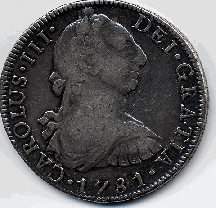 |
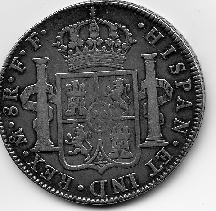 |
|
| The origin and significance of the dollar ($) sign is yet another part of our wonderful Spanish heritage in America that has somehow been lost, forgotten, or obscured. | ||
| Christian Evidence in Washington, D.C. Sent by Bill Carmena JCarm1724@aol.com On Wed, 29 Oct 2003 09:21:18 -0600 Darrell McCluskey macdo11@merr.com wrote: As you walk up the steps to the Capitol Building which houses the U.S. Senate and the House of Delagates, you can see near the top of the building a row of the world's law givers and each one is facing one in the middle who is facing forward with a full frontal view - it is Moses and the Ten Commandments! As you enter the Supreme Court courtroom, the two huge oak doors have the Ten Commandments engraved on each lower portion of each door. As you sit inside the courtroom, you can see the wall right above where the Supreme Court judges sit a display of the Ten Commandments! There are Bible verses etched in stone all over the Federal Buildings and Monuments in Washington, D.C. James Madison, the fourth president, known as "The Father of Our Constitution" made the following statement, "We have staked the whole of all our political institutions upon the capacity of mankind for self-government, upon the capacity of each and all of us to govern ourselves, to control ourselves, to sustain ourselves according to the Ten Commandments of God." Patrick Henry, that patriot and Founding Father of our country said, "It cannot be emphasized too strongly or too often that this great nation was founded not by religionists but by Christians, not on religions but on the Gospel of Jesus Christ". Every session of Congress begins with a prayer by a paid preacher, whose salary has been paid by the taxpayer since 1777. Fifty-two of the fifty-five founders of the Constitution were members of the established orthodox churches in the colonies. Thomas Jefferson worried that the Courts would overstep their authority and instead of interpreting the law would begin making law...an oligarchy...the rule of few over many. The very first Supreme Court Justice, John Jay, said, "Americans should select and prefer Christians as their rulers." How then, have we gotten to the point that everything we have done for 200 years in this country is now suddenly wrong and unconstitutional? |
||
Abstract: Pilgrimage to Plymouth, Massachusetts, Visiting Plimoth Plantation http://www.plimoth.org by Laurie Williams Sowby Source: Meridian Magazine http://www.ldsmag.com/travel/031119plymouth.html Ever since my first visit to Plymouth more than 30 years ago, these three words have evoked images of windswept shores, crude log huts, and Thanksgiving dinner The dinner, I've since learned, was just part of a common harvest celebration that had been part of English tradition for years, and it wasn't dubbed "Thanksgiving" until the Continental Congress declared a national day for it in 1777, some 150 years after Pilgrims landed on American shores. A connection between the Pilgrims and Thanksgiving wasn't even suggested until 1841.So much for historical origins. The folks at Plimoth Plantation -- a living-history museum with costumed actors filling modern-day visitors in about their origins and daily life in the re-created Plimoth Colony -- make it a point to dispel common myths about the Pilgrims and that "first Thanksgiving." |
||
Family Quote of the Week: Thanksgiving Proclamation World Congress of Families Update, Online! Volume 04 Issue 47 25 November 2003 "The year that is drawing towards its close, has been filled with the blessings of fruitful fields and healthful skies. To these bounties, which are so constantly enjoyed that we are prone to forget the source from which they come, others have been added, which are of so extraordinary a nature, that they cannot fail to penetrate and soften even the heart which is habitually insensible to the ever watchful providence of Almighty God. ...No human counsel hath devised nor hath any mortal hand worked out these great things. They are the gracious gifts of the Most High God, who, while dealing with us in anger for our sins, hath nevertheless remembered mercy. It has seemed to me fit and proper that they should be solemnly, reverently and gratefully acknowledged as with one heart and one voice by the whole American People. I do therefore invite my fellow citizens in every part of the United States, and also those who are at sea and those who are sojourning in foreign lands, to set apart and observe the last Thursday of November next, as a day of Thanksgiving and Praise to our beneficent Father who dwelleth in the Heavens." (Source: Abraham Lincoln, "Proclamation of Thanksgiving," October 3, 1863 [by William H. Seward]; in Roy P. Basler, Marion Dolores Pratt and Lloyd A. Dunlap, eds., The Abraham Lincoln Association, Springfield, Illinois; Collected Works of Abraham Lincoln, Volume 6, New Brunswick, N.J.: Rutgers University Press, 1953, p. 496-7; http://www.hti.umich.edu.) |
||
|
|
|
|
Quick Tip - Don't Rely Solely on
Indexes When Conducting a Formal Interview PERSI- PLUS Bookmarks for Resource Centers |
Digital Cameras & Genealogy website Ye Olde Genealogie Shoppe U.S. Catholic sources: A Diocesan Guide Learn the meaning of your family name |
Quick Tip - Don't Rely Solely on Indexes When looking at online or even microfiche birth death and marriage indexes be aware that just because your info isn't listed there doesn't mean the information isn't there. I have looked at indexes for several ancestors and not found them but when I contacted the county records keeper, there were certificates on file; they just weren't listed in the index. Source: Nancy McCoy, California African American Genealogical Society, Heritage Newsletter, Nov 2003 |
Ten Things to Remember When Conducting a Formal Interview A few months ago I conducted a class on "interviewing." We learned that there are several types of interviews. here are some pointers that you may find helpful in preparation for a formal interview: Purchase at least two 60-minute tapes. I hope these tips will assist you in your `formal' genealogical
interviewing adventures. |
PERSI- PLUS PERSI stands for the Periodical Source Index. It's the biggest index of Genealogical Journals in the world, giving you a pointer to the work of countless genealogist, that never gets listed in library catalogs. It's said to have "more than 1.8 million entries from nearly ten thousand titles. . . PERSI was created by the staff of the Historical Genealogy Department of the Allen county Public Library in Fort Wayne, Indiana, and the index covers genealogy and local history periodicals written in English and Canadian French since 1800. the time periods covered by these periodicals ranges from the 1700s to the present time. ProQuest is taking PERSI up a notch; the company is imaging many of the actual articles. All you will have to do is click on the Index refere4nce and you will be able to read the item. this is much better an writing to libraries all over to find who has a copy of the journal that's referred to. This will make PERSI more than an Index. It will become the Cyndi's List of genealogical journals. (This preview of PERSI was published in UGANEWS Sept-Oct, 2003 and was written by Dick Eastman, who visited Heritage Quest's booth at the FGS Conference in Orlando, Florida and reported it in Eastman's Online Genealogy Newsletter of September 8th. See http://www.eogn.com.) |
|
Bookmarks for Resource Centers Suggestions by Granville Hough, Ph.D. gwhough@earthlink.net Those of us who do research at home with computer assistance should have in our bookmarks all those resource bases we use over and over. I want to share my four most useful bookmarks with the hope that others researching history of Spanish America for the 1775-1785 time period will also share theirs. Library of Congress, http://www.lcweb.loc.gov. From the Library Catalog, I can learn what has been published, plus whom the researchers/authors were and are. I can then print out the book descriptions I need. I then attach each book description to a library loan request at my local library and ask the Reference Librarian to get the references for me. Three or four weeks later, the Librarian calls and tells me I have the book or books for 20 days usually. I extract what I can use and return the books (The Librarians do not have to have the Library of Congress readout, but they can surely read the printed numbers better than they can read my handwriting. In the long run, it saves time for me to provide it.) The Library Index (LIBDEX), www.libdex.com/country/USA.html. With LIBDEX, I get a listing of all the states, then I select California, then University of California at Irvine (UCI), and go to its Catalog. (I can get to UCI without driving on the freeway.) If one of the books I found in the Library of Congress listing is at UCI, I just go there and copy what I can use. Once I am in the stacks and have found my call number book, I look at close numbers and generally find other treasures I can use. In using LIBDEX, if I want to know what has been published in Mexico, or Spain, I replace USA with Mexico and browse around in various cities and universities and see what comes up. Family History Center, Church of Jesus Christ of Latter-Day Saints, http://www.FamilySearch.org. (Local family history centers are close enough to get to by bus or without getting on the freeway.) I go to the Family History Library Catalog on the internet and search by subject, author, or title. The listings show books in the Library at Salt Lake City, plus those which have been microfilmed and are available to be borrowed at local family history centers. Once you identify a microfilm of interest, you take the description and number for ordering to your local family history center, fill out a request, pay a rental fee, and about two weeks later the library volunteer will call you that your film is in and can be used for 30 days at the local family history center. You go there and copy what you need from it, and you can extend the rental if you need to. (Books not on microfilm may be used in Salt Lake City, but do not go out to branches. These may be recent books where the author or publisher does not consent to microfilming. What you do in those cases is get the book description and go request it through your local public library. In most cases, you can get US books in Salt Lake City without going there.) However, because Salt Lake City receives materials from all over the world, there are many microfilms and books there not found elsewhere in the US. For example, you can get microfilmed service records for all Spanish army officers in the Western Hemisphere for the 1790-1800 period. The alphabetical index of these officers is available through regular library loan. Arizona State Museum, Office of Ethnohistorical Research, Documentary Relations of the Southwest (DRSW), www.statemuseum.arizona.edu/drsw/index.html. This remarkable collection of 1500 microfilm reels covers New Spain (Mexico) from Mexico City northward from the 1530 decade until 1821, when Mexico became independent. Each reel contains many bundles of documents. These have been extracted (in English) by subject matter, author or government official, places or units, and key persons mentioned. You can use these designations to call up what you are researching. If I used the name Martinez I would get several hundred names for the whole period of 1530 through 1821. So I have to work out a strategy for calling up a particular Martinez in a particular place. If the name is unusual, such as Coca, there might be just a dozen entries. You can study each abstract until you find the one of your interest. The extracts also show where the original microfilm was made, or other places where it may be stored. You can go either to the campus of the University of Arizona at Tucson and view the microfilm, or you can go to the place the microfilm was made, and study the whole document (in Spanish). (I have had little success in hiring others to go print out the originals, so I suggest you try it yourself before hiring someone else.) If you are interested only in surnames, there is also a Biofile, which seems to be extracted from published books. You can get the essential information from the Biofile direct from the internet. Not mentioned above are the holdings of Orange County Public Library, Orange County Community College Districts, National Genealogical Society Library Loan, and New England Historical and Genealogical Society Library Loan. We do have them book marked for other uses, but the holdings are quite general and were soon exhausted for the period of Spanish history we are researching. At present we are working on West Indies, South America, Central America, Mexico, and the Philippine Islands. If anyone has found internet data bases for the 1775-1785 period for any particular region, we would appreciate learning about them. Granville W. & N. C. Hough, gwhough@earthlink.net. Bookmark, Nov 2003. |
Digital Cameras & Genealogy website Sent by Lorraine Hernandez lmherdz@msn.com Ken Watson states, "I've had several email queries about the specifics of how I go about copying old photos using a digital camera. To help answer those questions, I've updated my digital camera and genealogy website with a page that details my personal "workflow". Just click on the link from the main page, or from the Making Digital Copies of Old Photographs page." Indeed, this is an exhaustive analysis of digital photography and old photograph restoration. The topics covered include storing digital photographs, copying and improving old family photographs, photographing old documents, labeling digital photographs, capturing photographs, CD-ROM storage and archiving a cemetery with digital photographs. My person favorite is Ken's section entitled "The Myth of DPI." You can see Ken's excellent work at: http://www.rideau-info.com/genealogy/digital/ Are you printing family photographs on an inkjet printer with the expectation that you can keep them for years? Take a look at the examples at the bottom of the page at: http://www.rideau-info.com/genealogy/digital/project-2001.html . Don't destroy the digital images! |
Ye Olde Genealogie Shoppe http://www.yogs.com/ Recommended by Josie Trevino Trevino JOSIETT3@aol.com as a good source for Anglo-lines. I liked the book reviews in their Crazy e-mail updates newsletter, such as: |
U.S. CRATE 35 BOOK 3: CHECK LIST OF HISTORICAL RECORDS SURVEY PUBLICATIONS [BIBLIOGRAPHY OF RESEARCH PROJECTS REPORTS]. Prepared by Sargent Child and Dorothy Holmes. W.P.A., TECHNICAL SERIES, Research and Records Bibliography number 7, revised April 1943. Clearfield Company, O in 1943, R in 1943. This listing of the W. P. A. projects benefits all genealogists because of the vast amount of work done by the W. P.A. which has never received the acclaim it should have, for it was a fine idea. In spite of its drawbacks, more work was researched and typed for these records than anyone can imagine. And here is a state by state list of the projects that were carried out. Over 1,000 entries plus You may be looking for the information that has already been abstracted or listed in this book! Save yourself some time and money. 110 pages, hardbound. $10 U.S. CRATE CRAZY 35 BOOK 4: REVOLUTIONARY WAR BOUNTY LAND GRANTS AWARDED BY STATE GOVERNMENTS. By Lloyd DeWitt Bockstruck. Genealogical Publishing Company, 1996. A land bounty is a grant of land from a government as a reward to repay citizens for the hardships they endured in the service of their country, usually granted for military service. The governments offered the lands for a military victory as they would not have honored the grants for a military defeat because that government would no longer exist if they lost. Some of the Colonies had no land to give. There were no bounty land policies for the states of Delaware, New Jersey, New Hampshire, Rhode Island or Vermont for they had no lands left vacant. Bounty lands were a matter of policy for Connecticut, Georgia, Maryland, Massachusetts, New York, North Carolina, Pennsylvania, South Carolina and Virginia. Connecticut awarded lands in Ohio for the destruction of homes and businesses by the British, but apparently not for military service per se. Georgia issued lands to the civilians who remained loyal or neutral. North Carolina issued its bounty lands in what became the state of Tennessee. Virginia used its land located in Indiana, Kentucky and Ohio as its bounty land payments. Massachusetts used land located in the present state of Maine. Read and study the preface of this book for a tremendous lesson in the making of America by this very important settlement program. Format is generally last name, first name, state from which grant came, rank, date, number of acres: Aimes, Henry. Va. Colonel, 30 Dec. 1851. 8487 acres. or Akers, Simon. Va. Private. 2 Feb. 1786. 100 acres. You can quickly see the value of knowing your ancestor's name, rank and state for which he served. Now you can write for his bounty land application and file, his service pension and file and the possibility exists that he may have a pension file also. The book is in alphabetical order in 596 pages plus an index to heirs, representatives and other assignees. Hardbound. $45 |
"U.S. CATHOLIC SOURCES: A DIOCESAN RESEARCH GUIDE," by Virginia Humling http://www.ancestry.com/rd/prodredir.asp?sourceid=831&key=P1032 Recently updated, this guide to Catholic sources was compiled especially for the family historian from questionnaires mailed to all Roman Catholic dioceses within the United States. Contact information for dioceses is listed by state, along with the following information: area included in the diocese, fees, and, where available, sources for diocesan history and/or Catholic newspapers. A section for each state with "Additional Resources" also lists libraries and/or other organizations that maintain Catholic collections. "Catholic Sources" retails for $14.95 |
Learn the meaning of your family name. http://www.Ancestry.com recently added a name dictionary with the help of the Oxford University Press. In addition to proving name definitions, this database often pinpoints name origin. You can also see where households with your family name were living in 1920. California African American Genealogical Society, Heritage Newsletter, Nov 2003 |
|
Explorers Rediscover Incan City Near Machu Picchu |
| http://story.news.yahoo.com/news?tmpl=story&u=/nm/20031106/sc_nm/peru_britain_inca_dc_1 Sent by Sent by John Inclan Galveston@yahoo.com LONDON (Reuters) - An Anglo-American team of explorers have found an Incan city lost for centuries in the Peruvian jungles despite being within sight of the key religious center at Machu Picchu. Using infrared aerial photography to penetrate the forest canopy, the team led by Briton Hugh Thomson and American Gary Zeigler located the ruins at Llactapata 50 miles northwest of the ancient Incan capital, Cusco. "This is a very important discovery. It is very close to Machu Picchu and aligned with it. This adds significantly to our knowledge about Machu Picchu," Thomson told Reuters by telephone Thursday. "Llactapata adds to its significance." The site was first mentioned by explorer Hiram Bingham, the discoverer of Machu Picchu, in 1912. But he was very vague about its location, and the ruins have lain undisturbed ever since. After locating the city from the air, the expedition used machetes to hack through the jungle to reach it, 9,000 feet up the side of a mountain. They found stone buildings including a solar temple and houses covering several square miles in the same alignment with the Pleiades star cluster and the June solstice sunrise as Machu Picchu, which was a sacred center. "This gives the site great ritual importance," Thomson said. Not only was Llactapata probably a ceremonial site in its own right, excavations suggested that it might also have acted as a granary and dormitory for its sacred neighbor, he added. The Incas abandoned their towns and cities and retreated from the treasure-hunting Spanish invaders after the Conquistadors captured and executed the last Incan leader, Tupac Amaru, in 1572. Some of the cities have since been rediscovered, but many more are believed to lie hidden in the dense jungle, almost impossible to detect without new technology or a chance encounter. Last year, the expedition found another lost Incan town at Cota Coca, about 60 miles west of Cusco. "The fact that we have found two in two years means there could be many more out there," Thomson said. He said the use for the first time of an infrared camera to locate a set of ruins from the air had been a breakthrough, but one that did not make the humble machete redundant. "It makes wielding the machete slightly more purposeful -- at least you know where you are going and that there is something definitely in front of you -- but it certainly won't put it out of business," Thomson said. http://dir.yahoo.com/Regional/Regions/South_America/Social _Science/Anthropology_and_Archaeology/Archaeology/Inca/ |
| Scrapbook Fever Quaint Hobby | BioFilesLLC |
Extract: Scrapbook fever Quaint hobby has become a $2.5 billion industry By Michele Chandler, Mercury News, Oct. 26, 2003 http://www.siliconvalley.com/mld/siliconvalley/7107945.htm Even in the Internet Age, Silicon Valley stores are shining spotlights on a quaint little hobby that's morphed into a fast-growing, $2.5 billion industry: scrap-booking. It's gone far beyond simply gluing baby pictures onto the pages of oversized display books. Think souped-up photo albums with eye-catching displays that enthusiasts assemble alongside like-minded friends, reminiscent of quilting bees of days gone by. Even a host of magazines and trade shows devoted to the craft have emerged. Earlier this year, 5,200 people attended the first Scrapbook Expo in San Jose; early indications are that more than 6,000 will come to next year's event in early 2004, organizer Jennifer Davis said. Scrapbook fever recently prompted executives at national discount chain Target to significantly boost the amount of scrapbook-related merchandise carried in the stationary section of nearly all its stores. Craft retailer Michaels Stores has gone a step further, opening two scrapbook-only shops this year in its home market of Texas. Michaels executives say they plan to open 10 more ReCollections specialty stores next year in Dallas, Phoenix, Atlanta and metropolitan Washington, D.C. Publicly traded Michaels is testing whether it can go head-to-head with the handful of small, privately held scrapbook chains including Archiver's of Minnesota, which has 17 stores in five states, and hundreds of independents and solo entrepreneurs who sell supplies at home parties, Tupperware-style. Some industry watchers expect interest to grow. ``To me, scrap-booking is part of an up-scaling trend in consumer products. It's just like no one drinks plain coffee anymore, it's all double lattes,'' said Laura Richardson, a retail analyst at Adams, Harkness & Hill. ``Once people start putting scrapbooks together, the old photo albums will look passe.'' Even a high-technology business, Hewlett-Packard, wants a piece of the boom. This summer, HP launched a special Web page devoted to scrap-booking with project instructions and other information for devotees including links to advertisements about HP printers, digital cameras. There's even a section about different typefaces called ``Fonts are your Friends'' for the all-important captions, called journaling, in the scrapbooks. Sales of scrapbook-related products have quadrupled during the past five years, to $2.5 billion, according to the Hobby Industry Association trade group. There are about 2,500 scrapbook-only stores nationwide, although basic supplies can be found at many office-supply stores, discount chains such as Wal-Mart and photo supply stores. Hobby industry lore says scrap-booking originated in Utah among members of the Church of Jesus Christ of Latter-day Saints who used albums to record their genealogy. That interest spilled over to crafters more broadly with the development of scrapbooks and paper promoted to not degrade photos over time. Creative Memories, a 16-year-old Minnesota-based chain with 80,000 home-based consultants, is credited with igniting the broad popularity of contemporary scrap-booking. By holding ``crop parties'' and workshops in hotel suites, community centers, church basements or their homes, those consultants expose ever-more people to the craft. Last year, the company reported sales of $320 million, up nearly 30 percent from 2001, said Creative Memories spokeswoman Heidi Everett. The incentive for the company's consultants -- they get a cut of the sales of others they bring into the organization, plus a discount on scrapping supplies for themselves. Bay Area stores A number of scrapbook specialty stores have popped up in the Bay Area since Cathy Hanne opened Scrapbook Mania in San Jose six years ago. The former hairdresser visited a scrapbook store in Southern California in the mid-1990s, and was so impressed she used her savings, took out loans and brought in investors to raise the $50,000 needed to open her 1,800-foot store in south San Jose. Hanne's business took off, enabling her workforce to grow from one to five. Her store offers workshops in the latest techniques in a bright, airy classroom. But the store also attracts grade-schoolers looking for cutouts to decorate school projects and hosts birthday parties for teens. Only about 5 percent of her customers have been men. Last weekend, 15 women arrived at 9 a.m., toting photographs and craft supplies, and headed for a huge table in Scrapbook Mania's rear classroom for a daylong cropping session. They didn't leave until 7 p.m. About 20 percent of Hanne's business comes from assembling scrapbooks for others for a wide-ranging cost of $500 to $1,000, depending on the book's size and complexity and what decorations are selected. ``You're always trying to find new ways to make money,'' Hanne said. This week, Hanne is in suburban Detroit, where she is a paid consultant helping another scrapbook supply store owner get her business off the ground. Back in the Bay Area, Hanne says the region's limping economy hasn't done in scrap-booking because of the creative joy people get from the craft. ``Instead of them spending $40 per purchase, they're spending $20,'' she said. ``They are still shopping.'' Contact Michele Chandler at mchandler@mercurynews.com or (408) 920-5731. |
|
BioFilesLLC For immediate release: Living Family History: Creating a Multimedia Biography by David A. Beardsley has just been published by iuniverse.com. This practical guide shows families and local historians how to use consumer hardware and software to preserve their life stories and memories for future generations. Its eight chapters include selecting hardware and software, interviewing techniques, authoring programs, and a complete list of resources. It can be ordered from iuniverse.com, biofilesllc.com, and amazon.com The same content is available as an Ebook through biofilesllc.com, and an online course through myfamily.com. For more information, contact: David A. Beardsley BioFiles LLC biofilesllc.com 1 877 551 6500 |
12/30/2009 04:48 PM


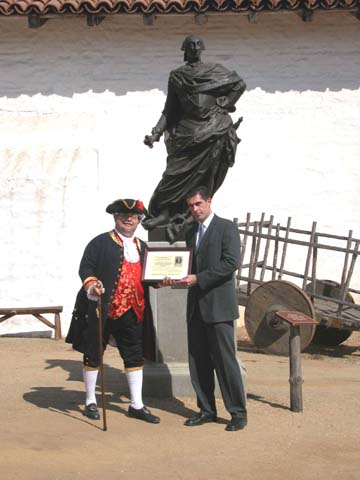
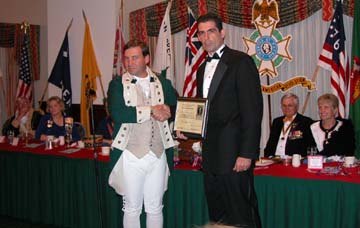
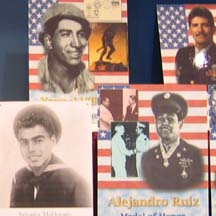
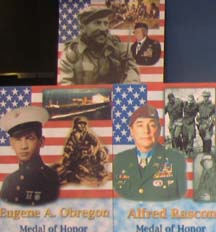
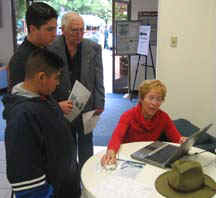
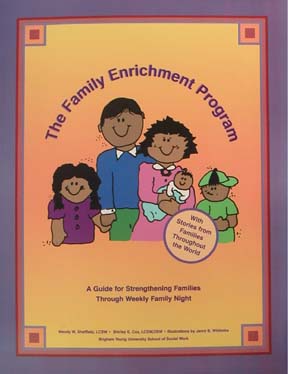
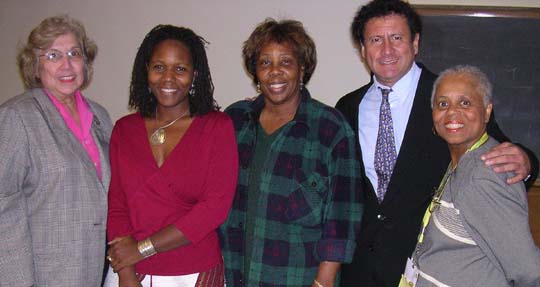
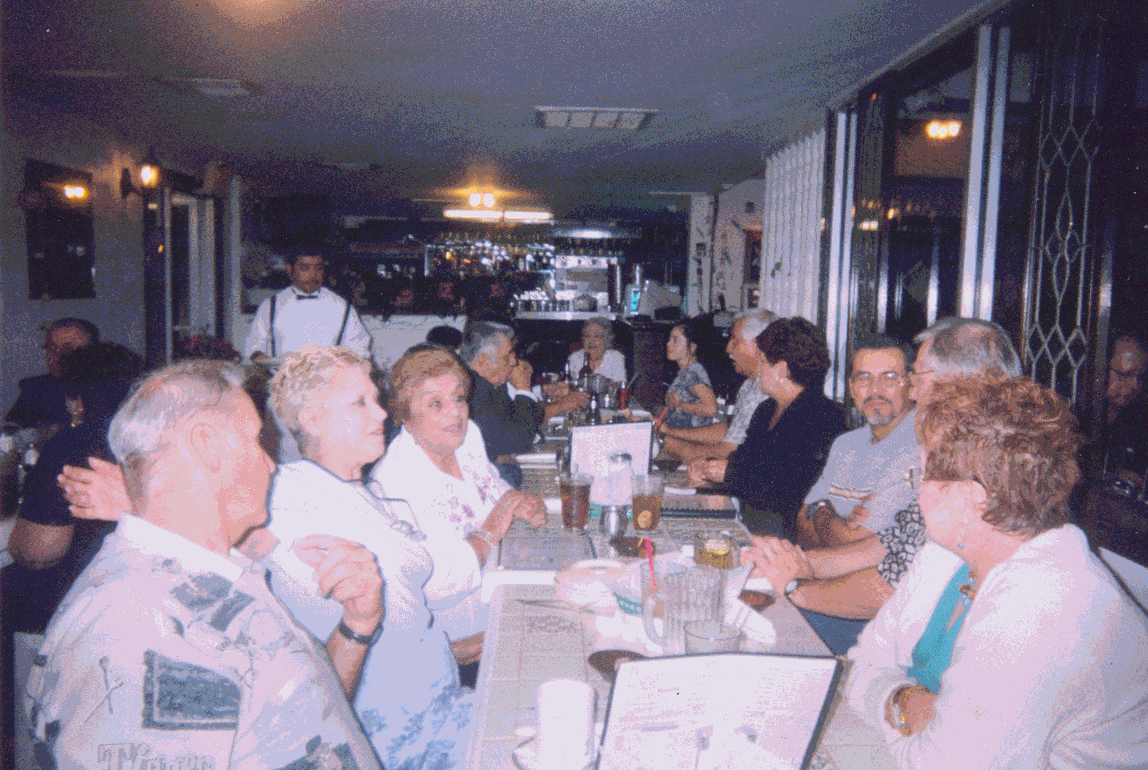
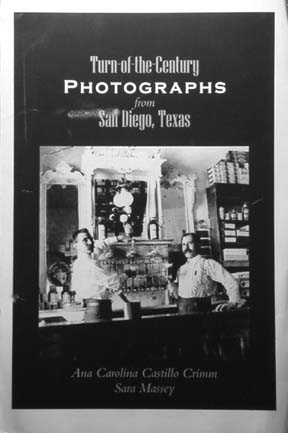
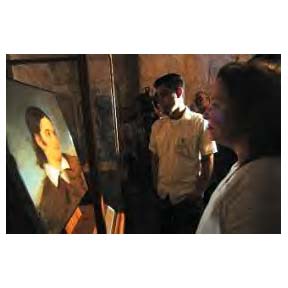
 SIGN
SIGN